
Home/Repair costs/2018 Chevrolet Traverse/Alternator replacement
2018 Chevrolet Traverse · Alternator replacement
2018 Chevrolet Traverse alternator replacement cost
A 2018 Chevrolet Traverse alternator replacement typically costs $438 to $850 at an independent shop, parts and labor included across its engine options. The alternator itself runs $230 to $430, and the job takes 1 to 3 hours. Prices updated October 2026.
Estimated cost, selected engine
$438 to $835
Charlotte, NC area
Prices updated October 2026
Which engine? They price differently, so pick yours for a closer number.
Alternator (part)
$230 to $430
Labor (1 to 3 hours)
$198 to $390
Fluids + supplies
$10 to $30
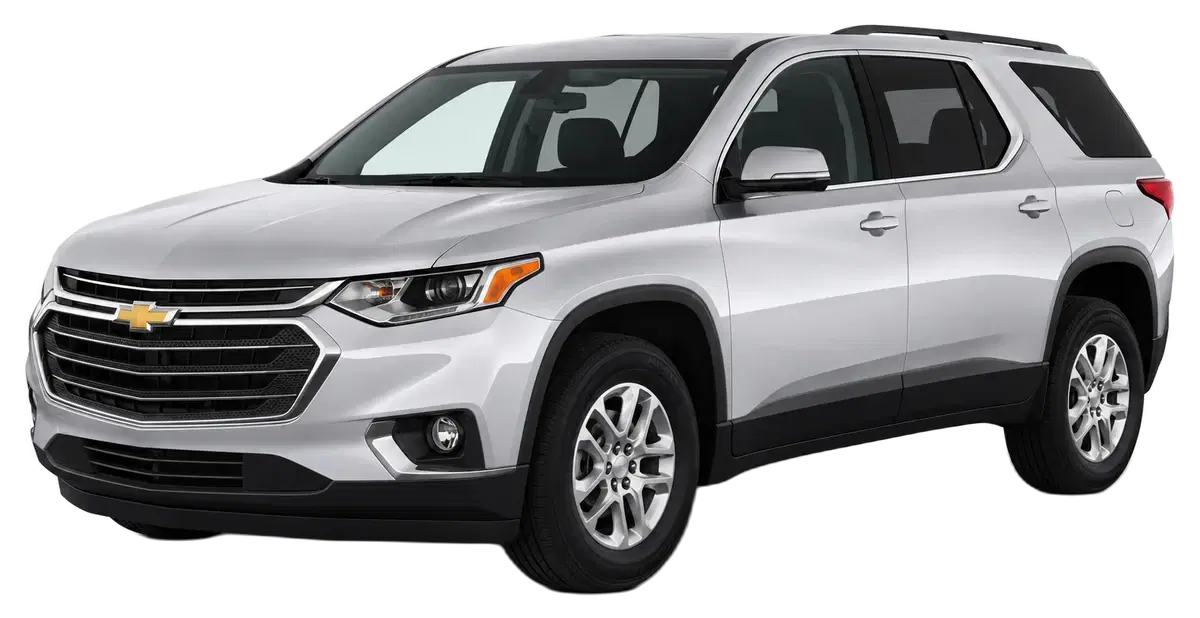
2018 Chevrolet Traverse alternator replacement: parts and labor
Labor runs $198 to $390 (the job takes 1 to 3 hours at typical independent-shop rates), and the alternator itself typically costs $230 to $430 for the 2018 Chevrolet Traverse, plus $10 to $30 in battery terminal service, anti-corrosion protectant,. Prices updated October 2026.
| Engine | Parts | Labor | Estimated total |
|---|---|---|---|
| 3.6L V6 | $230 to $430 | $198 to $375 (1.8 to 2.5 hrs) | $438 to $835 |
| 2.0L Turbo I4 (RS) | $250 to $430 | $198 to $390 (1.8 to 2.6 hrs) | $458 to $850 |
The GM Genuine 170A alternator (13552642) carries a $463.06 MSRP at the parts counter, and dealer labor at $175-230/hr typically lands the same job at $900-1,300, with marketplace dealer bands reaching $1,500-2,200. The gap is almost entirely part list price and shop rate, since the same GM-boxed unit sells for $200-227 online.
Where these numbers come from
- Estimate ranges: a hand-verified research pass for this exact vehicle and repair, cross-referenced across 12 independent sources (parts retailers, labor guides, and published shop pricing), completed September 2026.
- Recall and complaint data: NHTSA (National Highway Traffic Safety Administration) records for the 2018 Chevrolet Traverse specifically, filtered to charging system relevance and refreshed daily from the federal API.
- Local prices: real, accepted quotes from verified Fixxr marketplace jobs, published per metro once five verified jobs of this type have closed. Never estimates dressed up as transactions.
Not included in the estimate: Charging-system diagnosis time (typically 0.5-1.0 hr) to rule out battery, grounds, and cables per TSB 18-NA-161, Serpentine belt and tensioner, commonly replaced at the same time if worn (adds roughly $30-90 in parts), AGM battery replacement if it was drained or damaged by undercharging ($180-260 for this vehicle), Sales tax, shop supply fees, and the refundable core charge ($40-67) on remanufactured units, Any dealer-level battery sensor relearn or software checks if warning messages persist after repair.
What actually goes wrong on this exact vehicle
Federal safety data for the 2018 Chevrolet Traverse, filtered to the charging system specifically.
0
charging system recalls
10
charging system owner complaints
Real owner report, verbatim from NHTSA:
“When car is shifted into park, it does not register that. It is in park. Therefore the car keeps beeping, and you cannot leave the car in this position. This is the second time that we have had to address this problem once in 2021 and now in 2026 I believe that General motors should fix this problem without the consumer being charged to have it corrected.”
Get the failure confirmed with a real diagnosis before you approve the repair, so you fix the part that actually failed.
Recall fixes are free at the dealer. Everything else deserves a fair price.
Source: NHTSA (National Highway Traffic Safety Administration), recalls and complaints for the 2018 Chevrolet Traverse. Refreshed periodically.
Not sure what’s wrong?
A battery light or a car that dies while driving can be the alternator, the battery, or the wiring. Describe what your car is doing and our free diagnostic tool narrows it down before you spend a dollar.
Diagnose it freeKnow what you need?
Post your alternator replacement to the marketplace and get connected with local mechanics. Real repair offers for your Traverse, free, with no phone calls to make.
Get connected with a mechanicHow your charging system works
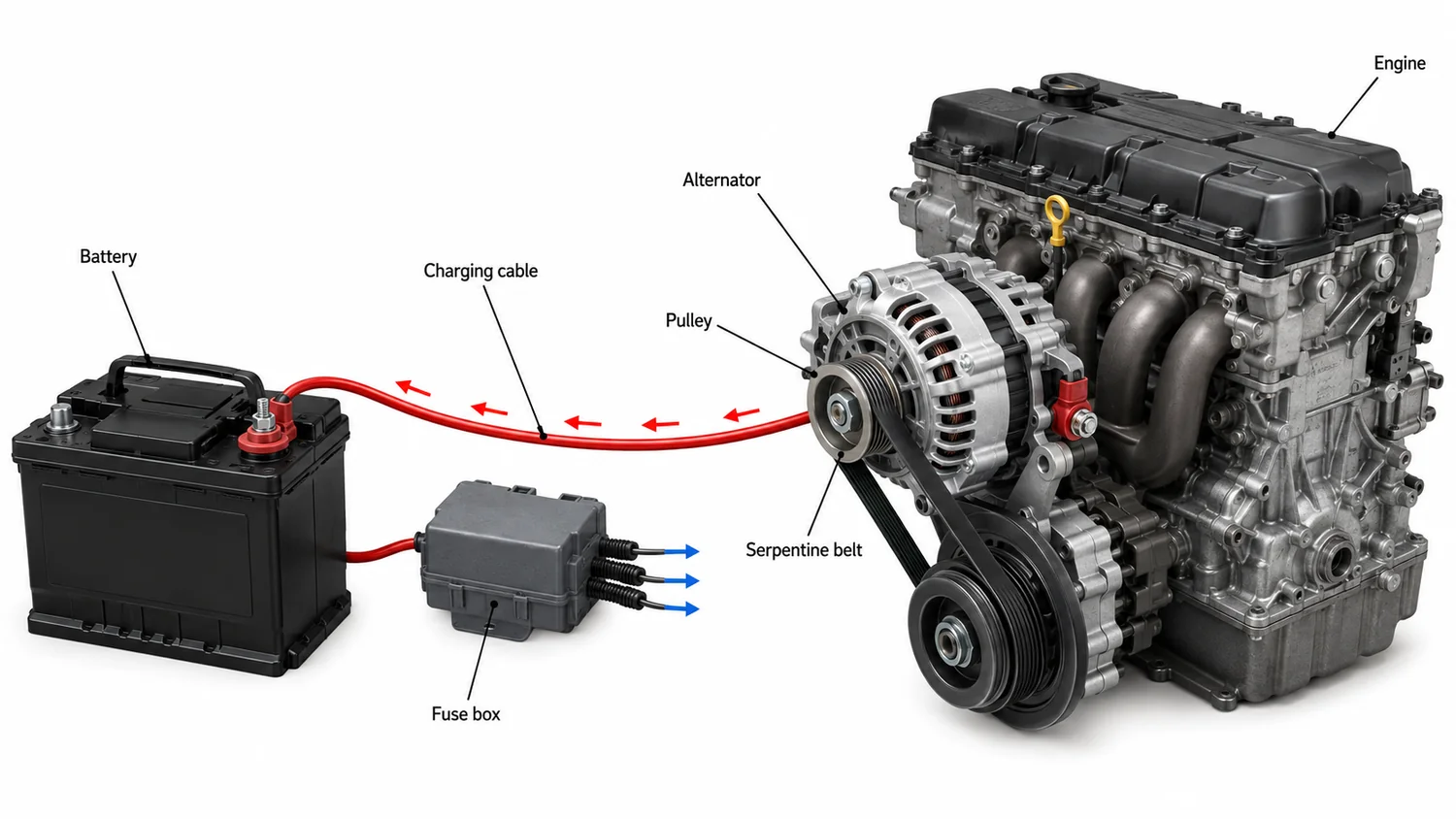
The battery starts your 2018 Chevrolet Traverse; the alternator runs it. Once the engine is on, a belt spins the alternator and it generates the electricity for everything, headlights, computers, ignition, while recharging the battery for the next start. When the alternator quits, the car drains the battery and dies, which is why a bad alternator so often gets misdiagnosed as a bad battery.
Four signs it’s the alternator, not the battery
Battery light while driving
The charging system stopped keeping up. The battery is now running the car alone.
Lights dim at idle
Headlights or dash brighten with revs and dim at a stop. Classic weak-alternator output.
Whine or growl up front
A failing alternator bearing gets noisy before it dies. The pitch rises with engine speed.
Dead battery, again
A new battery that keeps dying was probably never being recharged. Test the alternator first.
The two-minute check: with the engine running, voltage at the battery should read roughly 13.5 to 14.5 volts. Low 12s means the alternator is not charging. Most parts stores run this test free.
What an alternator replacement is like on the 2018 Chevrolet Traverse
The second-generation Traverse (2018 on, GM C1XX platform) is one of the friendlier three-row crossovers for this job, which is why book time sits around 1.8 hours rather than the 3-plus hours some transverse V6 rivals demand. The alternator on the 3.6L LFY mounts high on the front of the engine and is reached entirely from the top: pull the plastic engine cover off its grommets, remove the intake duct, release the serpentine belt at the tensioner, then remove the mounting bolts, the B+ cable nut, and the field connector. No subframe drop, no wheel-well surgery. Mitchell-style flat-rate guides quoted for the 2018 Traverse put alternator-only labor at about 1.8 hours; DIY step-by-step guides for the 2018-2022 3.6L body it out at 1.5 to 3.0 hours, and the top end of the range mostly covers rusted hardware, belt inspection, and post-repair charging verification.
Know your amperage before ordering, because this platform used multiple ratings. Every 2018 3.6L Traverse takes a 170-amp unit, OE part number 13552642 (GM has since superseded some listings to 13565647), and every aftermarket option cataloged for the 2018 3.6L is a 170A generator. The 2.0L turbo RS uses a different, smaller 155-amp unit, OE 13592809, shared with some Cadillac ATS/CTS applications. Later Traverse/Enclave/Acadia siblings added a 220-amp high-output variant, so a listing that covers 2018-2026 without an amperage callout is a red flag. The units do not interchange across engines.
This truck has GM regulated voltage control plus auto stop-start, and that combination generates more false alternator diagnoses than real ones. The ECM commands the alternator through six distinct charging modes, so voltage that wanders between roughly 12.9 and 15.0 volts can be normal operation, not a failing unit. GM bulletin 18-NA-161 directs techs to check the G218 ground under the driver-side dash and the battery cable connections at the battery, fuse block, and engine block before condemning an alternator for a Service Battery Charging System message. A worn AGM battery beaten up by stop-start cycling produces the same Battery Saver Active warnings; insist on a full charging-system test (13.5 to 14.5V at the battery with loads applied) before anyone sells you an alternator.
On failure history, the 2018 Traverse carries roughly 80 NHTSA electrical-system complaints on CarComplaints, and owner reports include battery-light-then-no-power events with alternator replacements in the 40,000 to 45,000 mile range, which is early for a component that routinely lives past 100,000 miles. The classic presentations are the red battery light at highway speed, accessories browning out, and a bearing whine that rises with engine rpm. Because so much of this vehicle's electrical trouble traces to grounds, cables, and the battery rather than the generator itself, the cheap diagnostics matter more here than on most vehicles.
Dealer quotes diverge for a documented reason: GM lists the Genuine 13552642 alternator at $463.06 MSRP, while the identical GM-boxed part sells online for $200 to $227, and quality aftermarket 170A units (Bosch, WAI, Duralast Gold, Remy reman) run $230 to $430 at retail. Marketplace data shows the spread clearly: YourMechanic's shop/dealer band for the 2018 3.6L runs $1,573 to $2,264, RepairPal's shop estimate is $800 to $983, and the independent-shop-plus-aftermarket path in this table lands at roughly half the dealer number for the same repair with a comparable warranty part.
Estimate note: these are researched independent-shop ranges, not a guaranteed quote. The only exact number is one from a shop that has seen your car.
Frequently asked questions
How much does a 2018 Chevrolet Traverse alternator replacement cost?
A 2018 Chevrolet Traverse alternator replacement typically runs $438 to $850 at an independent shop, parts and labor included. The alternator itself is $230 to $430, labor makes up most of the rest, and the job takes 1 to 3 hours.Why does the price change with the engine?
The 2018 Chevrolet Traverse came with more than one engine, and they do not share the same part or the same access. A tighter engine bay or extra teardown adds labor hours, and the part price moves too. Sites that show one national number flatten that out. Pick your engine on the estimate above for a closer figure.How do I know if it's the alternator or the battery?
A battery that only cranks weakly on startup but runs fine afterward is usually the battery. A battery or charging warning light while driving, headlights that dim at idle, or a car that dies while running points at the alternator. The clean test is voltage at the battery with the engine running: roughly 13.5 to 14.5 volts means the alternator is charging, low 12s means it is not. Most parts stores will test both for free, so confirm before buying either part.Can I drive my Chevrolet with a bad alternator?
Only briefly. Once the alternator stops charging, the car runs off the battery alone, and depending on its charge and what is switched on you may get 30 minutes to an hour before the Chevrolet dies, possibly in traffic. Turn off everything you can spare and drive straight to the shop, or have it towed if the warning light has been on a while.How long does an alternator last?
Most factory alternators last roughly 100,000 to 150,000 miles, or 7 to 12 years. Heat, short-trip driving, and heavy electrical loads shorten that. The usual failures are worn brushes, a failing voltage regulator, or a noisy bearing, and the fix is replacement rather than repair on nearly all modern units.
More 2018 Chevrolet Traverse repair costs
Related charging system repairs
You deserve a fair fix.
Tell us what is wrong. A verified mechanic comes to you.