
Home/Repair costs/2018 Dodge Durango/Torque converter replacement
2018 Dodge Durango · Torque converter replacement
2018 Dodge Durango torque converter replacement cost
A 2018 Dodge Durango torque converter replacement typically costs $1,240 to $2,770 at an independent shop, parts and labor included across its engine options. The torque converter itself runs $320 to $980, and the job takes 6 to 9 hours. Prices updated October 2026.
Estimated cost, selected engine
$1,240 to $2,330
Charlotte, NC area
Prices updated October 2026
Which engine? They price differently, so pick yours for a closer number.
Torque converter (part)
$320 to $980
Labor (6 to 9 hours)
$800 to $1,600
ZF 8-speed ATF (9 to 10 qt) + misc
$120 to $190
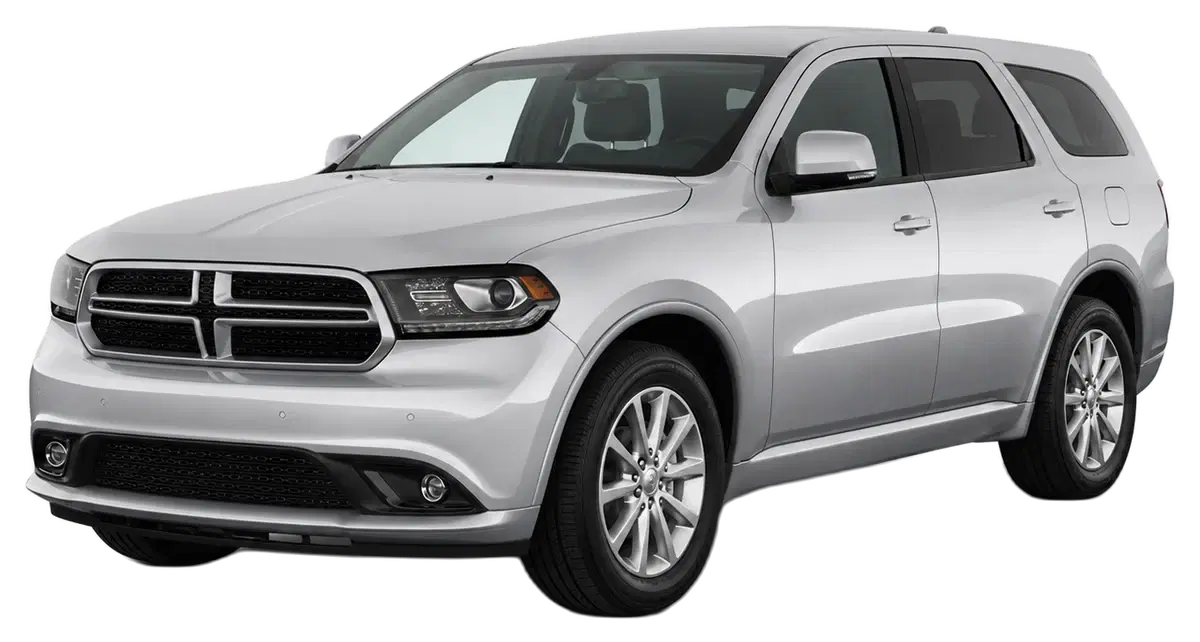
2018 Dodge Durango torque converter replacement: parts and labor
Labor runs $800 to $1,600 (the job takes 6 to 9 hours at typical independent-shop rates), and the torque converter itself typically costs $320 to $980 for the 2018 Dodge Durango, plus $120 to $190 in zf 8-speed atf (9 to 10 qt) + misc. Prices updated October 2026.
| Engine | Parts | Labor | Estimated total |
|---|---|---|---|
| 3.6L V6 | $320 to $620 | $800 to $1,520 (7.0 to 9.5 hrs) | $1,240 to $2,330 |
| 5.7L HEMI V8 | $400 to $980 | $860 to $1,600 (7.5 to 10.0 hrs) | $1,380 to $2,770 |
Coverage note: 6.4L HEMI SRT 392 excluded: performance trim with SRT-specific 8HP75-spec hardware and its own Mopar converter kits (RL405036AA/RL243365AA, $685 to $1,135), typically dealer or specialty-shop serviced, which would distort the mainstream range.
A Dodge dealer prices the Mopar converter kit at full MSRP ($483 V6, $994 to $1,150 V8) and bills $190 to $240/hr, pushing the same job to roughly $2,800 to $4,300. Generic aggregator numbers (RepairPal/YourMechanic-style $600 to $2,000 torque converter averages) skew low for this truck because they blend in vehicles with easy transmission access and do not price the Durango's AWD transfer case removal, the 9 to 10 quart ULV fluid refill, or the scan-tool temperature fill procedure.
Where these numbers come from
- Estimate ranges: a hand-verified research pass for this exact vehicle and repair, cross-referenced across 11 independent sources (parts retailers, labor guides, and published shop pricing), completed September 2026.
- Recall and complaint data: NHTSA (National Highway Traffic Safety Administration) records for the 2018 Dodge Durango specifically, filtered to transmission relevance and refreshed daily from the federal API.
- Local prices: real, accepted quotes from verified Fixxr marketplace jobs, published per metro once five verified jobs of this type have closed. Never estimates dressed up as transactions.
Not included in the estimate: Transmission pan with integrated filter (ZF-style plastic pan, typically $80 to $180 added while the trans is out), Dealer TCM reflash/calibration update if shudder persists after replacement, Full transmission reman/replacement if friction material is found in the pan ($3,300 to $4,000+), Rear main seal, flexplate, or trans mount replacement while access is open, Diagnostic time to rule out fluid degradation or calibration as the shudder cause, $175 refundable core deposit charged on reman converters until the old unit ships back.
What actually goes wrong on this exact vehicle
Federal safety data for the 2018 Dodge Durango, filtered to the transmission specifically.
0
transmission recalls
9
transmission owner complaints
Real owner report, verbatim from NHTSA:
“The contact owns a 2018 Dodge Durango. The contact stated while driving at approximately 65 MPH, the vehicle had started to lose motive power and nearly stalled. The contact stated that the check engine, a yellow "P" and several other unknown warning lights were illuminated. The contact pulled over and shifted into park(P) and became aware that the vehicle was in neutral(N) when the vehicle rolled forward. The contact was unable to restart the vehicle and had the vehicle towed to an independent mechanic. The vehicle was diagnosed by the mechanic, and it was determined that the PCM needed to be replaced and referred the contact to a dealer. The vehicle was not repaired. The contact had the vehicle towed to the residence. The contact attempted to restart the vehicle and there were several unknown warning lights illuminated. The contact stated that the windows independently rolled down and the vehicle was in park(P) but the vehicle rolled forward. The contact turned off the vehicle but observed that the ignition was in the "RUN" position and while attempting to restart the vehicle to properly shut the vehicle off, the vehicle failed to restart. The contact had the vehicle towed to a dealer who diagnosed the vehicle and determined that the starter motor had burned out and the batteries were drained and needed to be replaced due to an electrical failure. The contact requested information from the dealer about the PCM and was advised that he had missed a software update. The vehicle was not repaired. The manufacturer was informed of the failure and referred the contact to the NHTSA Hotline to report the failure. The failure mileage was approximately 170,000.”
Get the failure confirmed with a real diagnosis before you approve the repair, so you fix the part that actually failed.
Recall fixes are free at the dealer. Everything else deserves a fair price.
Source: NHTSA (National Highway Traffic Safety Administration), recalls and complaints for the 2018 Dodge Durango. Refreshed periodically.
Not sure what’s wrong?
A shudder or slip can be the torque converter, the transmission itself, worn mounts, or even misfires. Describe what your truck is doing and our free diagnostic tool narrows it down before you spend a dollar.
Diagnose it freeKnow what you need?
Post your torque converter replacement to the marketplace and get connected with local mechanics. Real repair offers for your Durango, free, with no phone calls to make.
Get connected with a mechanicHow your torque converter works
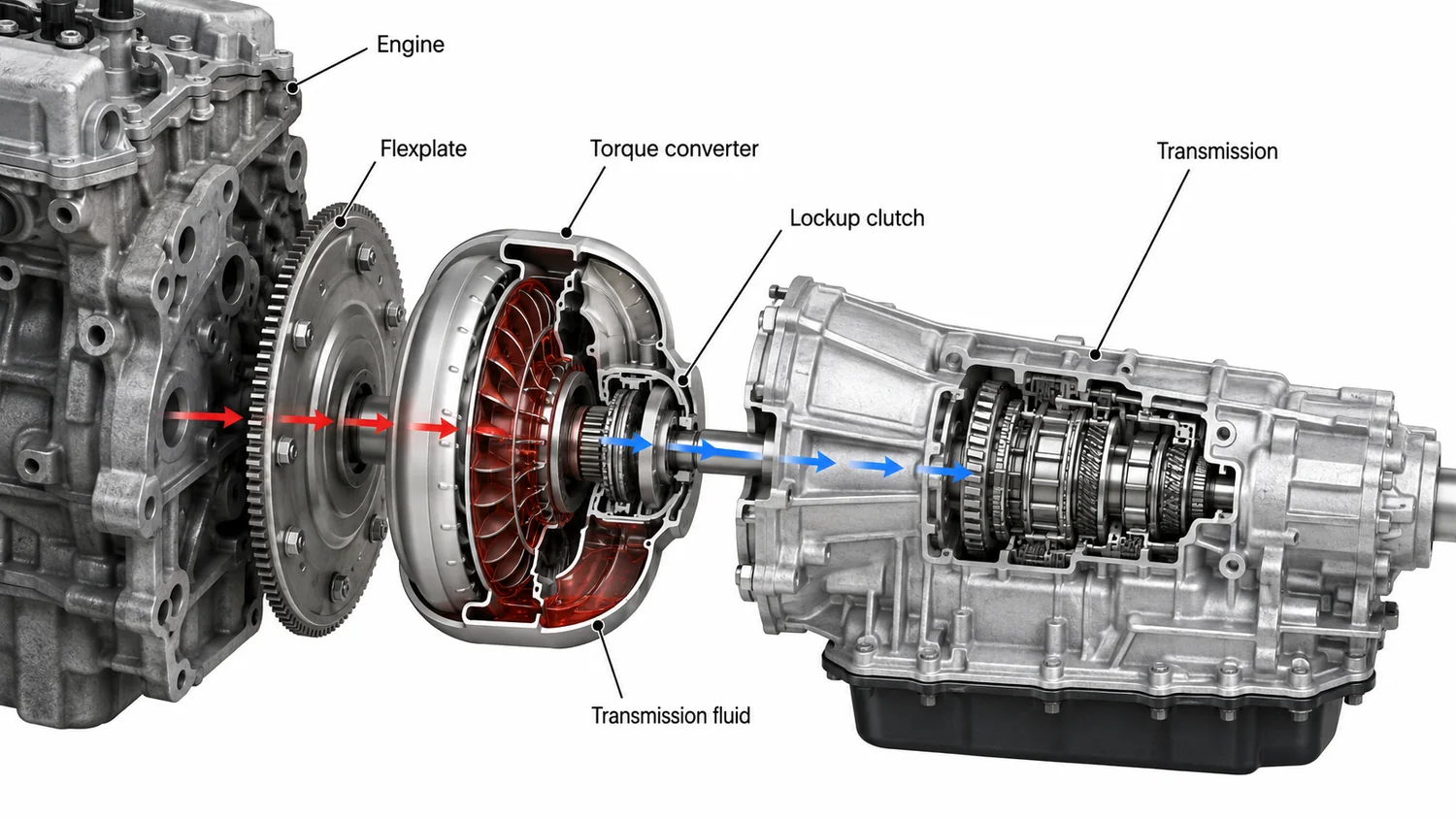
The torque converter is the fluid coupling between the engine and the automatic transmission in your 2018 Dodge Durango. It lets the engine keep spinning at a stoplight, multiplies torque when you pull away, and at cruising speed an internal lockup clutch grips solid to stop wasting fuel. That clutch is the part that wears out, and because the converter bolts on between the engine and transmission, replacing it means removing the transmission, which is why labor is most of the bill.
Four signs it’s the torque converter
Shudder at steady speed
A rumble-strip vibration at light throttle on the highway. The classic sign of a worn converter lockup clutch.
RPM flares, truck doesn't
Engine revs climb without matching speed. The converter or transmission is slipping instead of gripping.
Delayed or harsh engagement
A pause or clunk when shifting into drive or reverse, especially cold.
Hot, dark, or burnt fluid
A slipping converter cooks the fluid. Dark color or a burnt smell means friction material is circulating.
The free check: on a quiet road, hold a steady 45 to 55 mph at light throttle. A vibration that appears in that zone and fades when you accelerate or lift off points at the converter clutch. Mention exactly when it happens to your shop; it is the single most useful thing you can tell them.
What a torque converter replacement is like on the 2018 Dodge Durango
The 2018 Durango pairs two different 8-speeds with its two mainstream engines, and the converter price gap between them is real. The 3.6L Pentastar runs the Chrysler-built 850RE (a licensed ZF 8HP45), and its Mopar torque converter kit RL234051AA sells for $341 discounted against a $483 MSRP, cheap enough that many shops just install OEM on the V6. The 5.7L HEMI runs the German-built ZF 8HP70, and its Mopar kits (RL404379AA and RL243364AA) run $824 to $1,150, which is why quality reman is the normal independent-shop play on the V8: a RECON-certified 8HP70 converter (code C178) with a 4-year/100k warranty sells for about $345 plus a $175 refundable core deposit.
The classic failure on both ZF 8HP variants is torque converter clutch shudder at light throttle cruise, roughly 45 to 70 mph, that feels like driving over rumble strips as the locked-up TCC slips and glazes. Before authorizing a converter, a competent shop will try the cheap fixes FCA itself issued: a TCM calibration update plus a drain and fill with the correct ultra-low-viscosity fluid (Mopar ZF 8&9 Speed ATF, 68218925AB, or ZF Lifeguard 8). Generic multi-vehicle ATF in these transmissions accelerates shudder onset and valve body bore wear, so a Durango that got a bargain fluid service before the shudder started is a known pattern.
The converter itself is a 30-minute swap; the bill is the transmission drop. On this body the AWD models (a large share of Durangos, and where the 5.7 tow packages live) add transfer case removal, which is roughly an extra hour to hour and a half over RWD, and that drivetrain difference is what stretches the labor spread on each row. The 5.7 also adds exhaust and crossmember interference getting the 8HP70 out. The refill is temperature-critical with no dipstick: the level is verified at a specific fluid temperature on a scan tool after a road test, so the 9 to 10 quart ULV refill and the relearn drive are legitimately part of the job, not padding.
Two while-in-there items to expect on the estimate: the ZF-style plastic pan with integrated filter is normally replaced when the transmission is out ($80 to $180, excluded here), and if the magnet or pan shows friction material the converter has been shedding lining into the whole unit. At that point forum-documented math takes over: Ram and Durango owners on the same 8HP70 report $3,300 to $4,000 for a reman transmission that includes a new converter, versus $2,500-ish for a converter-only job that may not survive contaminated hard parts. One Durango owner's shop quoted $1,100 in labor just to pull and reinstall, with $1,500 best case and $2,800 if the trans was compromised, which brackets this estimate well.
Estimate note: these are researched independent-shop ranges, not a guaranteed quote. The only exact number is one from a shop that has seen your car.
Frequently asked questions
How much does a 2018 Dodge Durango torque converter replacement cost?
A 2018 Dodge Durango torque converter replacement typically runs $1,240 to $2,770 at an independent shop, parts and labor included. The torque converter itself is $320 to $980, labor makes up most of the rest, and the job takes 6 to 9 hours.Why does the price change with the engine?
The 2018 Dodge Durango came with more than one engine, and they do not share the same part or the same access. A tighter engine bay or extra teardown adds labor hours, and the part price moves too. Sites that show one national number flatten that out. Pick your engine on the estimate above for a closer figure.What are the signs of a bad torque converter?
The classic sign is a shudder at steady highway speed under light throttle, a rumble-strip vibration that comes and goes as the converter's lockup clutch grabs and slips. Others: engine RPM flaring up without the truck speeding up, a delayed or harsh clunk into drive, a whine that changes with gear, and transmission temperature climbing on grades. These symptoms overlap with internal transmission problems and even engine misfires, so get a real diagnosis before paying for either.Can I drive my Dodge with a bad torque converter?
Briefly, but it gets more expensive the longer you wait. A slipping converter sheds clutch material into the transmission fluid and runs hot, and that debris circulates through the entire transmission. Caught early, this can be a converter and fluid job. Ignored, it becomes a full rebuild at several times the price. If it shudders occasionally, book the repair soon; if it slips hard or overheats, stop driving it.Should the transmission be rebuilt at the same time?
Fluid condition is the tell. If the fluid is clean and the failure is isolated to the converter clutch, a converter-only replacement is a legitimate fix, and the labor is already paid since the transmission comes out either way. If the fluid is dark, smells burnt, or carries metal or friction material, converter debris has been through the whole unit and a reputable shop will recommend a rebuild instead of bolting a new converter to a dying transmission. Ask to see the fluid and the pan.How long does a torque converter last?
Usually the life of the transmission, commonly 100,000 to 200,000 miles. The weak point is the lockup clutch inside the converter, which wears like any friction clutch, and worn-out fluid accelerates it. Regular transmission fluid service is the cheapest way to extend converter life, and it is also what keeps a future repair converter-only instead of a rebuild.
More 2018 Dodge Durango repair costs
Related transmission repairs
You deserve a fair fix.
Tell us what is wrong. A verified mechanic comes to you.