
Home/Repair costs/2018 Toyota 4Runner/Alternator replacement
2018 Toyota 4Runner · Alternator replacement
2018 Toyota 4Runner alternator replacement cost
A 2018 Toyota 4Runner alternator replacement typically costs $385 to $700 at an independent shop, parts and labor included. The alternator itself runs $210 to $340, and the job takes 1 to 3 hours. Prices updated October 2026.
Estimated cost for your car
$385 to $700
Charlotte, NC area
Prices updated October 2026
Alternator (part)
$210 to $340
Labor (1 to 3 hours)
$165 to $330
Fluids + supplies
$10 to $30

2018 Toyota 4Runner alternator replacement: parts and labor
Labor runs $165 to $330 (the job takes 1 to 3 hours at typical independent-shop rates), and the alternator itself typically costs $210 to $340 for the 2018 Toyota 4Runner, plus $10 to $30 in battery test/recharge and shop supplies. Prices updated October 2026.
| Engine | Parts | Labor | Estimated total |
|---|---|---|---|
| 4.0L V6 | $210 to $340 | $165 to $330 (1.5 to 2.2 hrs) | $385 to $700 |
Coverage note: None; every 2018 US 4Runner trim (SR5, SR5 Premium, TRD Off-Road, TRD Pro, Limited) shares the same 4.0L 1GR-FE V6 and 130-amp alternator, so one row covers the entire model year.
A genuine Toyota alternator (27060-31190) lists at $504.48 MSRP, and dealer labor at $160 to $200/hr pushes dealership totals to roughly $850 to $1,150 for this job. The same OE Denso part sells for about $338 through online Toyota parts counters, so the dealer premium is mostly list-price part markup and rate, not extra work.
Where these numbers come from
- Estimate ranges: a hand-verified research pass for this exact vehicle and repair, cross-referenced across 11 independent sources (parts retailers, labor guides, and published shop pricing), completed September 2026.
- Recall and complaint data: NHTSA (National Highway Traffic Safety Administration) records for the 2018 Toyota 4Runner specifically, filtered to charging system relevance and refreshed daily from the federal API.
- Local prices: real, accepted quotes from verified Fixxr marketplace jobs, published per metro once five verified jobs of this type have closed. Never estimates dressed up as transactions.
Not included in the estimate: Charging-system diagnosis time (usually 0.5 to 1.0 hr to rule out the battery, grounds, or the clutch pulley), Serpentine drive belt, commonly replaced while the front of the engine is apart ($25 to $60 part), A replacement battery if the failing alternator ran it dead one too many times, Sales tax, shop supply fees, and core charges if the old unit is not returned, OEM-new part premium (see dealer note).
Not sure what’s wrong?
A battery light or a car that dies while driving can be the alternator, the battery, or the wiring. Describe what your car is doing and our free diagnostic tool narrows it down before you spend a dollar.
Diagnose it freeKnow what you need?
Post your alternator replacement to the marketplace and get connected with local mechanics. Real repair offers for your 4Runner, free, with no phone calls to make.
Get connected with a mechanicHow your charging system works
The battery starts your 2018 Toyota 4Runner; the alternator runs it. Once the engine is on, a belt spins the alternator and it generates the electricity for everything, headlights, computers, ignition, while recharging the battery for the next start. When the alternator quits, the car drains the battery and dies, which is why a bad alternator so often gets misdiagnosed as a bad battery.
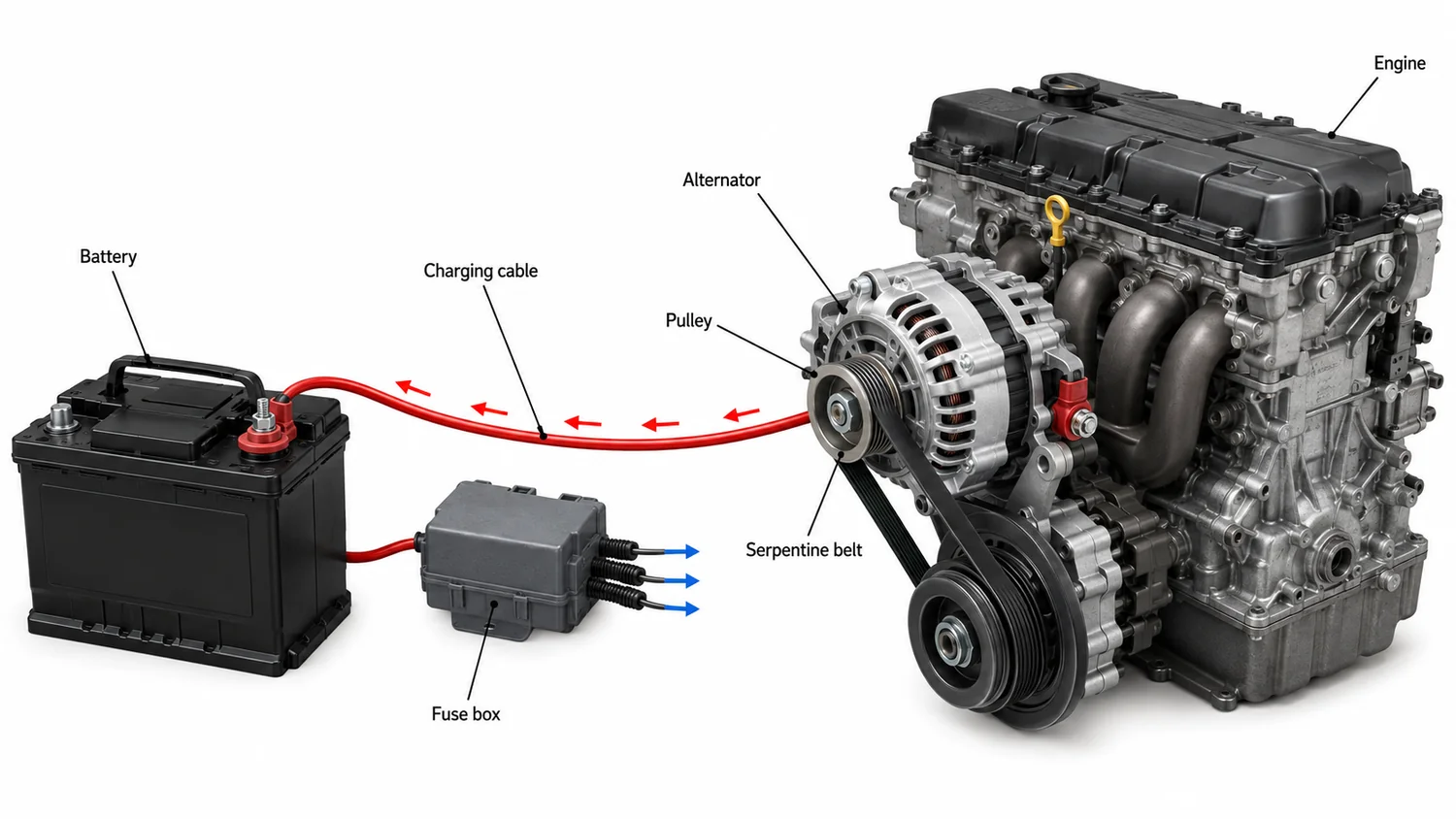
Four signs it’s the alternator, not the battery
Battery light while driving
The charging system stopped keeping up. The battery is now running the car alone.
Lights dim at idle
Headlights or dash brighten with revs and dim at a stop. Classic weak-alternator output.
Whine or growl up front
A failing alternator bearing gets noisy before it dies. The pitch rises with engine speed.
Dead battery, again
A new battery that keeps dying was probably never being recharged. Test the alternator first.
The two-minute check: with the engine running, voltage at the battery should read roughly 13.5 to 14.5 volts. Low 12s means the alternator is not charging. Most parts stores run this test free.
What an alternator replacement is like on the 2018 Toyota 4Runner
The 2018 4Runner came one way under the hood: the 4.0L 1GR-FE V6 with a 130-amp Denso alternator, OE part number 27060-31190 (Denso hardware IDs 104210-2860, -2863, -2864). Toyota's parts catalog also lists a 100-amp unit (27060-31260), so confirm the amp rating stamped on your old unit before ordering, but the 130-amp version is what nearly all US trucks carry. Every trim from SR5 to TRD Pro uses the same setup, which is why this page needs only one price row.
The labor number is set by one bolt. The alternator sits low on the front of the V6 and the two main mounting bolts come out without drama, but the rear bracket bolt hides behind the engine mount area and owners on Toyota-4Runner.org describe reaching it with a stack of extensions and swivel joints; some pull the driver-side front wheel and fender liner just to see it. That is why a job that booked around 1.2 hours on the 4th-gen truck realistically bills 1.5 to 2.2 hours on the 5th gen, and why a mechanic quoting 2 hours is not padding the ticket.
These Denso units are among the longest-lived alternators in the business. Most 5th-gen 4Runners see 120,000 to 180,000 miles before brushes, the voltage regulator, or a bearing gives out, though forum reports document failures as early as 88,000 miles. One 4Runner-specific trap: the alternator uses a one-way clutch decoupler pulley (Toyota 27415-0W131, about $97) that can fail on its own with a rattle or belt flutter that mimics a dying alternator. A shop that checks the pulley first can save you the whole job.
There are no NHTSA recalls or Toyota TSBs touching the charging system on the 2018 4Runner; its recalls cover the low-pressure fuel pump, suspension components, and GVWR labels. So an alternator failure is a straight out-of-warranty repair with no secret warranty to lean on. Skip the no-name eBay and Amazon units; 4Runner owners consistently steer toward Denso remanufactured units from established retailers because counterfeit Denso packaging is a documented problem on marketplace listings.
When a dealer quotes $900 to $1,100 for this job, the gap is almost entirely part sourcing, not different work. Toyota lists the OE alternator at $504 MSRP even though the identical part sells for about $338 from online Toyota parts counters, and RepairPal's $668 to $794 estimate prices the part at $497 to $544 for the same reason. A quality aftermarket unit runs $210 to $340: AutoZone's Duralast is $209.99 to $214.99 plus a $40 refundable core, and Denso remans run about $230 to $285. Same wrench time, roughly $300 less in parts.
Estimate note: these are researched independent-shop ranges, not a guaranteed quote. The only exact number is one from a shop that has seen your car.
Frequently asked questions
How much does a 2018 Toyota 4Runner alternator replacement cost?
A 2018 Toyota 4Runner alternator replacement typically runs $385 to $700 at an independent shop, parts and labor included. The alternator itself is $210 to $340, labor makes up most of the rest, and the job takes 1 to 3 hours.Why does the price change with the engine?
The 2018 Toyota 4Runner came with more than one engine, and they do not share the same part or the same access. A tighter engine bay or extra teardown adds labor hours, and the part price moves too. Sites that show one national number flatten that out. Pick your engine on the estimate above for a closer figure.How do I know if it's the alternator or the battery?
A battery that only cranks weakly on startup but runs fine afterward is usually the battery. A battery or charging warning light while driving, headlights that dim at idle, or a car that dies while running points at the alternator. The clean test is voltage at the battery with the engine running: roughly 13.5 to 14.5 volts means the alternator is charging, low 12s means it is not. Most parts stores will test both for free, so confirm before buying either part.Can I drive my Toyota with a bad alternator?
Only briefly. Once the alternator stops charging, the car runs off the battery alone, and depending on its charge and what is switched on you may get 30 minutes to an hour before the Toyota dies, possibly in traffic. Turn off everything you can spare and drive straight to the shop, or have it towed if the warning light has been on a while.How long does an alternator last?
Most factory alternators last roughly 100,000 to 150,000 miles, or 7 to 12 years. Heat, short-trip driving, and heavy electrical loads shorten that. The usual failures are worn brushes, a failing voltage regulator, or a noisy bearing, and the fix is replacement rather than repair on nearly all modern units.Are there recalls on the 2018 Toyota 4Runner?
Yes, NHTSA lists 5 recalls for the 2018 Toyota 4Runner. Recall repairs are done free of charge at a franchised dealer for that brand, so it is worth checking your VIN before paying a shop for related work.
More 2018 Toyota 4Runner repair costs
Related charging system repairs
You deserve a fair fix.
Tell us what is wrong. A verified mechanic comes to you.