
Home/Repair costs/2018 Toyota 4Runner/Torque converter replacement
2018 Toyota 4Runner · Torque converter replacement
2018 Toyota 4Runner torque converter replacement cost
A 2018 Toyota 4Runner torque converter replacement typically costs $1,150 to $2,130 at an independent shop, parts and labor included. The torque converter itself runs $270 to $470, and the job takes 6 to 9 hours. Prices updated October 2026.
Estimated cost for your car
$1,150 to $2,130
Charlotte, NC area
Prices updated October 2026
Torque converter (part)
$270 to $470
Labor (6 to 9 hours)
$780 to $1,480
Toyota WS ATF (11 qt) + pump seal
$100 to $180
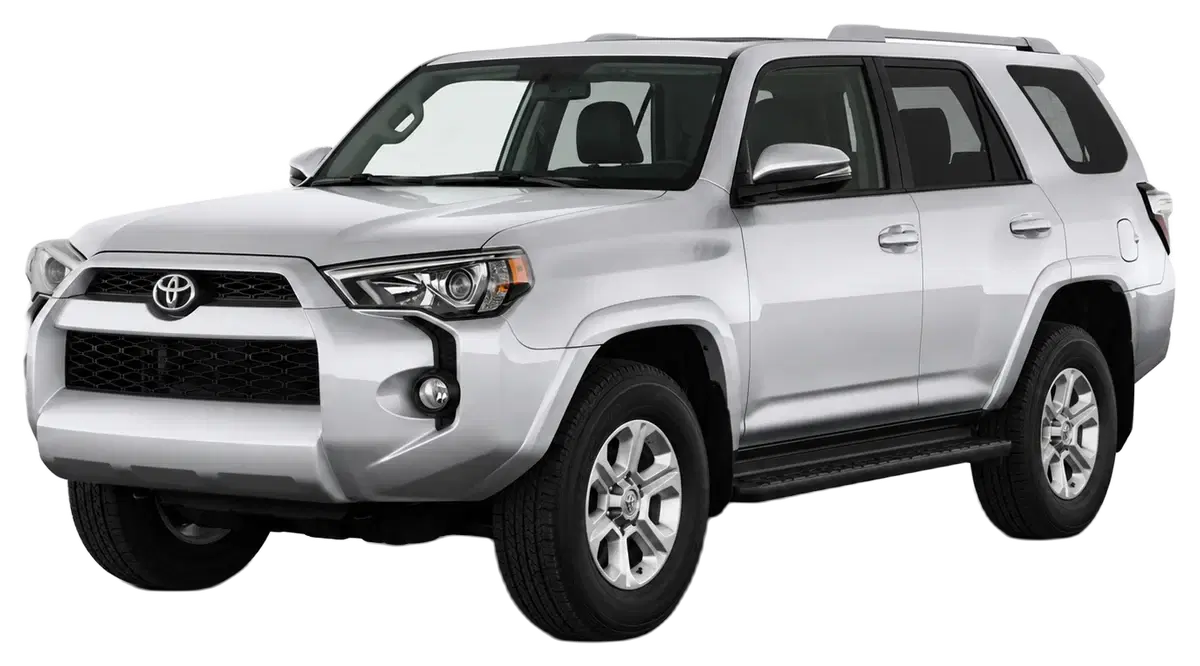
2018 Toyota 4Runner torque converter replacement: parts and labor
Labor runs $780 to $1,480 (the job takes 6 to 9 hours at typical independent-shop rates), and the torque converter itself typically costs $270 to $470 for the 2018 Toyota 4Runner, plus $100 to $180 in toyota ws atf (11 qt) + pump seal. Prices updated October 2026.
| Engine | Parts | Labor | Estimated total |
|---|---|---|---|
| 4.0L V6 | $270 to $470 | $780 to $1,480 (6.5 to 9 hrs) | $1,150 to $2,130 |
Coverage note: None. Every 2018 US 4Runner uses the same 4.0L 1GR-FE V6; the 2WD (A750E) versus 4WD/full-time 4WD (A750F) difference is folded into the labor spread, and TRD Pro adds only minor skid plate time.
RepairPal has no torque converter line item for the 4Runner, and its generic torque converter guidance (roughly $600 to $1,200 for non-luxury brands) understates this job because it assumes passenger-car R&R times, not a body-on-frame 4x4 with skid plates, transfer case, and two driveshafts. The genuine Toyota converter 32000-04010 runs $987.66 discounted ($1,474.71 MSRP) versus $270 to $451 for OE-core remans with 4 year warranties, so a dealer doing this job with the OEM part at dealer labor rates typically lands $2,600 to $3,500, roughly 60 to 80 percent over a good independent transmission shop.
Where these numbers come from
- Estimate ranges: a hand-verified research pass for this exact vehicle and repair, cross-referenced across 12 independent sources (parts retailers, labor guides, and published shop pricing), completed September 2026.
- Recall and complaint data: NHTSA (National Highway Traffic Safety Administration) records for the 2018 Toyota 4Runner specifically, filtered to transmission relevance and refreshed daily from the federal API.
- Local prices: real, accepted quotes from verified Fixxr marketplace jobs, published per metro once five verified jobs of this type have closed. Never estimates dressed up as transactions.
Not included in the estimate: Diagnosis time (road test, scan, fluid inspection), typically 0.5 to 1.0 hr billed separately, Transmission rebuild or replacement if clutch debris is found in the pan or cooler, Valve body, solenoid, or TCC solenoid repairs, Transmission cooler flush or replacement (recommended after a shuddering converter contaminates fluid), Flexplate replacement if cracked (found only after teardown), Transmission mount, exhaust gaskets rusted beyond reuse, Taxes, shop supplies, and disposal fees.
What actually goes wrong on this exact vehicle
Federal safety data for the 2018 Toyota 4Runner, filtered to the transmission specifically.
0
transmission recalls
2
transmission owner complaints
Real owner report, verbatim from NHTSA:
“While my father was exiting his 2018 Toyota 4Runner SR5, the vehicle unexpectedly started reversing fairly quickly, despite no foot being on the brake. He was dragged by the vehicle while attempting to stop it outside the car, and it continued moving backwards then down a hill before crashing into a fence, causing significant damage to both the car and the fence. This vehicle should not have rolled back at this speed, and it appears to be related to a potential design flaw in the vehicle’s brake-shift interlock system or automatic reverse functionality. This incident is concerning, and after reviewing discussions in various forums, it seems that similar issues may not be isolated to this particular vehicle and could point to a larger defect in Toyota vehicles. I am very disappointed that there are no built-in safety features that could have prevented this incident. It is extremely concerning that the vehicle shifted into reverse while the driver was in the process of exiting. A vehicle should not be able to reserve this quickly or move into reverse unintentionally without the driver’s control. This poses a serious safety risk to drivers and bystandards, and I strongly urge the NHTSA to investigate this issue and determine whether a defect or design flaw contributed to the incident. Implementing proper safeguards could prevent similar accidents in the future.”
Get the failure confirmed with a real diagnosis before you approve the repair, so you fix the part that actually failed.
Recall fixes are free at the dealer. Everything else deserves a fair price.
Source: NHTSA (National Highway Traffic Safety Administration), recalls and complaints for the 2018 Toyota 4Runner. Refreshed periodically.
Not sure what’s wrong?
A shudder or slip can be the torque converter, the transmission itself, worn mounts, or even misfires. Describe what your truck is doing and our free diagnostic tool narrows it down before you spend a dollar.
Diagnose it freeKnow what you need?
Post your torque converter replacement to the marketplace and get connected with local mechanics. Real repair offers for your 4Runner, free, with no phone calls to make.
Get connected with a mechanicHow your torque converter works
The torque converter is the fluid coupling between the engine and the automatic transmission in your 2018 Toyota 4Runner. It lets the engine keep spinning at a stoplight, multiplies torque when you pull away, and at cruising speed an internal lockup clutch grips solid to stop wasting fuel. That clutch is the part that wears out, and because the converter bolts on between the engine and transmission, replacing it means removing the transmission, which is why labor is most of the bill.
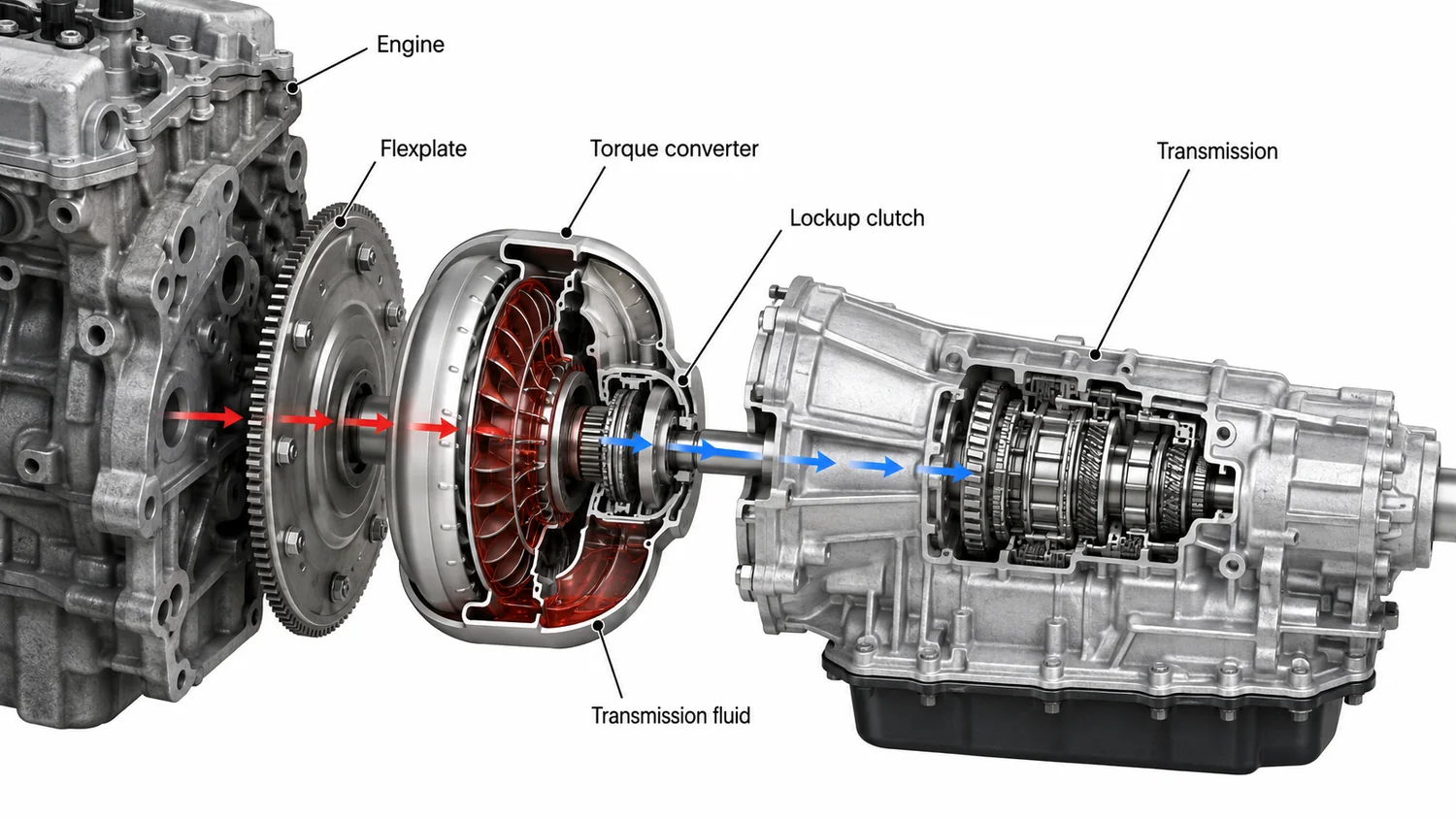
Four signs it’s the torque converter
Shudder at steady speed
A rumble-strip vibration at light throttle on the highway. The classic sign of a worn converter lockup clutch.
RPM flares, truck doesn't
Engine revs climb without matching speed. The converter or transmission is slipping instead of gripping.
Delayed or harsh engagement
A pause or clunk when shifting into drive or reverse, especially cold.
Hot, dark, or burnt fluid
A slipping converter cooks the fluid. Dark color or a burnt smell means friction material is circulating.
The free check: on a quiet road, hold a steady 45 to 55 mph at light throttle. A vibration that appears in that zone and fades when you accelerate or lift off points at the converter clutch. Mention exactly when it happens to your shop; it is the single most useful thing you can tell them.
What a torque converter replacement is like on the 2018 Toyota 4Runner
Every 2018 4Runner sold in the US has one powertrain: the 4.0L 1GR-FE V6 backed by an Aisin 5-speed, the A750E in 2WD trucks and the A750F in 4x4s (SR5, TRD Off-Road, TRD Pro part-time 4WD, and the Limited with full-time 4WD and Torsen center diff). The labor spread covers drivetrain, not engine: a 2WD SR5 sits near the low end, while a 4x4 adds front driveshaft removal, factory skid plates, and transfer case handling that push a shop toward 8 to 9 billed hours on this body-on-frame truck.
The classic A750 complaint that sends owners shopping for a converter is the rumble strip shudder at roughly 25 to 45 mph under light throttle in 4th or 5th gear, caused by the flex lockup clutch cycling. Multiple toyota-4runner.org threads document owners curing it with a proper WS fluid exchange for $165 to $300 instead of a converter, so a real converter verdict should come with evidence: TCC codes like P0741, glitter in the fluid, or shudder that survives fresh fluid. Do the cheap fix first.
Parts reality for this exact unit: a remanufactured OE-core A750E/F converter listed for 2004 to 2021 4Runners runs $268.77 at Transmission Parts Distributors (4 year 100k warranty, $120 to $150 refundable core) up to $450.99 at Cobra Transmission, with Maktrans at $357. The genuine Toyota converter 32000-04010 is $987.66 discounted online against a $1,474.71 MSRP, meaning OEM costs 2 to 3.5 times a quality reman for a part that is itself a reman-grade wear item.
A converter swap on this truck is a full transmission R&R: exhaust crossover, driveshafts, crossmember, wiring, and cooler lines all come apart, which is why a 4th gen forum quote pegged it at an $800 part plus 6.5 to 8 hours of labor. Refill is Toyota WS only, about 11 quarts of total system capacity, and the A750 has no dipstick; final level is set through the overflow check plug with fluid between about 97F and 117F, which adds legitimate billed time. While the trans is out, replacing the $15 to $25 front pump seal and inspecting the flexplate is standard practice.
Price sanity check: older forum totals of $1,300 to $1,500 reflect 2010s labor rates; at 2026 independent rates of $120 to $165 per hour the same job lands in the $1,150 to $2,150 window. If a quote comes back at $4,000 or more, the shop is quoting a replacement transmission, not a converter; KBB and RepairPal put full trans replacement on a late 5th gen 4Runner at $4,790 to $6,811. A converter-only job should never approach that number on an otherwise healthy A750, one of the most durable automatics Toyota ever shipped.
Estimate note: these are researched independent-shop ranges, not a guaranteed quote. The only exact number is one from a shop that has seen your car.
Frequently asked questions
How much does a 2018 Toyota 4Runner torque converter replacement cost?
A 2018 Toyota 4Runner torque converter replacement typically runs $1,150 to $2,130 at an independent shop, parts and labor included. The torque converter itself is $270 to $470, labor makes up most of the rest, and the job takes 6 to 9 hours.Why does the price change with the engine?
The 2018 Toyota 4Runner came with more than one engine, and they do not share the same part or the same access. A tighter engine bay or extra teardown adds labor hours, and the part price moves too. Sites that show one national number flatten that out. Pick your engine on the estimate above for a closer figure.What are the signs of a bad torque converter?
The classic sign is a shudder at steady highway speed under light throttle, a rumble-strip vibration that comes and goes as the converter's lockup clutch grabs and slips. Others: engine RPM flaring up without the truck speeding up, a delayed or harsh clunk into drive, a whine that changes with gear, and transmission temperature climbing on grades. These symptoms overlap with internal transmission problems and even engine misfires, so get a real diagnosis before paying for either.Can I drive my Toyota with a bad torque converter?
Briefly, but it gets more expensive the longer you wait. A slipping converter sheds clutch material into the transmission fluid and runs hot, and that debris circulates through the entire transmission. Caught early, this can be a converter and fluid job. Ignored, it becomes a full rebuild at several times the price. If it shudders occasionally, book the repair soon; if it slips hard or overheats, stop driving it.Should the transmission be rebuilt at the same time?
Fluid condition is the tell. If the fluid is clean and the failure is isolated to the converter clutch, a converter-only replacement is a legitimate fix, and the labor is already paid since the transmission comes out either way. If the fluid is dark, smells burnt, or carries metal or friction material, converter debris has been through the whole unit and a reputable shop will recommend a rebuild instead of bolting a new converter to a dying transmission. Ask to see the fluid and the pan.How long does a torque converter last?
Usually the life of the transmission, commonly 100,000 to 200,000 miles. The weak point is the lockup clutch inside the converter, which wears like any friction clutch, and worn-out fluid accelerates it. Regular transmission fluid service is the cheapest way to extend converter life, and it is also what keeps a future repair converter-only instead of a rebuild.Are there recalls on the 2018 Toyota 4Runner?
Yes, NHTSA lists 5 recalls for the 2018 Toyota 4Runner. Recall repairs are done free of charge at a franchised dealer for that brand, so it is worth checking your VIN before paying a shop for related work.
More 2018 Toyota 4Runner repair costs
Related transmission repairs
You deserve a fair fix.
Tell us what is wrong. A verified mechanic comes to you.