
Home/Repair costs/2018 Toyota Tundra/Alternator replacement
2018 Toyota Tundra · Alternator replacement
2018 Toyota Tundra alternator replacement cost
A 2018 Toyota Tundra alternator replacement typically costs $425 to $890 at an independent shop, parts and labor included across its engine options. The alternator itself runs $190 to $400, and the job takes 1 to 3 hours. Prices updated October 2026.
Estimated cost, selected engine
$425 to $870
Charlotte, NC area
Prices updated October 2026
Which engine? They price differently, so pick yours for a closer number.
Alternator (part)
$190 to $400
Labor (1 to 3 hours)
$220 to $450
Fluids + supplies
$15 to $40
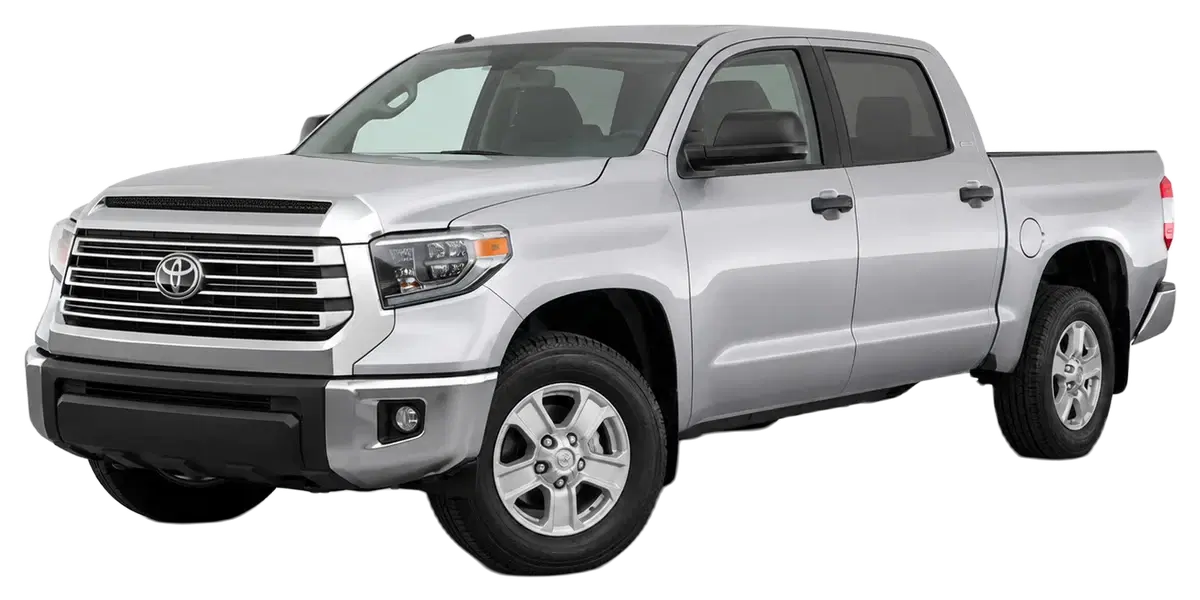
2018 Toyota Tundra alternator replacement: parts and labor
Labor runs $220 to $450 (the job takes 1 to 3 hours at typical independent-shop rates), and the alternator itself typically costs $190 to $400 for the 2018 Toyota Tundra, plus $15 to $40 in shop supplies and battery service (terminal cleaning. Prices updated October 2026.
| Engine | Parts | Labor | Estimated total |
|---|---|---|---|
| 4.6L V8 | $190 to $380 | $220 to $450 (2.0 to 3.0 hrs) | $425 to $870 |
| 5.7L V8 | $200 to $400 | $220 to $450 (2.0 to 3.0 hrs) | $435 to $890 |
Coverage note: No powertrains are excluded: every 2018 Tundra trim carries one of these two V8s, and the flex-fuel 5.7L (3UR-FBE) uses the same alternator as the standard 5.7L so it is covered by that row.
A Toyota dealer installs the genuine Denso unit (27060-0S030 base, $465.55 list; 150-amp 27060-0S020 higher) at door rates of $150 to $200 per hour, frequently on the radiator-out book procedure, which is why documented dealer quotes on this platform run $1,000 to $1,600 versus the independent range above. The premium buys the OEM label, not different hardware; Denso is the original supplier either way.
Where these numbers come from
- Estimate ranges: a hand-verified research pass for this exact vehicle and repair, cross-referenced across 12 independent sources (parts retailers, labor guides, and published shop pricing), completed September 2026.
- Recall and complaint data: NHTSA (National Highway Traffic Safety Administration) records for the 2018 Toyota Tundra specifically, filtered to charging system relevance and refreshed daily from the federal API.
- Local prices: real, accepted quotes from verified Fixxr marketplace jobs, published per metro once five verified jobs of this type have closed. Never estimates dressed up as transactions.
Not included in the estimate: Charging-system diagnosis and testing time (typically 0.5 hr or a flat $50 to $150 if you skip the parts-store free test), Serpentine belt, idler, and tensioner pulleys commonly replaced at the same time, Battery replacement or recharge if the failing alternator killed it, Taxes, shop supply fees, and the $30 to $50 core charge if the old unit is not returned, Towing if the truck died on the road.
What actually goes wrong on this exact vehicle
Federal safety data for the 2018 Toyota Tundra, filtered to the charging system specifically.
0
charging system recalls
2
charging system owner complaints
Real owner report, verbatim from NHTSA:
“I PURCHASED A 2018 TOYOTA, TUNDRA TRUCK IN 1/2018. ON 3/5/19 AT APPRX 8 AM. I ASSUME AN ELECTRICAL FIRE STARTED BENEATH THE CENTER CONSOLE. WHILE AT A STANDSTILL, ON MY DRIVEWAY, AROUND 8 AM, A FIRE STARTED INSIDE THE TOYOTA.THE FIRE COULD NOT BE EXTINGUISHED WITH WATER AND CONTINUED TO GROW AND ONLY AFTER A FIRE EXTINGUISHER WAS USED WAS THE FIRE EXTINGUISHED. THE FLAMES HAD CONSUMED THE PLASTIC IN THE CENTER CONSOLE TO THE AUTOMATIC GEAR SHIFT. THE FIRE HAD RUN ALONG THE SAME PATH THAT THE WIRE RUN WHICH COULD BE VISUALLY SEEN. WE TRIED TO MOVE THE VEHICLE A DISTANCE FROM A BUILDING BUT COULD NOT SHIFT IT FORWARD ONLY BACKWARDS. WE CONTACTED OUR INSURANCE AND AFTER INSPECTION THEY DETERMINED IT WAS AN ELECTRICAL FIRE. THERE HAS BEEN NO AFTER MARKET ADDITIONS TO THIS VEHICLE. WE CONTACTED TOYOTA AND THE VEHICLE WAS TOWED TO THE DEALERSHIP ON3/8/19. A CLAIM WAS FILED WITH TOYOTA (#[XXX]) THEREAFTER. IT IS NOW MAY 2018 AND TO DATE WE DO NOT HAVE OUR CAR BACK NOR KNOW OF THE STATUS OF OUR CLAIM. AS AN FYI THE TRUCK WAS SERVICED ON 8/2018 AND THEY ADVISED US THAT THEY HAD TO REPLACE THE TRUCK BATTERY WITH A BRAND NEW BATTERY ON THIS SAME NEW CAR - SOMETHING ABOUT NOT KEEPING THE CHARGE. THE FIRE WAS ON 3/5/19 AND IT IS NOW 5/3/19 AND WE HAVE NOT BEEN ADVISED ON THE STATUS OF THE VEHICLE. ON ONE OF THE PHONE CALLS I WAS ADVISED THAT IT WAS AT PRODUCT LIABILITY. ONE MY PHONE CALL TODAY THEY DID NOT KNOW WHEN I WOULD HAVE MY TRUCK BACK OR THE OUTCOME OF THE INVESTIGATION. THE TRUCK'S APPROXIMATE MILEAGE WAS 20K. I WAS ADVISED BY MY STATE'S AG THAT I WAS OBLIGATED TO REPORT THIS INCIDENT TO YOU. I WOULD LIKE ANSWERS AND I WOULD LIKE MY 2018 TOYOTA AS IT SHOULD BE. INFORMATION REDACTED PURSUANT TO THE FREEDOM OF INFORMATION ACT (FOIA), 5 U.S.C. 552(B)(6). *TT”
Get the failure confirmed with a real diagnosis before you approve the repair, so you fix the part that actually failed.
Recall fixes are free at the dealer. Everything else deserves a fair price.
Source: NHTSA (National Highway Traffic Safety Administration), recalls and complaints for the 2018 Toyota Tundra. Refreshed periodically.
Not sure what’s wrong?
A battery light or a car that dies while driving can be the alternator, the battery, or the wiring. Describe what your car is doing and our free diagnostic tool narrows it down before you spend a dollar.
Diagnose it freeKnow what you need?
Post your alternator replacement to the marketplace and get connected with local mechanics. Real repair offers for your Tundra, free, with no phone calls to make.
Get connected with a mechanicHow your charging system works
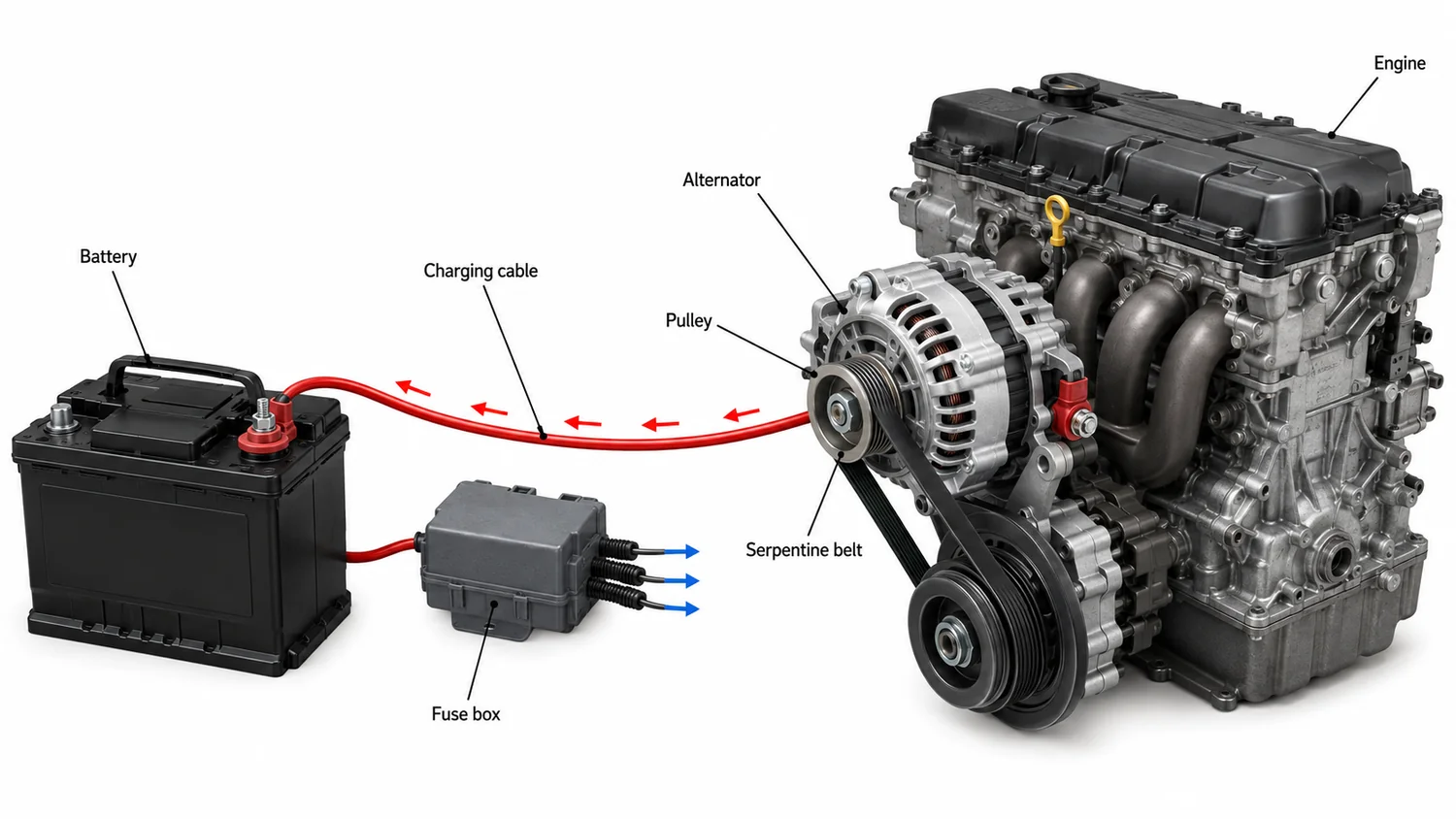
The battery starts your 2018 Toyota Tundra; the alternator runs it. Once the engine is on, a belt spins the alternator and it generates the electricity for everything, headlights, computers, ignition, while recharging the battery for the next start. When the alternator quits, the car drains the battery and dies, which is why a bad alternator so often gets misdiagnosed as a bad battery.
Four signs it’s the alternator, not the battery
Battery light while driving
The charging system stopped keeping up. The battery is now running the car alone.
Lights dim at idle
Headlights or dash brighten with revs and dim at a stop. Classic weak-alternator output.
Whine or growl up front
A failing alternator bearing gets noisy before it dies. The pitch rises with engine speed.
Dead battery, again
A new battery that keeps dying was probably never being recharged. Test the alternator first.
The two-minute check: with the engine running, voltage at the battery should read roughly 13.5 to 14.5 volts. Low 12s means the alternator is not charging. Most parts stores run this test free.
What an alternator replacement is like on the 2018 Toyota Tundra
The labor number on this truck is all about access, not the swap itself. On both UR-family V8s the alternator hangs low on the passenger side of the block, boxed in by the fan shroud above and the frame beside it. Independent shops use one of two routes: pull the passenger front wheel and fender liner and rotate the alternator out through the wheel well, or work from the top after removing the fan and shroud and loosening the power steering pump. Either way it books around 2 hours and can run to 3 on a rusty or heavily-optioned truck. Dealers often quote the full service-manual route, which pulls the fan, shroud, and radiator, and that is how a 2-hour job becomes a 4-hour, four-figure estimate.
Amperage matters when ordering the part. The base alternator is 100 amps (Toyota part 27060-0S030, MSRP $465.55, commonly $305 to $410 from online dealer parts counters), but 130-amp and 150-amp versions exist, and most 5.7L trucks with the tow package run the 150-amp unit (27060-0S020). RockAuto lists all three amperages for both the 4.6L and 5.7L, so the part is shared across engines; what changes the price is the amp rating, not the displacement. Denso built the original, and Denso-internals WAI and Denso reman units in the $200 to $270 range are the closest match to OE quality without paying dealer money.
This is not a pattern failure on the 2007-2021 Tundra platform. There are no recalls or charging-system TSBs on the 2018 truck; owner reports cluster around 140,000 to 190,000 miles, with brushes, the voltage regulator, or bearings aging out rather than a design defect. Watch for the classic tells: battery warning light, headlights dimming at idle, a whine that rises with RPM, or a battery that keeps dying after being charged. Because the symptoms overlap with a failing battery, insist on a charging-system test before buying an alternator.
Forum-documented dealer quotes on this generation run $1,000 to $1,600 or more, while the honest independent math above lands at roughly $425 to $890. The entire gap is explained by two line items: a genuine Denso unit billed at or near the $465 list price instead of a $200 to $400 quality aftermarket part, and the radiator-out book procedure at a $150 to $200 door rate instead of the wheel-well shortcut every experienced Toyota tech uses. Neither buys you a better repair; the aftermarket Denso reman is largely the same hardware rebuilt by the same supplier.
While the truck is open, the serpentine belt is a five-minute add. One belt drives everything on these V8s, and the belt, idler, and tensioner pulley all have to come off or swing aside for the alternator anyway, so a $20 to $40 belt installs for near-zero extra labor. Shops that pull the shroud will also often suggest inspecting the water pump weep hole while sight lines are clear; that is legitimate on a 100,000-plus-mile truck, but it is an inspection, not an automatic replacement.
Estimate note: these are researched independent-shop ranges, not a guaranteed quote. The only exact number is one from a shop that has seen your car.
Frequently asked questions
How much does a 2018 Toyota Tundra alternator replacement cost?
A 2018 Toyota Tundra alternator replacement typically runs $425 to $890 at an independent shop, parts and labor included. The alternator itself is $190 to $400, labor makes up most of the rest, and the job takes 1 to 3 hours.Why does the price change with the engine?
The 2018 Toyota Tundra came with more than one engine, and they do not share the same part or the same access. A tighter engine bay or extra teardown adds labor hours, and the part price moves too. Sites that show one national number flatten that out. Pick your engine on the estimate above for a closer figure.How do I know if it's the alternator or the battery?
A battery that only cranks weakly on startup but runs fine afterward is usually the battery. A battery or charging warning light while driving, headlights that dim at idle, or a car that dies while running points at the alternator. The clean test is voltage at the battery with the engine running: roughly 13.5 to 14.5 volts means the alternator is charging, low 12s means it is not. Most parts stores will test both for free, so confirm before buying either part.Can I drive my Toyota with a bad alternator?
Only briefly. Once the alternator stops charging, the car runs off the battery alone, and depending on its charge and what is switched on you may get 30 minutes to an hour before the Toyota dies, possibly in traffic. Turn off everything you can spare and drive straight to the shop, or have it towed if the warning light has been on a while.How long does an alternator last?
Most factory alternators last roughly 100,000 to 150,000 miles, or 7 to 12 years. Heat, short-trip driving, and heavy electrical loads shorten that. The usual failures are worn brushes, a failing voltage regulator, or a noisy bearing, and the fix is replacement rather than repair on nearly all modern units.Are there recalls on the 2018 Toyota Tundra?
Yes, NHTSA lists 9 recalls for the 2018 Toyota Tundra. Recall repairs are done free of charge at a franchised dealer for that brand, so it is worth checking your VIN before paying a shop for related work.
More 2018 Toyota Tundra repair costs
Related charging system repairs
You deserve a fair fix.
Tell us what is wrong. A verified mechanic comes to you.