


The split is simpler than it sounds: an auto body shop fixes what an impact did to your car, panels, bumpers, frame, paint, glass, while a mechanic fixes what wears out or breaks underneath, engine, brakes, suspension, electrical. Bent metal goes to the body shop; a noise, a leak, or a warning light goes to the mechanic. And when a crash does both, the body shop runs the job and brings in the mechanical work.
Costs on the body side have their own logic, and it's worth knowing before a fender-bender or a runaway shopping cart forces the question. The average repairable collision claim now runs about $4,768 (CCC Intelligent Solutions, the collision industry's main claims-data source), a record 23.1% of damaged cars get totaled rather than fixed, and, the stat that surprises everyone, the mechanical labor on a collision estimate is now posted at $163 an hour, nearly double the $86 an hour posted for body labor (both from NABR's index of shop asking rates, insurer-negotiated rates typically run lower). Here's who does what, what the common jobs cost, and what your rights are when an insurance company is steering the ship.
Dealing with a mechanical repair instead? The repair cost calculator prices those jobs for your exact year, make, and model in about thirty seconds.
What Does a Body Shop Actually Do?
Body shops (also called collision centers) handle everything about how the car is shaped and finished: straightening or replacing panels, pulling frames back to spec on dedicated equipment, replacing bumper covers, matching and spraying paint in a controlled booth, and replacing glass. The trade splits into its own specialties, body labor, refinish (paint) labor, and frame labor each carry different rates, and increasingly includes a fourth: recalibrating the cameras and radar behind your windshield and bumpers. Over 28% of collision estimates now include an ADAS calibration (CCC), which is why even a "simple" bumper job on a newer car carries an electronics line item.
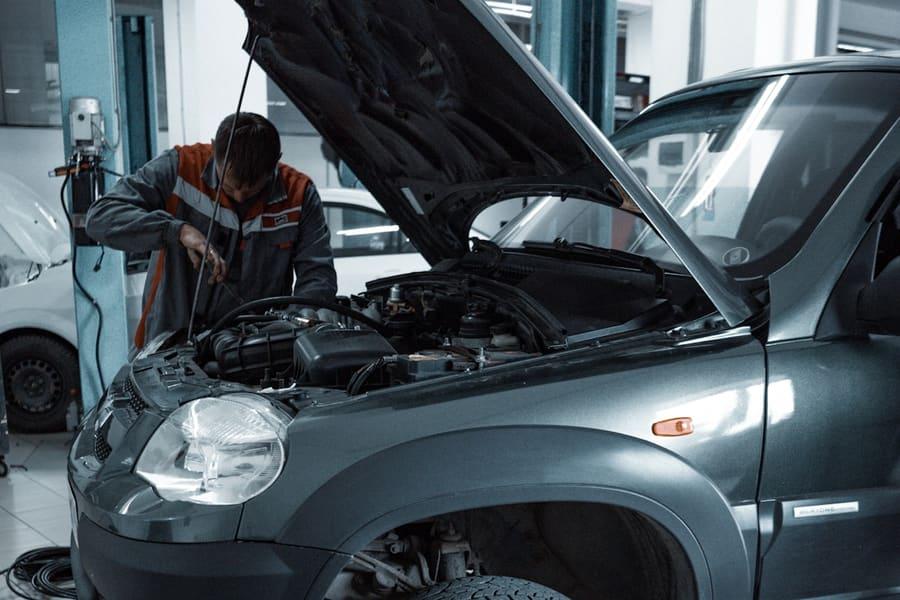
Mechanical shops, by contrast, live in diagnosis and function: why it won't start, why it shakes, why the light is on. The overlap case is the crash that bends a control arm or cracks a radiator, the body shop quarterbacks it, and the mechanical work either happens in-house or gets sublet. That's exactly where that $163-an-hour posted collision-mechanical rate comes from, and it's climbing twice as fast as body labor.
What Do Common Body Repairs Cost?
| Repair | Typical 2026 cost | Notes |
|---|---|---|
| Paintless dent repair (PDR), door ding | $100 to $350 | Paint must be intact; usually same-day |
| PDR, medium dent (3 to 6 inches) | $200 to $450 | Access from behind the panel required |
| Bumper scuff/crack repair + repaint | $150 to $600 | Up to ~$800 with heavy filling and full respray |
| Bumper replacement, painted and installed | $500 to $2,000 | $1,200 to $3,500+ with sensors or on luxury models |
| Single panel repaint (door, fender, hood) | $400 to $1,200 | Includes blending into adjacent panels |
| Windshield replacement | $350 to $1,500 | Camera-equipped glass sits at the top |
| ADAS recalibration (often after glass or bumper work) | $150 to $600+ | ~$300 is a common single-sensor figure |
These are broad national figures from body-shop and industry guides, and body work genuinely varies more than mechanical work, paint blending, hidden damage found after teardown, and parts availability all move the number. That's also why body shops quote after seeing the car, not over the phone.
Is Paintless Dent Repair Too Good to Be True?
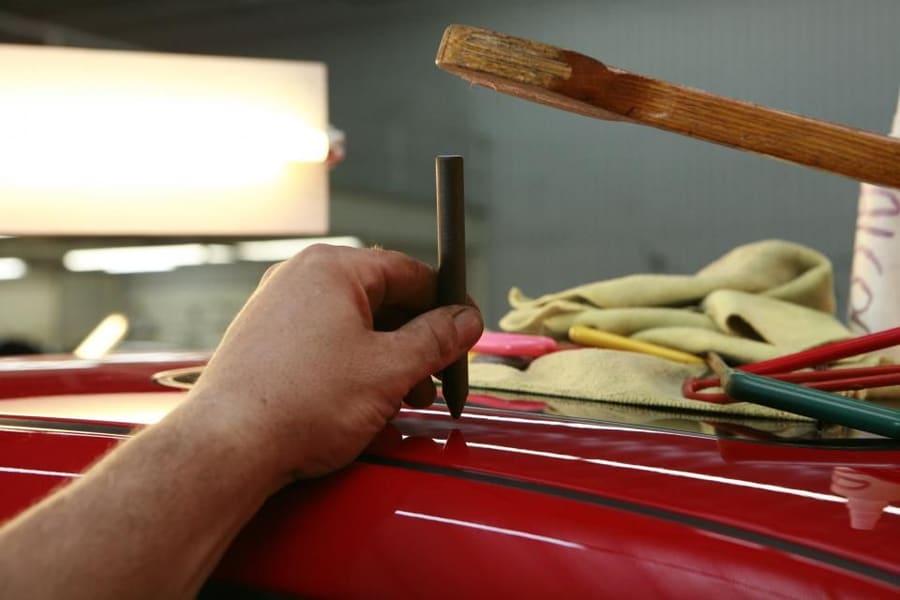
PDR is the real thing within its limits, and it's the first question to ask about any dent. A technician works the metal back from behind the panel with no filler and no paint, which preserves the factory finish, typically runs 50 to 70% less than conventional repair, and often finishes the same day instead of over several days.
Where the two camps honestly differ: PDR specialists will tell you most dents qualify; traditional body shops counter that PDR has real limits. Both are right. PDR needs intact paint, access behind the panel, and a dent that isn't on a body line or stretched too far, and a failed PDR attempt on the wrong dent can crack the clearcoat and force the conventional repair anyway, now at full price. The honest test: if the paint is broken, PDR is off the table; if the paint is perfect and the dent is shallow and away from edges, get a PDR quote before a body-shop quote.
What Are Your Rights When Insurance Is Paying?
Three things every source, including the insurer-friendly ones, agrees on:
- You choose the shop. In every state, the insurance company can recommend a shop from its direct repair program (DRP), but it cannot require you to use one or refuse to pay because you went elsewhere. Some states write this into statute explicitly.
- A DRP shop isn't automatically bad. Direct-repair shops get pre-negotiated rates and faster claim approval, that's real convenience, and the work is typically guaranteed through the insurer. The trade-off critics point to is that the pre-negotiated pricing leaves those shops less room, so ask the same line-item questions there you'd ask anywhere.
- The parts question is where to pay attention. Insurers often specify aftermarket body parts; IIHS crash testing found cosmetic aftermarket parts performed equivalently, while a CAPA study found many non-certified aftermarket parts miss OEM fit and spec. The practical consensus: cosmetic panels in aftermarket are usually fine, but anything structural or ADAS-related deserves OEM, and you can ask what's on the estimate line by line.
One more expectation-setter: shops quote a bumper at a day or two, but the measured average collision repair keeps a car in the shop about 15.5 days (Enterprise's rental-length data). The gap is parts backorders, calibration scheduling, and insurer approval loops, ask the shop what's driving the timeline on yours before you're surprised by it.
When Is a Car "Totaled", and Why Does It Happen So Often Now?
An insurer totals a car when repair cost approaches its market value, and it's now happening to nearly one in four damage claims, a record. The math has two drivers: almost half the vehicles in repairable claims are seven-plus years old (lower value), while sensor-laden bumpers, camera-equipped windshields, and $600 calibrations push repair costs up (higher bills). A $4,500 repair on a $6,000 car doesn't pencil.
If your older car takes cosmetic damage you'd rather not claim, that's exactly when the cheap end of the table above matters, a $250 PDR or a $400 bumper repaint out of pocket can be smarter than a claim that flirts with a total-loss decision on a car you like.
Where Do You Find the Right Shop in North Carolina?
For the mechanical side, that's what Fixxr does: mobile mechanics who come to you across Charlotte and the Raleigh area, at local labor rates of $90 to $135 an hour that run below the national band. Our guide to finding a mechanic you can trust applies almost word-for-word to body shops too: itemized estimates, willingness to show you the damage, and a bill that matches the approved quote.
For body work, add three body-specific checks: ask whether the shop is certified by your car's manufacturer (many makes certify collision shops on their structural procedures), ask how ADAS calibration will be handled and by whom, and ask whether the estimate uses OEM or aftermarket parts on each line. A shop that answers all three plainly is a shop you can leave the car with.
And whichever side of the line your problem falls on, the estimate check works the same: run it through Fixxr's quote scanner at is my quote fair, snap a photo, and in about a minute your diagnostic reads the line items against real pricing for your vehicle. Crashes are stressful and the claims process is nobody's hobby, but the repair itself follows knowable rules and knowable prices. Know them, and you're the informed party in every conversation that follows. You deserve a fair fix.