


For most repairs on an out-of-warranty car, an independent mechanic will do the same work for roughly 25 to 40% less than a dealership. The dealer is the right choice for recalls, warranty repairs, and jobs that need factory software or brand-specific tools, and under federal law, using an independent shop cannot void your warranty.
That's the short version. The longer version matters because this decision comes up again and again over a car's life, and the right answer changes as the car ages. In North Carolina the math is concrete: independent shops in Charlotte bill roughly $90 to $130 an hour and the Raleigh-Durham Triangle runs $95 to $135, while dealership rates commonly sit at $150 to $250, luxury brands at the top or above it. Here's what that gap actually buys, where dealerships genuinely earn their premium, and what the law says about your warranty rights.
Want your number first? The repair cost calculator prices this job for your exact year, make, and model in about thirty seconds, then come back for what's behind the number.
How Much More Does a Dealership Charge Than an Independent?
On a complete repair bill, the difference is often 25 to 40%, and it isn't just the hourly rate. Dealers almost always install OEM parts at full retail markup, while an independent can offer you a choice between OEM and quality aftermarket parts, which often changes the bill as much as the labor rate does.
| NC independent shop | Dealership | |
|---|---|---|
| Labor rate | $90 to $135/hr | $150 to $250/hr |
| Front brake pads + rotors (per axle) | $260 to $570 | $400 to $800 |
| Parts options | OEM or quality aftermarket, your call | Almost always OEM at retail markup |
| Typical total bill | Roughly 25 to 40% higher on common repairs |
To be fair to dealers: that premium buys real things. Factory-trained technicians, brand-specific tooling, software subscriptions, and big facilities all cost money. The dealership isn't scamming you by charging more, it has a genuinely more expensive cost structure. The question is whether the repair in front of you actually needs any of that. Most of the time, it doesn't. Our cost guides show what common repairs run at local independent rates, so you can see the gap job by job.
Can an Independent Mechanic Void My Car's Warranty?
No. The federal Magnuson-Moss Warranty Act makes it illegal for a manufacturer to void your warranty or deny a claim simply because an independent shop did your maintenance or repairs, or because you used aftermarket parts. If a service advisor implies you "have to" service the car at the dealer to keep the warranty, that's false, and the FTC, which enforces the law, has said so directly.
There are only two real exceptions. A manufacturer can require you to use its service or parts if it provides them free of charge. And it can deny a specific claim if it can prove that an aftermarket part or improper work actually caused the failure, the burden of proof is on them, not you. The FTC has taken action against companies (including Harley-Davidson) for warranty language that claimed independent repair or third-party parts would void coverage.
The practical takeaway: service wherever you like, but keep your receipts. Records showing the right fluids, the right parts, and on-schedule intervals are what win a warranty dispute if one ever comes up.
When Is the Dealership Actually the Right Call?
The dealership is the right call when the work is free, when it's warranty-covered, or when it needs tools and software only the factory network has. That covers more situations than dealer skeptics like to admit:
- Recalls. Recall repairs are always free and only dealers can perform them. You can check your VIN for open recalls in about a minute on our recall lookup.
- Warranty repairs. If a failure is covered under your factory or powertrain warranty, the dealer fixes it for $0. Paying an independent for covered work is just donating money.
- TSBs and goodwill. Dealers apply factory fixes from technical service bulletins directly, and they can sometimes get the manufacturer to cover a known problem even slightly past the warranty period. Independents can't submit goodwill claims.
- Factory software and security functions. Certain module reprogramming, key and anti-theft work, and calibration updates are dealer-exclusive or gated behind subscriptions many small shops don't carry.
- New-tech problems. High-voltage EV and hybrid issues on newer models, and genuinely hard-to-diagnose faults on cars only a year or two old, often go faster at a dealer that sees that exact platform every day.
When Is an Independent Shop the Better Choice?
An independent shop is usually the better choice for almost anything on an out-of-warranty car, brakes, suspension, oil and fluid services, batteries, alternators, water pumps, cooling systems, and most engine and electrical work. Consumer Reports' repair-shop surveys have consistently found that car owners rate independent shops higher than dealerships on satisfaction and price.
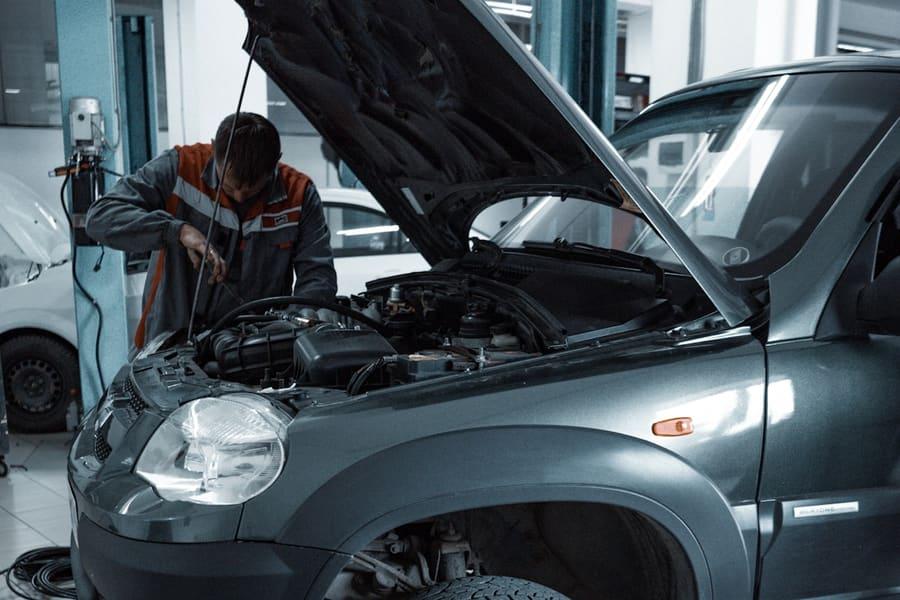
There are softer advantages too. At a good independent, the same technician may work on your car for years, which means someone actually remembers its history. You get a straight conversation about what needs fixing now versus what can be watched. And plenty of independent techs are former dealer techs with ASE certifications and scan tools that cover most brand functions, the skill gap people assume often isn't there. Most shops in this state are small businesses that live on repeat customers and word of mouth; the Charlotte and Raleigh pages list verified local shops along with the labor rates they actually work from, and if getting to a shop is the hard part, mobile mechanics in Charlotte come to your driveway for a long list of common jobs.
Is It Serious, or Can It Wait While You Shop Around?
Treat anything safety-related or warranty-deadline-related as serious; treat routine wear on an out-of-warranty car as something you can take a week to price out.
Serious, act now, usually at the dealer: an open safety recall (airbags, brakes, fire risk, it's free, go), or a covered symptom showing up close to your warranty's expiration. Get that second one documented at the dealer before the clock runs out, even if the fix comes later. And any true safety symptom, grinding brakes, steering wander, overheating, needs a shop this week, whichever kind you choose.
Can wait while you compare: maintenance services, brake pads that are worn but not metal-on-metal, aging shocks, slow leaks, noises that haven't changed in months. A few days of quote-shopping on jobs like these routinely saves hundreds of dollars and costs you nothing in risk.
How Do You Decide, Step by Step?
- Run your VIN for open recalls. Recall work is free at any dealer, no matter where you normally service.
- Check your warranty status, basic and powertrain. If the repair is covered, go to the dealer and pay nothing.
- Out of warranty? Get a written, itemized estimate from an independent shop. For anything over a few hundred dollars, get two.
- Vet the shop: ASE certifications, their parts policy (OEM vs aftermarket), and a written workmanship warranty, 12 months/12,000 miles is the floor; 24/24 is common at good shops.
- Compare estimates line by line, parts and labor hours, not just the totals. A cheaper total with vague line items isn't actually cheaper. Multiply the quoted hours by the shop's rate, $90 to $135 at NC independents, and see if the labor line adds up.
- Test a new shop with a small job, an oil change or brake inspection, before handing it a $2,000 repair.
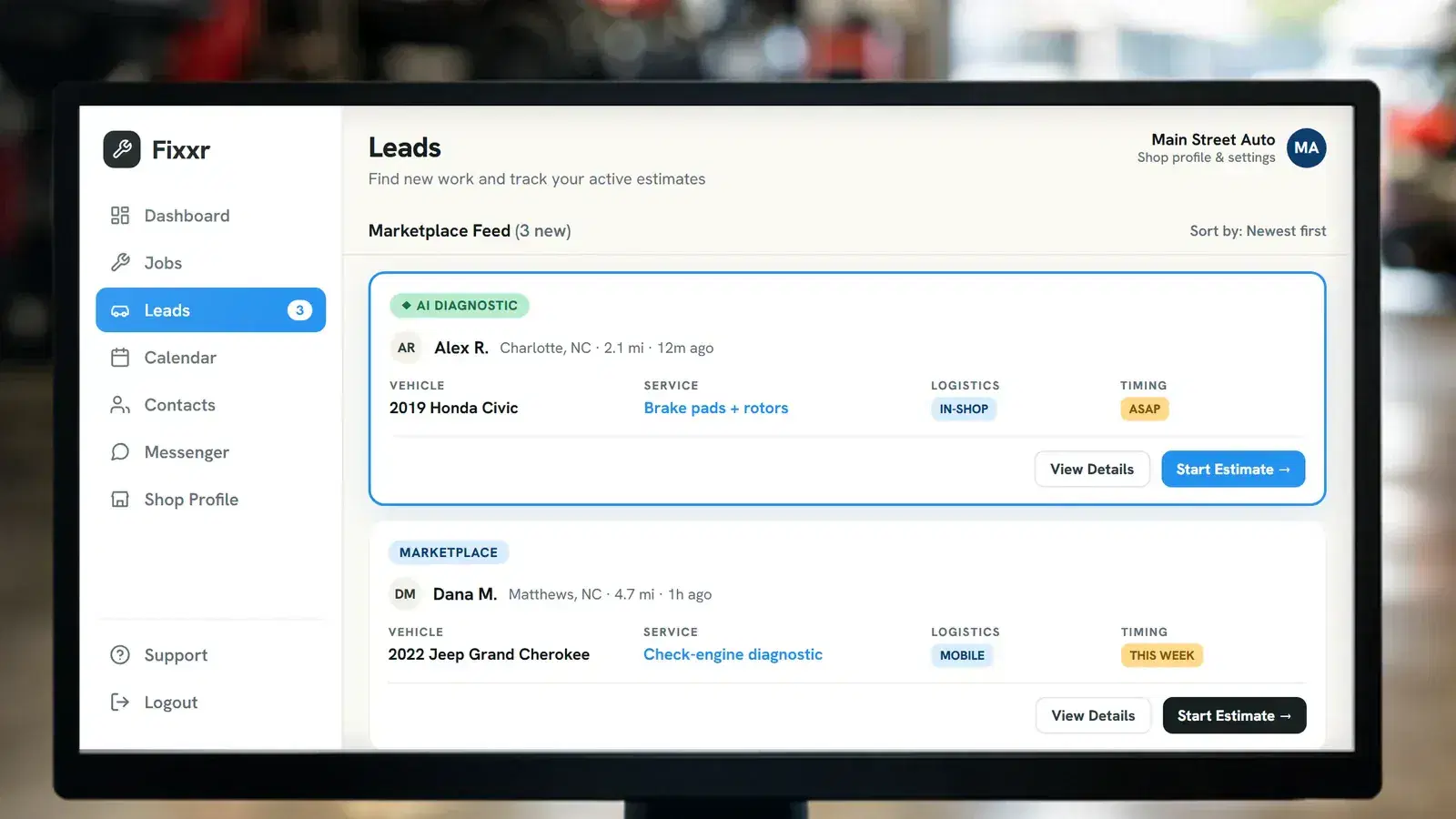
That comparison step is where most people get stuck, because an estimate full of part numbers and labor lines is hard to judge on your own. It's the exact problem Fixxr's quote scanner was built for: snap a photo of any estimate, dealer or independent, at is my quote fair, and in about a minute your diagnostic gives you a line-by-line read on which charges sit in the normal range for your car in your part of North Carolina, and what to ask before you approve the work.
There's no team to pick here. Dealers and good independents both fix cars properly, they just make sense at different moments in a car's life. Your warranty is protected by federal law wherever you service, recalls are always free, and for everything else, a written estimate and ten minutes of comparison put you back in control of the bill. You deserve a fair fix.