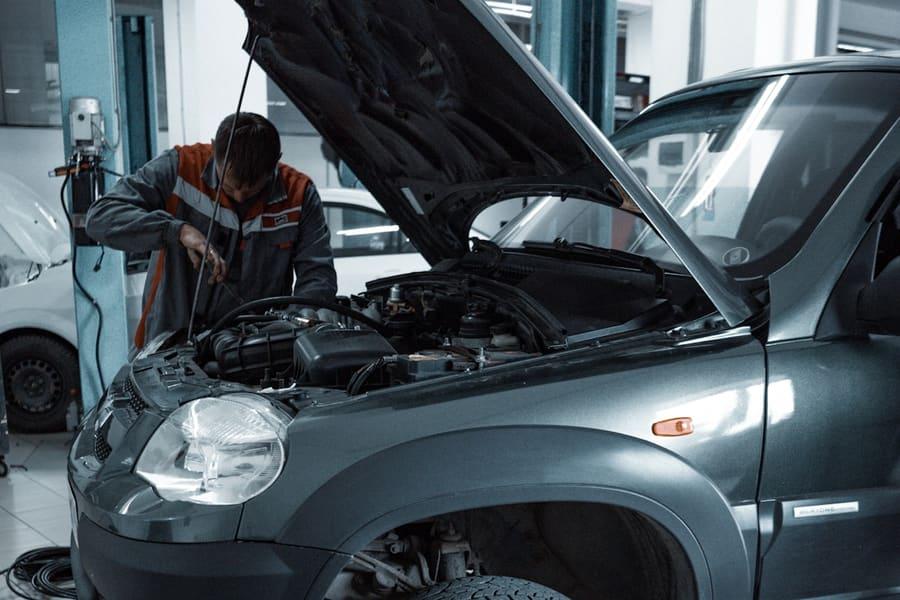



Straight answer: yes, but almost never by turning wrenches on a normal flat-rate job. The Bureau of Labor Statistics puts the median annual wage for automotive service technicians and mechanics at $50,620, with the highest 10% earning more than $81,790 and the lowest 10% under $34,660. A $200,000 year sits far outside that distribution. Every technician who gets there does it by adding something to the wrench: a scarce specialty, a business they own, or a production rate at a high-dollar shop that very few people can sustain.
That is the honest version, and it is worth understanding whether you are considering the trade or just trying to figure out why your repair bill looks the way it does. The two questions turn out to be the same question.
Curious what shops actually charge? The repair cost calculator prices a specific job for your exact year, make, and model in about thirty seconds, and it makes the labor side of this article concrete.
What Mechanics Actually Earn
| Tier | Typical annual earnings |
|---|---|
| Lowest 10% of technicians (BLS) | under $34,660 |
| Median technician (BLS, all technicians) | $50,620 |
| Top 10% of technicians (BLS) | above $81,790 |
| Strong flat-rate tech at a high-rate dealership | roughly $90,000 to $130,000 |
| Master tech with a scarce specialty (diesel, EV, heavy diagnostics) | roughly $100,000 to $150,000 |
| Independent shop or mobile business owner | highly variable, $0 to $250,000+ |
| $200,000 as a W-2 technician | rare enough to be a story, not a plan |
Three honest notes on that table:
- The BLS numbers count everyone, including entry-level lube techs and tire installers in their first year. They pull the median down and they are why "mechanics make $50K" and "my buddy clears $120K" are both true statements about different people.
- The tiers past the top 10% are estimates from how flat-rate pay works, not survey figures. Anyone quoting you a precise national average for "master diesel tech" is guessing. The structure is reliable; the exact number is not.
- Owner income is the only row with real $200K upside, and the only row that can go negative. A shop owner takes home what is left after rent, payroll, insurance, and equipment. Some years that is excellent. Some years it is less than the techs made.
Why the Median Is $50K but the Ceiling Is Higher
Because most technicians are not paid by the hour. They are paid flat rate, and understanding it from the technician's side explains almost everything about this trade, including your bill.
Every job has published book hours: a starter might book at 2.0 hours on a given vehicle. The shop bills you 2.0 hours. The technician is paid for 2.0 hours of production, whether the job took 90 minutes or three and a half hours. Beat the book consistently and you can bill 50 or 60 hours of production in a 40-hour week. Lose a day to a seized bolt, a wrong part, or a car that will not reproduce its fault, and you can work 40 hours and get paid for 25.
That structure has three consequences worth knowing:
- It rewards speed and tooling. A tech who has invested in the right tools and knows the platform cold genuinely produces more. That is skill being paid for, not a shortcut.
- It punishes hard diagnosis. Chasing an intermittent electrical fault can eat a full day and produce almost no billable hours. This is exactly why the trade struggles to keep good diagnostic techs, and why the diagnostic fee on your bill is not a padded line. It is the only way that work gets paid for at all.
- Slow periods hurt immediately. No cars in the bays means no production, and flat-rate pay does not care that it was not the tech's fault.
The path to a big year is mostly the path to consistent high production: a busy shop, a high posted rate, work you know well, and the tools to do it fast.
The Five Routes That Actually Get There
If someone is clearing $150,000 or more in this trade, it is almost always one of these:
- Own the business. The biggest jump in this trade is from being paid for your hours to being paid for other people's hours. It also means signing a lease, making payroll, and carrying liability. This is the only route with real $200K-plus headroom, and it is a different job than being a mechanic.
- Go mobile or independent. No building, no lobby, no bay rent. Mobile mechanics typically quote roughly $80 to $120 an hour and keep far more of it, and they can start with a van and a tool inventory rather than a mortgage. The ceiling is lower than a multi-bay shop because you are still the only pair of hands, but the overhead is a fraction and the startup cost is realistic for a working tech.
- Specialize where nobody else can. Diesel, heavy-duty, European, transmission rebuilding, and increasingly high-voltage EV and hybrid work. Scarcity sets the price. A shop that can do a hybrid battery module repair when the alternative is a $6,000 pack has pricing power, and so does the tech who can do it.
- Become the diagnostician. Every region has a handful of technicians other shops call when they are stuck, and those people can bill hourly at a premium precisely because the flat-rate system does not reward what they do. Getting there takes years and real investment in scan tools, scopes, and training.
- Move into the adjacent roles. Shop foreman, service manager, field engineer, technical trainer, dealership fixed-operations management. Several of these clear six figures more reliably than the bay does, and they are why experienced techs leave the bay.
What It Costs to Get There
The part career articles skip. Getting to the top of this trade takes real money out of pocket:
- Tools are the technician's expense, not the shop's. A working tech's box is commonly $10,000 to $40,000 or more, accumulated over years. Truck-route financing makes this easy to start and hard to escape, and tool debt is the quiet reason a lot of promising techs leave.
- Training and certification never stop. ASE certifications, manufacturer training, EV safety credentials. Some shops pay, many do not, and the pace of change is accelerating. A tech who stopped learning in 2015 cannot fix a 2024 vehicle.
- The body takes a toll. Concrete floors, awkward positions, heat, cold, and weight. It is a physically expensive career, and that cost lands in your forties.
- Flat rate means income variance. Two slow weeks are a real financial event when you are paid for production.
None of this is a reason not to do it. The trade has a genuine and growing shortage, the work is real and satisfying, and skilled hands will be needed long after a lot of desk jobs are automated. But "you can make $200K as a mechanic" and "the median is $50,620" are both true, and only one of them is the default.
Is It Worth It? Honest Thresholds
- If you want a reliable middle-class income without student debt: yes, this trade delivers that, and faster than most four-year paths. Expect the $50K-to-$80K band for the first several years.
- If you want six figures in the bay: possible, but plan on a specialty. General repair alone rarely gets there. Pick diesel, EV, diagnostics, or transmissions early and commit.
- If you want $200,000: plan on owning something. A shop, a mobile operation, or a specialty practice. Accept that this makes you a business owner who used to be a mechanic.
- If you hate diagnosing things: reconsider. The parts-swapping end of this trade is the end most exposed to pressure. The thinking end is where the durable money is.
- If you are considering it at 40 after another career: it is done all the time, and prior trade or electrical experience transfers better than people expect. Go in with clear eyes about tool cost and the flat-rate learning curve.
Why This Matters If You Are the One Paying the Bill
Here is the connection that makes this article worth reading even if you never pick up a wrench. The technician shortage is the main reason your repair bill went up.
Roughly half of US independent shops now bill $120 to $159 an hour and the national average sits near $132, with only about 6% of shops still charging under $100. A large share of that increase is technician pay, because shops are competing for a shrinking pool of people who can actually diagnose a modern vehicle. At the same time CarMD's 2026 Vehicle Health Index put the average check-engine-light repair at a record $554, with the labor share up 51% in one year.
That is the whole story in two numbers: cars got harder, and the people who can fix them got scarcer. When a shop quotes you $135 an hour, a meaningful piece of that is what it takes to keep a tech who can program a module and read a waveform from leaving for a job with air conditioning. Our guide to how much a mechanic costs breaks the rest of the rate down, and is $100 an hour fair puts your specific quote in context.
What This Looks Like in North Carolina
North Carolina shops bill below the national band. Independents in Charlotte generally run $90 to $130 an hour and the Raleigh-Durham Triangle about $95 to $135, against that $120-to-$159 national survey band. Lower posted rates are good news for drivers and they are also part of the pay picture for technicians here, alongside a cost of living below the coastal metros.
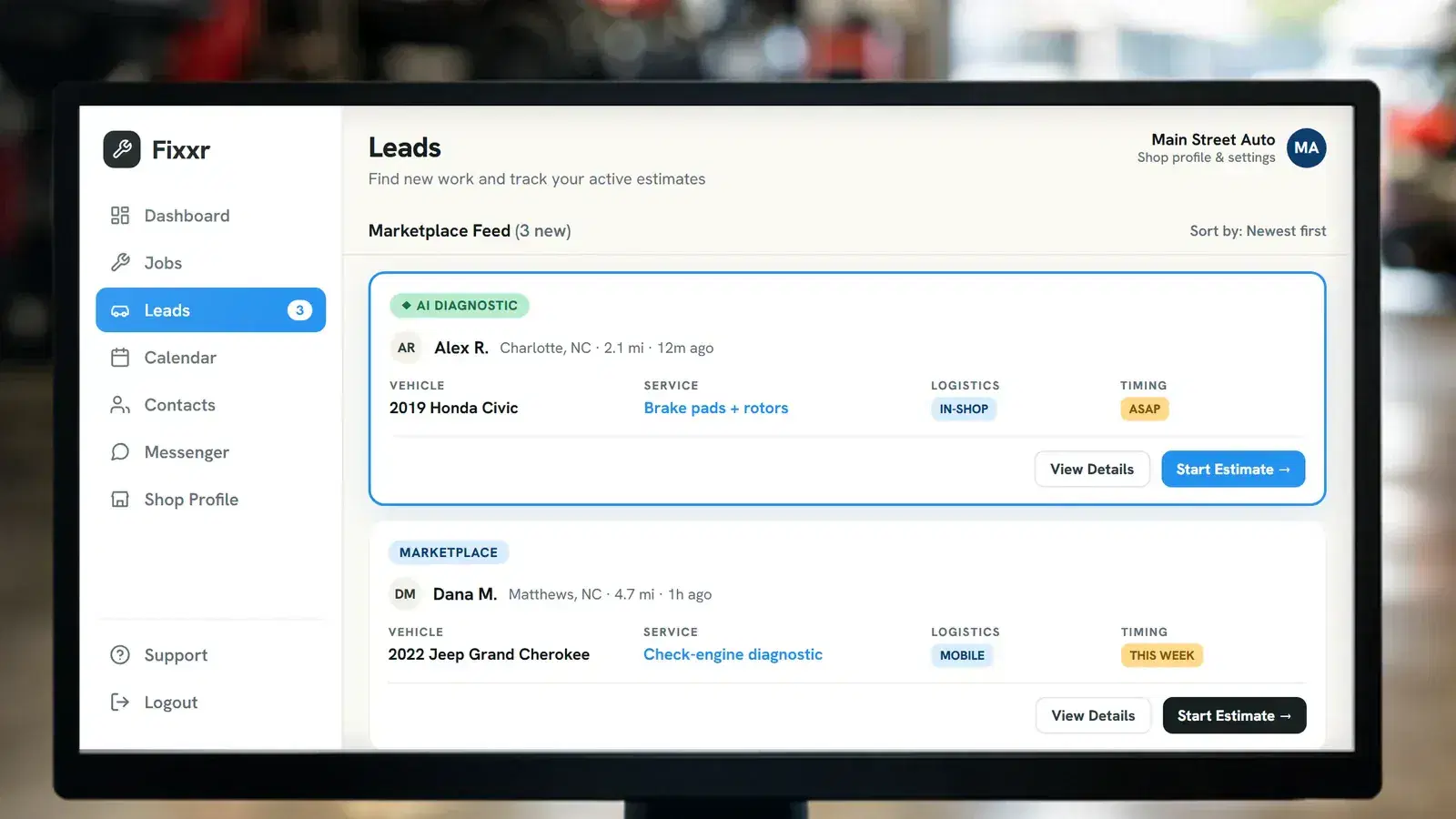
The more interesting local wrinkle is demand. Charlotte and the Triangle are two of the faster-growing metros in the country, which means more cars, more miles, and more need for people who can fix them. For a technician thinking about going independent, that combination of real demand, moderate overhead, and no building required is why mobile mechanic work has grown here. If you run a shop or work independently in North Carolina, Fixxr's shop and pro network is where that side of the marketplace lives.
Every figure in this article is a ballpark rather than a promise, and individual earnings depend on the shop, the market, the specialty, and the year. If you are on the other side of the counter and just want to know whether the bill in your hand is reasonable, run it through Fixxr's quote scanner at is my quote fair. Snap a photo of the estimate, tell us the vehicle, and in about a minute your diagnostic checks the labor hours, the rate, and the parts pricing against real data for your exact year, make, and model in your area. The mechanics behind Fixxr are shop people, and we built this so good technicians get paid properly for real work and drivers can see exactly what they are paying for. You deserve a fair fix.