


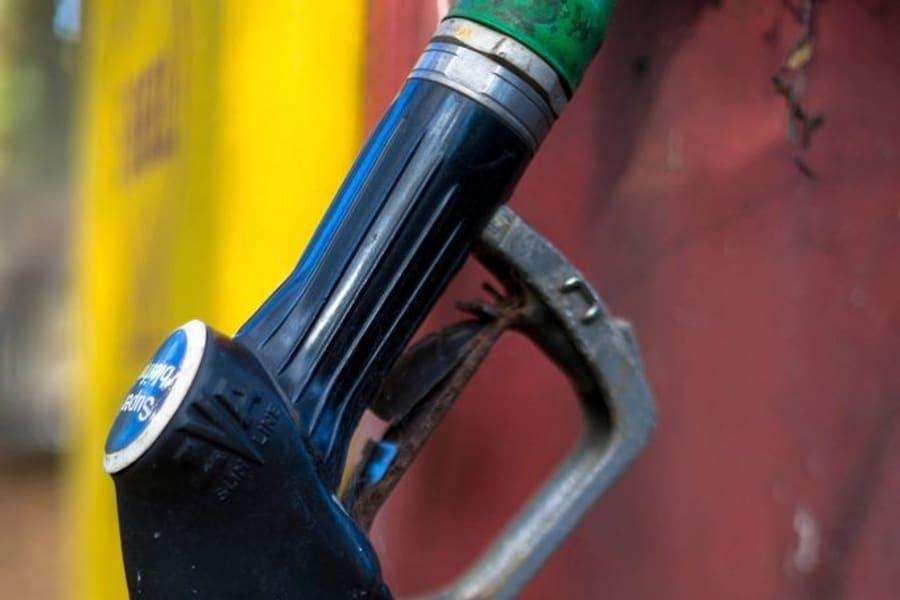
If your car cranks fine but will not start, or starts and stumbles, right after you fill the tank, the most likely cause by a wide margin is a stuck-open EVAP purge valve. It is a small solenoid, it usually costs less than a tank of gas, and once you know the trick, you can confirm it at the pump on your next fill-up with no tools.
Here is why it happens. Every modern car captures the gasoline vapor that would otherwise escape the tank and stores it in a charcoal canister. The purge valve is the door between that canister and the engine. It is supposed to stay shut while the engine is off and open in measured pulses while you drive, so the engine can burn the stored vapor a little at a time. When the valve sticks open, filling the tank pushes a big slug of raw fuel vapor straight into the intake. The engine tries to start on a mixture that is far too rich, and it floods.
That is the ninety-percent answer. The other ten percent is a saturated canister, a weak fuel pump, a tired battery that only shows itself after a hot restart, or bad gas. Most fixes land between $80 and $600, and the common one sits at the bottom of that range. Treat every number here as a ballpark, not a guaranteed quote.
Want your number first? The car repair cost calculator prices this job for your exact year, make, and model in about thirty seconds.
Why Does It Only Happen After Filling Up?
Because filling up is the only time the tank's vapor space changes suddenly. As gasoline goes in, the vapor above it has to go somewhere, and the EVAP system routes it into the charcoal canister. With a healthy purge valve, it stays there until the engine is running and asks for it. With a stuck-open valve, the pressure of the incoming fuel shoves vapor through the open valve into the intake manifold, where it sits waiting for you to turn the key.
Turn the key and the engine gets its normal starting fuel plus a lungful of vapor. Too rich, no start. Crank it a few more times, or hold the throttle down, and enough air gets in to clear it. Then the car runs fine until the next fill-up, which is exactly the pattern that makes people think they are imagining it.
Two clues make it almost certain:
- It is worse when you top off. Squeezing extra fuel in after the nozzle clicks forces liquid gasoline into the canister, which is much worse than vapor. Cars with a saturated canister will hard-start after every fill and may throw an EVAP code.
- Holding the gas pedal to the floor while cranking makes it start. On nearly every fuel-injected car, wide-open throttle during cranking tells the computer to cut fuel, a built-in "clear flood" mode. If that trick works, the engine was flooded, which points straight at the purge valve.
The Two-Minute Check at the Pump
Next fill-up, do this before you put the nozzle in.
- Start the car first, then shut it off. Note that it started normally.
- Fill the tank and stop at the first click. Do not top off.
- Try to start. If it stumbles or will not catch, you have reproduced the problem.
- Hold the accelerator all the way to the floor and crank again. Do not pump it. If it fires, that is the clear-flood mode working and a flooded engine confirmed. Let off the pedal the moment it catches.
- Listen and smell. A strong raw-fuel smell at the engine, or an intake that sounds like it is gulping, both point at vapor in the manifold.
If the car cranks and starts normally after a fill but is hard to start at other times, particularly when the engine is hot, you are probably looking at a different problem, and our guide to why a car won't start walks through clicking, no-crank, and crank-no-start one at a time.
What Else Can Cause It?
The purge valve is the usual suspect, but it is worth knowing the rest of the lineup so a shop's diagnosis makes sense to you.
- Saturated charcoal canister. Years of topping off soak the charcoal with liquid fuel. The canister stops doing its job, and the purge valve, even a healthy one, pulls raw fuel into the engine. Often comes with a check engine light and an EVAP code, and sometimes a fuel smell around the car after fill-ups.
- Weak fuel pump. A pump on its way out struggles most when the engine is hot and the tank was just disturbed. The car cranks and cranks, then catches. This one usually shows up at other times too, and gets worse over weeks, not just at the pump. Our rough idle and stalling guide covers the fuel-pressure side.
- Weak battery or corroded terminals. A battery that is fine on a cold morning can sag after a short hot soak at the pump. If the crank sounds slow and lazy rather than normal, the battery is the first thing to test, and it is free at most parts stores.
- Bad gas. Water or contamination from one station on one day. If the problem started immediately after a specific fill-up and never happened before, it may simply be the fuel. It will clear as you burn through the tank.
- A loose or worn gas cap does not cause a no-start on its own, but it will set an EVAP code that can send a shop down the wrong path. Make sure it clicks.
Is It Safe to Keep Driving?
For the purge valve, yes. It is an emissions part, not a safety part. The car runs normally once started. Two things push it up the list:
- A stuck valve will eventually set a check engine light, and in counties that include an emissions check in the annual inspection, an active EVAP code is a failure. Better to fix it on your schedule than the inspection's.
- A saturated canister keeps feeding raw fuel into the engine every time the valve opens. Over time that can foul plugs and wash oil off cylinder walls. Not an emergency, but not a forever situation either.
A weak fuel pump is the one to take seriously. It does not fail on a schedule, and when it quits, the car stops wherever it is. If the long-crank problem is showing up at times other than fill-ups, get it tested this week.
What Do These Repairs Cost?
Typical parts-plus-labor ranges at independent shops. The fuel pump and battery figures match our researched cost guides. Everything else is a ballpark.
| Repair | Typical price installed | The clue that points here |
|---|---|---|
| Diagnostic (smoke test or scan) | $90 to $150 | Usually credited toward the repair if you proceed |
| EVAP purge valve (solenoid) | $80 to $250 | Hard start only after fill-ups, clear-flood trick works |
| Charcoal canister | $200 to $600 | Fuel smell after fill-ups, EVAP code, chronic topping off |
| Battery terminal cleaning | $20 to $160 | Slow, lazy crank |
| Battery replacement | $180 to $300 | Slow crank, battery tests weak |
| Fuel pump replacement | $400 to $800 | Long crank when hot, getting worse, not tied to fill-ups |
A few honest notes on reading that table:
- The purge valve is usually a fifteen-minute job. On most engines it sits on top of the intake with one electrical plug and two hoses. The part is inexpensive. If a quote for this lands in the hundreds, ask what else is included. Sometimes the answer is legitimate (a canister on a car that has been topped off for years), and sometimes it is a diagnostic hour that will be credited.
- A smoke test is money well spent when the picture is muddy. The shop fills the EVAP system with harmless smoke and watches where it leaks. It finds cracked hoses and stuck valves that guessing never would, and it is what keeps you from replacing parts one at a time.
- A canister on the same ticket as a valve can be legitimate. If the valve failed because the canister flooded it, replacing only the valve invites the same failure. Ask the shop to show you the canister dripping or weeping fuel. If it is dry, the valve alone may do.
For the same parts-plus-labor breakdown across dozens of other repairs, our cost guides are built the same way.
How to Keep It From Coming Back
The single biggest thing: stop at the first click. The nozzle shuts off because the tank is full. Every extra squeeze pushes liquid fuel toward the canister, and over years that is what kills canisters and gums up valves. It also does nothing useful for range; the last half-gallon sits in the filler neck.
Beyond that, tighten the gas cap until it clicks, replace a cap whose seal is cracked, and treat a check engine light with an EVAP code as a nudge rather than a nuisance. These are among the cheapest systems on the car to keep healthy.
What to Ask the Shop
- "Did you confirm the purge valve, or is it a guess?" A good answer involves a scan tool commanding the valve and watching it, or a vacuum test showing it does not seal. Both take minutes.
- "Is the canister wet?" If they recommend a canister, this is the question that justifies it.
- "Will the diagnostic fee be credited toward the repair?" Many shops do this. It is worth asking up front.
Shops handle this one all week. The purge valve is a well-known failure, and a mechanic who hears "only after I get gas, and flooring it while cranking makes it start" will usually smile, because you have just handed them the diagnosis.
If you already have a written estimate and want to know whether the number lands in the right range, run it through Fixxr's quote scanner at is my quote fair. Snap a photo of the estimate, tell us the vehicle, and your diagnostic comes back in about a minute with what that repair typically costs for your car where you live. It is free, and it turns "I hope this is reasonable" into "I know what this should cost." You deserve a fair fix.