


If your car sounds like it is dragging something and you have already pulled over and looked and found nothing hanging underneath, you are in very good company. This is one of the most common noises we hear about, and in most cases the "something" is a thin piece of metal or plastic that is almost touching a wheel: a bent brake dust shield, a loose splash guard or underbody panel, or a rock wedged between the shield and the rotor. The next tier up is a brake caliper that is not releasing, and the tier after that is a wheel bearing or a failing exhaust hanger.
The noise is a scrape, a zing, a tinny rattle, or a metallic shush that follows the wheels. It usually shows up right after new tires, a brake job, a curb strike, a deep pothole, or a drive through gravel. And the reason you cannot find it standing next to the car is that the parts are only a millimeter apart. They touch when the car is moving and the suspension flexes, and they sit quietly the moment it stops.
Most fixes land between $0 and $300, and a good number of them are free. Treat every number here as a ballpark to check a quote against, not a guaranteed price for your car.
Want your number first? The brake job cost calculator prices brake work for your exact year, make, and model in about thirty seconds, and the general repair calculator covers the rest.
What Does a Dragging or Scraping Sound Actually Mean?
Different sources make slightly different sounds, and, more usefully, they show up under different conditions.
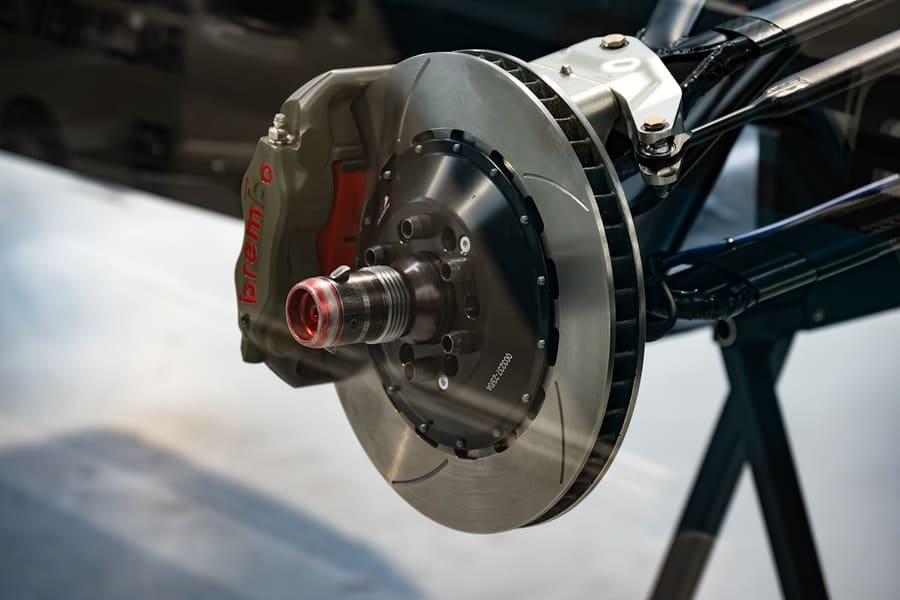
- Bent brake dust shield. Behind every disc brake rotor is a thin sheet-metal plate that keeps water and grit off the back of the rotor. It bends easily: a tire tech's pry bar, a curb, a rock kicked up on a gravel road. Once bent, it touches the spinning rotor and makes a steady metallic zing or scrape that follows road speed and often changes when you turn, as the suspension shifts. This is the single most common cause, and the fix is usually bending it back by hand.
- A rock or debris caught behind the shield. Same location, sharper sound. A pebble jammed between the shield and rotor makes a harsh grinding scrape that can appear suddenly on a gravel drive and sometimes disappears just as suddenly when it works free. Reverse a few feet and brake hard; that often spits it out.
- Loose splash guard, wheel-well liner, or underbody panel. Modern cars carry plastic panels under the engine and inside the wheel wells to manage airflow and keep road spray off. Their clips and screws fall out, and a corner droops into the tire or drags on the road. That gives you a flapping, scraping, or buzzing that is worse at speed and over bumps, and often a visible sag if you kneel down and look at the front of the car.
- A dragging brake caliper. When a caliper's slide pins seize or a piston sticks, the pad never fully releases from the rotor. You get a constant light scraping or hiss, a wheel that is hot to the touch after a normal drive, a pull to one side, and sometimes a burning smell. Our guide to burning smells after driving covers the hot-wheel check in detail.
- Worn brake pads. Once the friction material is gone, the metal backing plate scrapes the rotor. This is a grinding that gets louder and more urgent when you brake, not just while rolling. Our guide to what brake squeaks and grinds really mean separates the wear-indicator squeal from the metal-on-metal grind.
- Exhaust hanger or heat shield. A rusted rubber hanger lets a section of exhaust pipe sag and drag or knock over bumps, and a loose heat shield rattles at idle. Both are engine-side noises, so they change with RPM, not road speed.
- Wheel bearing. A failing bearing starts as a hum and can sound like a scrape or a roar that builds with speed and shifts when you turn. It is the one on this list that gets expensive if ignored, and our wheel bearing cost guide prices it.
The Five-Minute Check That Usually Finds It
Engine off, car parked on level ground. Flashlight, and ideally a friend to roll the car a foot while you listen.
- Kneel at each wheel and look through the spokes. You are looking at the back of the rotor for the dust shield. If one edge looks pushed toward the rotor, or you see a bright scratch line on the rotor face near the edge, you have found it.
- Spin the wheel by hand if you can. With the car safely jacked and supported on a stand (or on a lift at a shop), spin each front wheel. A scrape you can hear at hand speed is a shield or debris. A rough, gritty feel or a growl is a bearing. Skip this step if you do not have proper jack stands; the next steps work from the ground.
- Roll the car a few feet in a quiet spot with the windows down and the radio off. Have your friend push or let it creep in Neutral. Shield and debris noises are audible at walking speed. Bearing and caliper noises usually are not.
- Look at the front and rear of the car from the ground. Any panel edge hanging below its neighbor, any plastic liner curling into the wheel well, any clip missing where its neighbors have one.
- After a ten-minute drive with light braking, hold a hand near each wheel. Near, not on; a dragging caliper gets hot enough to burn. One wheel much hotter than the other three is the caliper.
- Note when it started. New tires last week means the shield got nudged. A brake job last month means a shield or a pad was not seated. A gravel road yesterday means a rock. A curb or pothole means a shield or a panel.
Write down what you find. "Zing follows speed, louder turning right, started after new tires, no heat at any wheel" is a diagnosis. A shop can confirm it in the first two minutes on the lift.
Is It Safe to Keep Driving?
For most of these, yes, for now.
- A bent dust shield or a rock is harmless to drive on for a few days. It is annoying and it will leave a light scratch on the rotor face that does not matter. Get it bent back at the next opportunity.
- A dragging splash guard can catch on a speed bump or a parking block and tear off entirely, sometimes taking a wiring harness or a hose with it. Tuck it up with a zip tie until you can replace the clips. Do not drive at highway speed with a panel flapping.
- A dragging caliper is a this-week repair. Every mile of a pad pressed against a spinning rotor is cooking the pad, glazing the rotor, and heating the brake fluid on that corner. Left long enough it ruins the rotor and can boil the fluid, which is a real safety problem. Our brake caliper cost guide covers the slide-pin service that often fixes it for far less than a new caliper.
- Metal-on-metal brake grinding is a stop-driving-soon problem. Stopping distance is getting longer every day and the rotor is being machined away.
- A bearing that has gone from hum to scrape is on borrowed time. If the steering has picked up any looseness or you feel a rumble through the floor, do not put it off.
What Do These Repairs Cost?
Typical parts-plus-labor ranges at independent shops. The brake and bearing figures match our researched cost guides and are the ones to trust. The small stuff is often folded into a minimum labor charge or done for free while you are there for something else.
| Repair | Typical price installed | The clue that points here |
|---|---|---|
| Dust shield bent back | $0 to $60 | Zing follows speed, started after tire or brake work |
| Rock or debris removed | $0 to $60 | Sudden harsh scrape after gravel, may come and go |
| Splash guard or liner clips replaced | $20 to $120 | Flapping at speed, panel visibly sagging |
| Splash guard or underbody panel replaced | $80 to $300 | Panel torn or missing |
| Dust shield replaced | $60 to $180 | Shield rusted through or too mangled to bend |
| Exhaust hanger or heat shield repair | $30 to $300 | Knock over bumps or rattle at idle, follows RPM |
| Caliper slide pin service (no caliper replaced) | $90 to $250 | One hot wheel, light constant scrape |
| Single caliper replaced, one corner | $250 to $450 | Piston seized, pin service not enough |
| Pads and rotors, one axle | $330 to $580 | Grinding that gets worse under braking |
| Front wheel bearing hub assembly, one corner | $250 to $520 | Growl or scrape that builds with speed, shifts when turning |
A few honest notes on reading that table:
- Ask for the cheap fix first. A shop that bends a shield or pulls a rock and sends you on your way has just earned a customer for life. Most do exactly that. If you were in for an oil change anyway, it is often free.
- A caliper on the same ticket as pads and rotors can be legitimate. If a seized caliper cooked the pad and glazed the rotor, replacing only the caliper leaves damaged parts behind. The shop should be able to show you the discolored, unevenly worn pad on that corner. If it looks like the other side, question the extras.
- Underbody panels matter more than they look. On many newer cars they route cooling air and keep water off electronics. Replacing one is not a cosmetic upsell.
For the same parts-plus-labor breakdown across dozens of other repairs, our cost guides are built the same way.
Why Does This Happen Right After Work Was Done?
Because the dust shield lives exactly where a tire tech's tools go. Mounting a tire, torquing a wheel, or pulling a caliper all put a pry bar or a knuckle within a quarter inch of that thin plate, and it bends with almost no force. It is not carelessness. It is a part designed to be light, sitting in a tight spot. Any decent shop will straighten it in a minute if you bring the car back, and they will not be surprised.
The same goes for splash guard clips. They are one-use plastic fasteners that break when removed for an oil change, and they do not always get replaced. A missing clip becomes a sagging panel a few weeks later.
What to Ask the Shop
- "What was touching what?" A good answer names two parts: shield and rotor, liner and tire, pad and rotor. "It was making a noise, we fixed it" is not a diagnosis.
- "Is the wheel that was scraping hotter than the others?" This is the caliper question, and it takes ten seconds to check.
- "Did the rotor get damaged?" A shield scratch is cosmetic. Deep scoring from a dragging pad is not, and it tells you whether a rotor on the estimate is justified.
Shops around here see this one every day, and the honest ones will tell you when it is a nothing. The mechanics behind Fixxr are shop people themselves, and the pattern is always the same: the shop that bends the shield back for free is the shop you go back to for the next ten years.
If you already have a written estimate and want to know whether the number lands in the right range, run it through Fixxr's quote scanner at is my quote fair. Snap a photo of the estimate, tell us the vehicle, and your diagnostic comes back in about a minute with what that repair typically costs for your car where you live. It is free, and it turns "I hope this is reasonable" into "I know what this should cost." You deserve a fair fix.