


A car that sounds like a helicopter, that rhythmic whop-whop-whop that speeds up as you go faster, almost always comes from one of three places: tires that have worn unevenly (mechanics call it cupping), a wheel bearing that is starting to fail, or a loose exhaust or heat shield flapping against something. A distant fourth is a cooling fan problem, which makes the same beat but only with the hood up or at a stop.
The reason the sound gets the helicopter label is simple. All four of those things happen once per rotation of something, and once-per-rotation at 50 miles an hour is a fast, deep pulse that the car's body amplifies like a drum. The trick to telling them apart is not the sound itself. It is what changes the sound: speed, turning, braking, or engine RPM. Pay attention to that for one short drive and you can usually name the culprit before a shop does.
Most of these repairs land between $60 and $600. Treat every number in this guide as a ballpark to check a quote against, not a guaranteed price for your car.
Want your number first? The car repair cost calculator prices this job for your exact year, make, and model in about thirty seconds.
What Makes a Car Sound Like a Helicopter?
Here are the usual suspects, roughly in the order we see them, and the signature each one leaves.
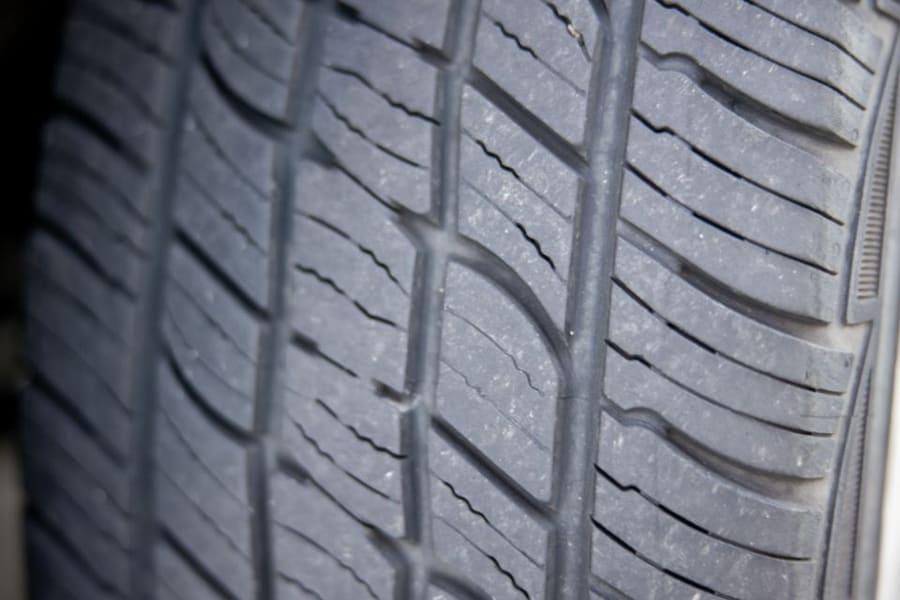
- Cupped or scalloped tires. When a shock or strut gets weak, the tire bounces slightly as it rolls, and over thousands of miles it wears a pattern of high and low spots around the tread. Each low spot slaps the pavement. The result is a whop that rises and falls exactly with road speed, whether the engine is working or coasting. Run your hand around the tread and you can often feel the scallops.
- A failing wheel bearing. A bearing that has lost its grease or picked up a pit in the race makes a growl or roar that grows with speed. Early on it hums. Later it beats. The giveaway is that it changes when you turn: swing the car gently one way and it gets louder, the other way and it fades, because turning shifts the car's weight onto one bearing.
- A loose exhaust part or heat shield. Exhaust systems hang on rubber hangers and thin metal shields. When one rusts through or a clamp lets go, the pipe or shield rattles against the underbody with every pulse of exhaust. That gives you a helicopter sound that follows engine RPM, not road speed. Rev it in Park and it changes. Coast in Neutral and it drops.
- Tire pressure or a damaged tire. A tire that is badly underinflated, or one with a broken internal belt, flexes and slaps as it rolls. A belt separation often shows up as a bulge on the tread or sidewall, and it makes the car sound like a helicopter and feel like a washing machine at the same time.
- A fan clutch or electric cooling fan. On trucks and older rear-drive cars, the engine-driven fan has a clutch that is supposed to release when the engine is cool. When it sticks locked, the fan roars like a helicopter at every start and on every rev, especially in the first few minutes. Electric fans with a bent blade or a bad motor bearing do something similar, but you will hear it at a stop with the engine warm, not on the highway.
- Wind buffeting, the one that is not a problem at all. Crack one rear window at highway speed and the air pulsing in and out of the cabin makes a deep throb that is genuinely painful. Roll the window up and it stops instantly. If that is your helicopter, you are done reading.
The Five-Minute Drive That Sorts Them Out
You do not need tools. You need a quiet road, a parking lot, and a little attention.
- Coast test. On a straight, quiet road at 40 or 50, shift to Neutral and let the car coast. If the noise stays exactly the same, it comes from the wheels or tires (bearing, cupping, damaged tire). If it drops away as the RPM falls, it comes from the engine or exhaust side (heat shield, exhaust, fan).
- Sway test. Back in gear at the same speed, ease the car gently toward one side of the lane and then the other. Not a swerve, just a slow drift. A noise that gets louder swinging one way and quieter the other is a wheel bearing. A noise that does not care which way you drift is more likely tires.
- Brake test. Brake gently from speed. If the beat changes or a shudder appears, the brakes or a warped rotor are in the picture. If it carries on unchanged, brakes are ruled out.
- Rev test in Park. Parked, hood down, rev the engine to 2,000 and hold it. A rattle or roar that appears with the revs is exhaust, heat shield, or fan. Silence means it is not there.
- Look and feel. Walk around the car. Run a hand across each tire's tread. Cupping feels like a row of shallow scoops. Check pressures with a gauge, not by eye; a tire can be 10 psi low and look normal. Kneel and look under the back of the car for a shield or pipe hanging lower than its neighbor.
Write down what you found. Telling a shop "same noise coasting in Neutral, louder drifting left, tires feel scalloped on the right rear" is a diagnosis they can confirm in ten minutes instead of hunting for an hour.
Which Wheel Is It?
For bearings, the sway test does most of the work. Turning left loads the right side, so a noise that gets louder as you ease left points at the right-side bearing, and the reverse. For cupping, your hand across the tread finds it, and the worst tire is usually on the corner with the tiredest shock.
For exhaust noise, a helper standing outside while you rev in Park can point straight at it. Most rattling heat shields live over the catalytic converter or the muffler, both easy to see with a flashlight.
Is It Safe to Keep Driving?
Honest answer: usually yes for a short while, with two exceptions.
- A damaged tire is a today problem. A visible bulge or a belt separation can fail without warning at highway speed. If the helicopter sound came on suddenly and the car also shakes, pull over and look at the tires before anything else. Our guide to car shaking at highway speed walks through the tire checks.
- A bearing that has moved from hum to beat is running out of time. Worn bearings do not fail gracefully. They overheat, they loosen, and in the worst case the wheel develops play. If you feel any rumble through the floor, any looseness in the steering, or the noise has doubled in a week, stop treating it as a someday repair. Most bearings give you weeks of warning, not months, once they get loud.
- Cupped tires and a loose heat shield can wait a bit. They are annoying and they are telling you something (cupping means your shocks are done, a loose shield means rust is working on the exhaust), but neither will leave you on the shoulder this week.
- A locked fan clutch costs you fuel and a little power, and it is loud, but it is not dangerous. A fan with a cracked blade is different: pieces coming off a spinning fan can take out a radiator or a belt, so get that one looked at soon.
What Do These Repairs Cost?
Typical parts-plus-labor ranges at independent shops. Dealerships, European makes, and 4WD trucks run higher. Cost detail for the bigger jobs lives in the researched guides linked below, and those figures are the ones to trust.
| Repair | Typical price installed | The clue that points here |
|---|---|---|
| Tire pressure correction, rotation and balance | $0 to $130 | Noise came on gradually, no other symptoms |
| Heat shield clamp or strap repair | $30 to $150 | Rattle follows engine RPM, worse at idle in Park |
| Exhaust hanger, clamp, or small weld | $80 to $300 | Pipe visibly hanging low or knocking on bumps |
| Fan clutch replacement | $250 to $600 | Roars on cold start and revs, quiets after warm-up |
| Front wheel bearing hub assembly, one corner | $250 to $520 | Louder drifting one direction, same when coasting |
| Rear hub assembly, one corner | $185 to $400 | Same as above, from the back of the car |
| One new tire, installed | $150 to $400+ | Bulge, belt separation, or cupping past saving |
| Front struts or rear shocks, pair | $210 to $980 | Cupped tires; the real cause behind them |
A few honest notes on reading that table:
- Cupped tires are a symptom, not the disease. Replacing the tires without replacing the worn shocks means the new tires will cup the same way. A shop that quotes struts alongside tires is not padding the ticket; it is fixing the thing that ate your tires. The researched struts and shocks cost guide breaks down the per-axle numbers.
- Bearings are per-corner repairs. If one is noisy, you fix that one. A shop that recommends both sides should be able to show you play or roughness in the second bearing. If they can, doing both in one visit saves a second labor charge. The wheel bearing cost guide explains why the hub-versus-pressed-bearing difference changes the labor line.
- A rattling heat shield is often a ten-dollar fix. A large hose clamp around the shield stops the rattle for years. Do not let anyone talk you into a new catalytic converter for a noise that a clamp cures.
For the same parts-plus-labor breakdown across dozens of other repairs, our cost guides are built the same way.
Why Does This Happen in the First Place?
Mostly miles, water, and rough roads.
- Shocks wear out silently somewhere around 50,000 to 100,000 miles. Nobody notices because the decline is gradual. The tires notice, and cupping is how they tell you.
- Bearings live on sealed grease. A hard pothole hit can dent the bearing race microscopically, and the noise shows up thousands of miles later. Driving through deep standing water after a summer storm can push water past the seal, and a bearing that took a soaking rumbles months afterward. Both are common on Carolina back roads and in the low spots on I-485 in a downpour.
- Exhaust hangers and shields rust. Heat cycles and road spray do it. Cars in coastal counties and cars that see winter road salt up north lose shields first.
- Fan clutches are thermostatic and simply wear out with age on trucks that have earned it.
None of this means something was done wrong. It means the car has miles on it and is telling you about the wear in the only language it has.
What to Ask the Shop
Three questions cover most of it:
- "Which corner, and what confirmed it?" A good diagnosis names the wheel and the evidence: play at the hub on the lift, roughness spinning the wheel by hand, a scalloped tread they can show you.
- "Is the noise from the wheel or from the exhaust?" A shop that has heard it on a road test will answer in one sentence. If they have not driven it, ask them to.
- "What is the book time?" Multiply the hours by the local rate (roughly $90 to $130 an hour around Charlotte, $95 to $135 in the Raleigh area) and you can see how the labor line was built.
If you already have a written estimate and just want to know whether the number lands in the right range, run it through Fixxr's quote scanner at is my quote fair. Snap a photo of the estimate, tell us the vehicle, and your diagnostic comes back in about a minute with what that repair typically costs for your car where you live. It is free, and it turns "I hope this is reasonable" into "I know what this should cost." You deserve a fair fix.