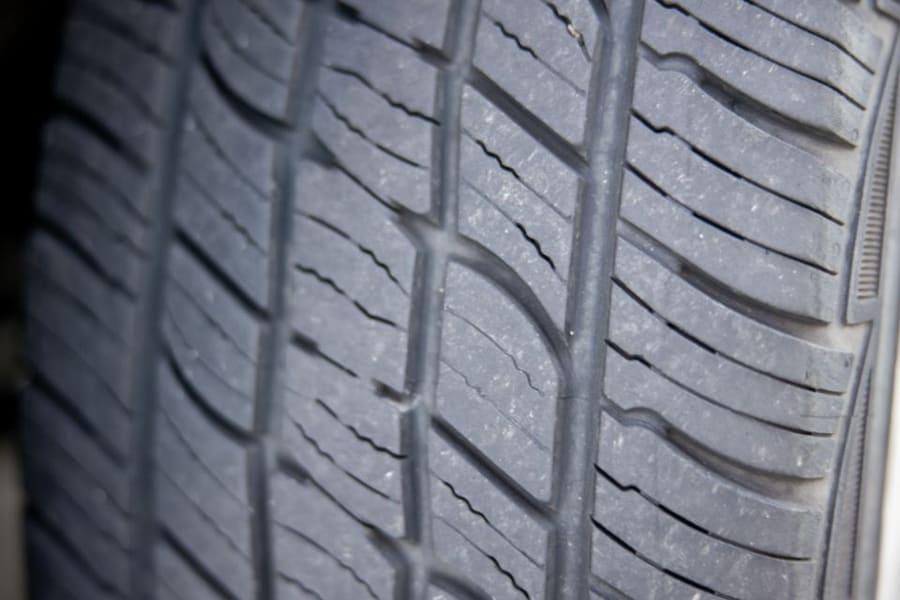




If your car shakes at highway speed, usually showing up somewhere between 55 and 70 mph, the most likely cause is wheel imbalance, and rebalancing all four wheels typically costs $60 to $130 at a North Carolina independent shop. Damaged tires, a bent wheel, worn suspension parts, and the uneven tread wear caused by bad alignment can produce the same shake. Where you feel it, what speed triggers it, and whether braking changes it will narrow the cause before you ever talk to a mechanic.
That's the short version. The longer version is worth five minutes, because "vibrates on the highway" is one of those complaints where a shop can reach for the expensive fix first. The good news is that this problem tells on itself, and even the pricier outcomes are ordinary money at local rates, which run roughly $90 to $130 an hour at Charlotte independents and $95 to $135 an hour around the Triangle. Pay attention to three things, speed, location, and braking, and you can usually walk in knowing what's wrong.
Already know which repair you're facing? The alignment cost calculator prices it for your exact year, make, and model in about thirty seconds.
Is It Wheel Balance, Alignment, or the Tires?
Wheel imbalance is the most common cause of a shake that appears only at highway speed; alignment problems usually show up as pulling to one side and uneven tire wear, not vibration. They're related but different jobs, and shops sell them together often enough that it's worth knowing which one you actually need.
Balancing corrects the weight distribution of each tire-and-wheel assembly so it spins smoothly. At 65 mph, your wheels are turning hundreds of times a minute, so even a small heavy spot, a lost wheel weight, uneven wear, mud packed inside the rim, becomes a rhythmic force you feel in the car.
Alignment adjusts the angles of the wheels relative to the car and the road. When it's off, the primary symptoms are a pull to one side, an off-center steering wheel, and tires wearing unevenly. Here's the catch: months of misalignment can cup or scallop the tread, and that damaged tread vibrates. So alignment is often the root cause hiding behind a tire-caused shake. Our wheel alignment guide covers the signs in detail.
The tires themselves can be the problem even with perfect balance and alignment: flat spots, cupped tread, a bent wheel from a pothole, or, more seriously, a separated internal belt. Loose lug nuts belong on this list too, and they're the one item to rule out immediately.
Why Does It Only Shake Between 55 and 70 mph?
A vibration confined to a specific speed window, there at 62, gone at 45, points strongly to imbalance. The shake peaks where the wheel's rotation rate hits your suspension's sweet spot for transmitting it, which for most cars lands right in the highway range. Slow down and it fades; sometimes it even smooths back out above the window.
A tire with a broken belt behaves differently. That vibration tends to feel rhythmic or pulsing rather than a smooth buzz, often comes with a thumping sound, can show up at lower speeds, and gets worse over days or weeks instead of staying constant. And if your car shakes at all speeds, or while sitting at idle, the wheels probably aren't your problem at all, that points toward engine mounts or a misfire, and our rough idle guide is the better starting point.
Does It Come Through the Steering Wheel or the Seat?
Shake you feel in the steering wheel points to the front wheels; shake you feel in the seat or floor points to the rear. That single observation cuts the search area in half before anyone touches a lug wrench.
Braking is the other big filter. If the car is smooth cruising at 70 but shudders when you brake from highway speed, with pulsing in the pedal or steering wheel, that's brake rotor thickness variation (what most people call warped rotors), not a balance issue, and our guide to steering wheel shake under braking covers exactly that case. And if the shake comes with clunking over bumps, wandering steering, or a growl that changes pitch when you swerve gently side to side, you're likely into suspension territory: tie rod ends, ball joints, or a wheel bearing. Our symptoms guide covers those sounds in more detail.
What Does Each Fix Cost in North Carolina?
Most fixes for highway-speed vibration sit at the cheap end of car repair, balancing runs about $15 to $35 per tire here, and even suspension work rarely crosses four figures unless several parts fail at once. Realistic ranges at Charlotte and Triangle independents, labor built from book hours times local rates:
| Fix | Typical NC cost (parts + labor) | It's the answer when... |
|---|---|---|
| Wheel balancing (all four) | $60 to $130 | Shake lives in one speed window, smooth elsewhere |
| Four-wheel alignment | $80 to $130 | Car pulls, wheel sits off-center, tread wearing unevenly |
| Replacing a damaged tire | $100 to $400+ per tire, installed | Belt separation, bulge, or tread too cupped to save |
| Front pads + rotors (per axle) | $260 to $570 | Shake appears only under braking |
| Tie rod replacement (with alignment) | $250 to $700 | Loose or wandering steering plus vibration |
| Ball joint (per joint) | $200 to $500 | Clunking over bumps, uneven wear |
| Front wheel bearing / hub, one side | $220 to $590 | Growl that changes when you swerve side to side |
Prices swing with your vehicle, luxury badges, AWD, and big wheels all push the top of these ranges. Many shops discount an alignment bundled with balancing, so ask; that bundle is genuinely in your interest when both are due, not padding. Our cost guides break down dozens more repairs the same way.
What Should I Do, in Order?
- Write down the pattern. What speed does it start, where do you feel it, does braking change it? This is 80% of the diagnosis.
- Walk around the car. Look for a bulge or knot in any tire, visibly uneven or scalloped tread, a missing stick-on wheel weight, or mud packed inside a rim.
- Confirm the lug nuts are tight, especially if the shake started right after a tire rotation or new tires. This takes two minutes and rules out the one dangerous cheap cause.
- Start with a balance and rotation. It's the cheapest fix and the most common answer. If rotating the tires moves the shake (front to seat, or seat to wheel), a tire itself is implicated.
- If the shake survives balancing, ask for a road-force check. That machine presses a load against the spinning tire and catches internal defects, belt separation, bent wheels, that a standard spin balance misses.
- If the tires check out, get the suspension inspected, tie rods, ball joints, bearings, bushings, and align the car after any parts are replaced, or the new parts will chew the tires and restart the cycle.
When Is It Serious, and When Can It Wait?
A mild, steady shimmer at 65 that hasn't changed in weeks can wait for a convenient appointment; a shake that's new, worsening, or paired with a bulging tire cannot. A visible bulge or a rhythmic thump means possible belt separation, and August pavement heat plus highway speed can turn that into sudden tread failure, get it inspected before your next run down I-85, full stop. Same urgency if the vibration appeared right after wheel work: pull over and check the lugs. Shake plus clunking or vague steering deserves a look within days, because a failing ball joint or tie rod affects control. Brake-only shudder and garden-variety imbalance are schedule-soon problems, but don't sit on them for months, since vibration steadily wears tires, bearings, and bushings and turns a $100 fix into a $600 one.
If you'd like a read before you call anyone, this is exactly what Fixxr's free diagnostic is built for: describe what you're feeling, "shakes in the steering wheel at 62, smooth at 50, worse lately", add a short video if you have one, and it returns a ranked list of likely causes with a fair local cost range for each. Walking into a shop in Charlotte or the Raleigh area saying "I think this needs a road-force balance" is a very different conversation than "it shakes, help."
However it plays out, keep some perspective: a highway-speed shake is one of the most solvable problems your car will ever hand you. Most of the time it's a wheel balance that costs less than a tank-and-a-half of gas, and even the worst realistic case, a bad tire or a worn front-end part, is a routine, same-day repair. Your car flagged it early. Read the clues, start cheap, and if an estimate lands in your hand along the way, run it through the quote scanner at is my quote fair, about a minute tells you whether the number fits your car and your part of North Carolina. You deserve a fair fix.