
Home/Repair costs/2018 Dodge Charger/Water pump replacement
2018 Dodge Charger · Water pump replacement
2018 Dodge Charger water pump replacement cost
A 2018 Dodge Charger water pump replacement typically costs $250 to $610 at an independent shop, parts and labor included across its engine options. The water pump itself runs $60 to $160, and the job takes 2 to 4 hours. Prices updated October 2026.
Estimated cost, selected engine
$250 to $485
Charlotte, NC area
Prices updated October 2026
Which engine? They price differently, so pick yours for a closer number.
Water pump (part)
$60 to $160
Labor (2 to 4 hours)
$165 to $390
Fluids + supplies
$25 to $60
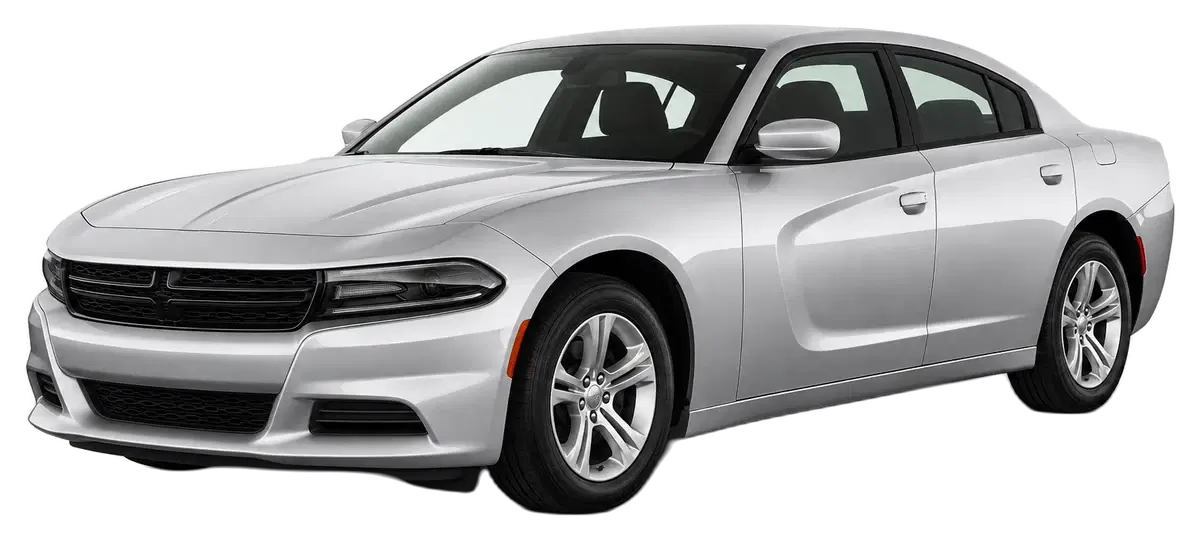
2018 Dodge Charger water pump replacement: parts and labor
Labor runs $165 to $390 (the job takes 2 to 4 hours at typical independent-shop rates), and the water pump itself typically costs $60 to $160 for the 2018 Dodge Charger, plus $25 to $60 in oat coolant (mopar purple 10-yr) plus disposal. Prices updated October 2026.
| Engine | Parts | Labor | Estimated total |
|---|---|---|---|
| 3.6L V6 | $60 to $125 | $165 to $300 (1.5 to 2.0 hrs) | $250 to $485 |
| 5.7L HEMI V8 | $75 to $150 | $220 to $390 (2.0 to 2.6 hrs) | $320 to $600 |
| 6.4L HEMI V8 (Scat Pack) | $80 to $160 | $220 to $390 (2.0 to 2.6 hrs) | $325 to $610 |
Coverage note: The 707-hp SRT Hellcat's supercharged 6.2L is excluded because it runs a separate low-temperature intercooler cooling circuit with its own electric auxiliary pumps and has almost no aftermarket main-pump support (one GMB unit at $206 versus a $549 Mopar pump), so pricing behaves like a dealer-only job.
A dealer will use the Mopar pump billed at list (roughly $350 to $560 on paper versus $179 to $240 street) and labor at $160 to $200 per hour, which is how dealer quotes land at $700 to $1,100 for the same 2 to 2.5 hour job. The independent range above is lower mainly because aftermarket parts street pricing runs a half to a third of OEM list, not because less work is done.
Where these numbers come from
- Estimate ranges: a hand-verified research pass for this exact vehicle and repair, cross-referenced across 10 independent sources (parts retailers, labor guides, and published shop pricing), completed September 2026.
- Recall and complaint data: NHTSA (National Highway Traffic Safety Administration) records for the 2018 Dodge Charger specifically, filtered to cooling system relevance and refreshed daily from the federal API.
- Local prices: real, accepted quotes from verified Fixxr marketplace jobs, published per metro once five verified jobs of this type have closed. Never estimates dressed up as transactions.
Not included in the estimate: Diagnosis time (cooling system pressure test, dye trace) to confirm the pump is the leaker, Thermostat, radiator hoses, and serpentine belt, which shops commonly recommend replacing in the same visit, A full cooling system flush; pricing assumes a drain-and-refill of what the pump job spills, Sales tax, shop supplies, and environmental disposal fees beyond basic coolant disposal, Towing or after-hours charges if the car overheated and cannot be driven in.
Not sure what’s wrong?
Overheating can be the radiator, thermostat, water pump, or a leak. Describe what your car is doing and our free diagnostic tool narrows it down before you spend a dollar.
Diagnose it freeKnow what you need?
Post your water pump replacement to the marketplace and get connected with local mechanics. Real repair offers for your Charger, free, with no phone calls to make.
Get connected with a mechanicHow your cooling system works
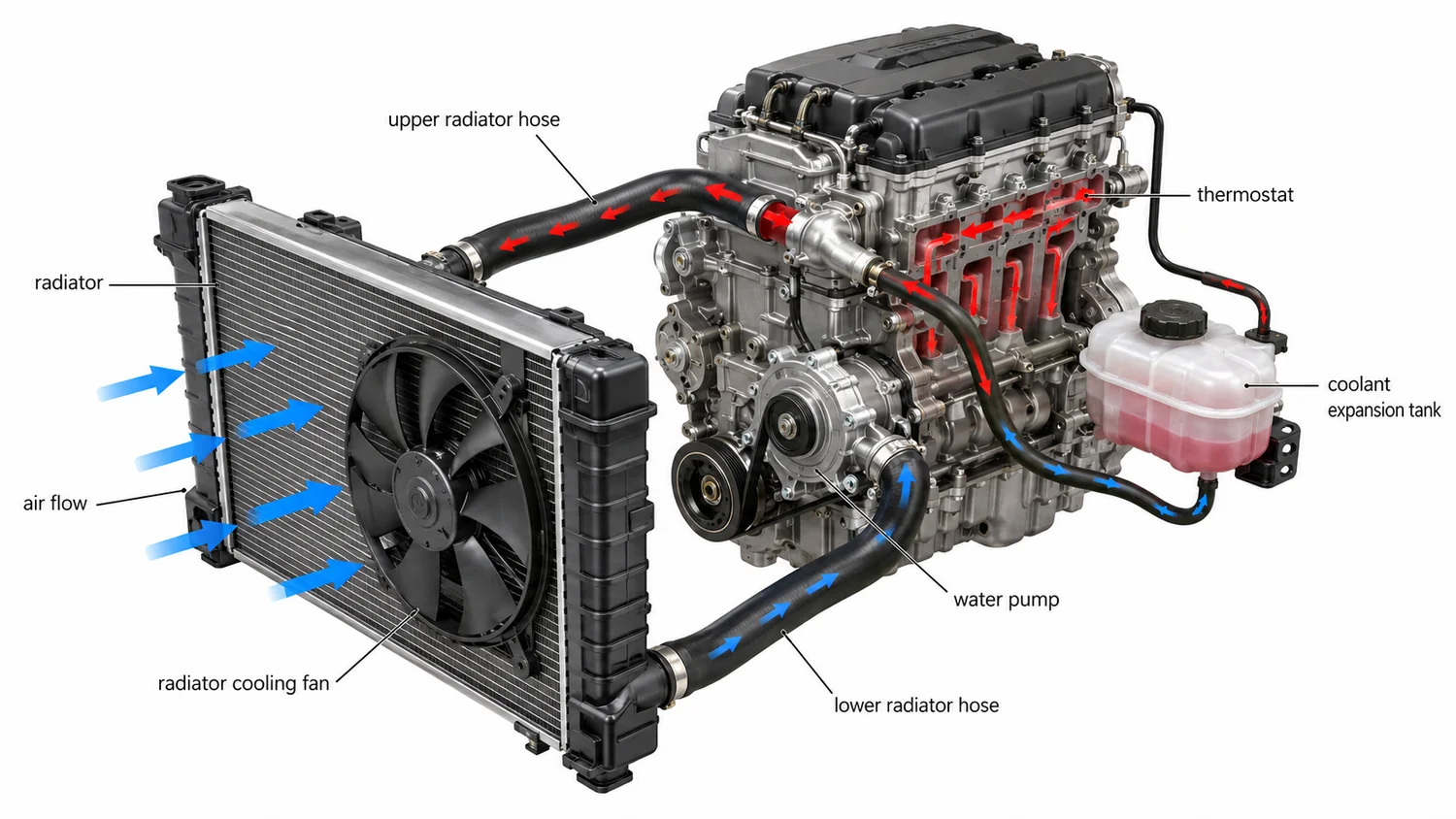
The water pump is one piece of a loop. Here is how the parts work together, so you understand exactly what your car is doing and why.
Found a puddle? What the color tells you
Bright green
Classic coolant leak. Find the source before it overheats.
Orange / pink
What most modern vehicles use (OAT). Same urgency as green.
Rusty brown
Old, corroded coolant. Overdue for a flush.
Milky / oily
Coolant mixing with oil, like a coffee milkshake. Can mean a head gasket. Serious.
What a water pump replacement is like on the 2018 Dodge Charger
The labor number on every 2018 Charger engine is friendly for one reason: no engine on this platform drives the water pump off the timing chain. Both the 3.6L Pentastar and the HEMIs bolt the pump to the front of the block and spin it with the serpentine belt. On the V6 the job is belt off, pulley clear, eight or so bolts, new gasket, refill, roughly 1.5 to 2.0 hours. The HEMIs add teardown around the pump rather than at it: the upper radiator hose, the electric fan module connector and shroud clearance, and more accessory hardware in the way push book time to the 2.0 to 2.6 hour range. There is no fan clutch to fight; 2018 Chargers use an electric fan.
Typical failure mode on all three engines is seal weep rather than sudden death. Owners find dried orange-purple coolant crust trailing from the weep hole under the pump snout, a low coolant warning, or a bearing growl that changes with engine speed, most commonly in the 90,000 to 150,000 mile window. The 3.6L Pentastar has a reputation for pump seepage right around the 100k mark, and because the pump sits directly above the belt, a leaking pump can also contaminate and ruin the serpentine belt, which is why many shops pair the two.
Current OE part numbers, verified against Mopar listings in the RockAuto catalog: 68667064AA for the 3.6L (about $179 street), 5038668AD for the 5.7L HEMI including gasket, plug, and sensor (about $199), 68346916AB for the 6.4L SRT engines (about $240), and 68268052AA for the Hellcat 6.2L (about $549). Coolant is Mopar's purple 10-year OAT spec, MS.90032. Do not top off or refill with green universal or old HOAT coolant; mixing chemistries gels and shortens the life of the new pump seal.
The 2018 Charger carries six NHTSA recall campaigns (backup camera 20V512, park lock rod 18V280, cruise control 18V332, AWD driveshaft 18V281, PCM voltage regulator 18V524, and side curtain airbag inflators 24V198), and none of them touch the cooling system or water pump. So there is no free dealer fix hiding here; this is a straight pay-to-repair item.
Myth-busting the big-book quotes: RepairPal publishes $814 to $894 for a 2013-2023 Charger water pump, but that figure assumes about $562 in parts, which is OEM list pricing. The genuine Mopar pump actually streets for $179 to $240, and quality aftermarket units (Gates, AISIN, GMB, ACDelco Gold) run $57 to $118. YourMechanic's logged shop quotes for V8 Chargers run $891 to $1,259 for the same reason. An independent shop installing a name-brand aftermarket pump has no honest path to a four-figure bill on this car, and any quote that mentions timing cover or engine teardown labor is describing a different vehicle.
Estimate note: these are researched independent-shop ranges, not a guaranteed quote. The only exact number is one from a shop that has seen your car.
Frequently asked questions
How much does a 2018 Dodge Charger water pump replacement cost?
A 2018 Dodge Charger water pump replacement typically runs $250 to $610 at an independent shop, parts and labor included. The water pump itself is $60 to $160, labor makes up most of the rest, and the job takes 2 to 4 hours.Why does the price change with the engine?
The 2018 Dodge Charger came with more than one engine, and they do not share the same part or the same access. A tighter engine bay or extra teardown adds labor hours, and the part price moves too. Sites that show one national number flatten that out. Pick your engine on the estimate above for a closer figure.Is it always the water pump when my Dodge overheats?
No. Overheating can also be a stuck thermostat, a clogged or leaking radiator, a failed cooling fan, or simply low coolant. What points specifically at the water pump is coolant dripping from the weep hole under the pump, a grinding or whining noise from the front of the engine, or wobble in the pump pulley. Because these causes look identical from the driver's seat, get a real diagnosis before approving the repair.Can I drive my Dodge with a bad water pump?
Only far enough to get it looked at. A failing pump stops circulating coolant, the engine overheats, and driving an overheating Dodge risks a warped cylinder head or a blown head gasket, a $3,000 to $8,000 repair on top of the pump. If the temperature gauge climbs or you see steam, pull over and let it cool. If it keeps overheating, tow it.Should the thermostat be replaced at the same time?
Usually yes, and most shops will suggest it. The cooling system is already drained and opened for the water pump, so the thermostat adds only a small part cost with little extra labor, and a stuck thermostat is one of the most common follow-on failures. Replacing both in one visit avoids paying the teardown labor twice.How long does a water pump last?
Most factory water pumps last roughly 100,000 to 150,000 miles. The usual failures are the shaft seal, which starts seeping coolant from the weep hole, and the bearing, which gets noisy before it lets go. Regular coolant changes protect the seal and are the cheapest way to extend pump life.
More 2018 Dodge Charger repair costs
Related cooling system repairs
You deserve a fair fix.
Tell us what is wrong. A verified mechanic comes to you.