
Home/Repair costs/2018 Ford Escape/Alternator replacement
2018 Ford Escape · Alternator replacement
2018 Ford Escape alternator replacement cost
A 2018 Ford Escape alternator replacement typically costs $340 to $880 at an independent shop, parts and labor included across its engine options. The alternator itself runs $180 to $400, and the job takes 1 to 3 hours. Prices updated October 2026.
Estimated cost, selected engine
$340 to $685
Charlotte, NC area
Prices updated October 2026
Which engine? They price differently, so pick yours for a closer number.
Alternator (part)
$180 to $400
Labor (1 to 3 hours)
$145 to $465
Shop supplies and fees
$15 to $45
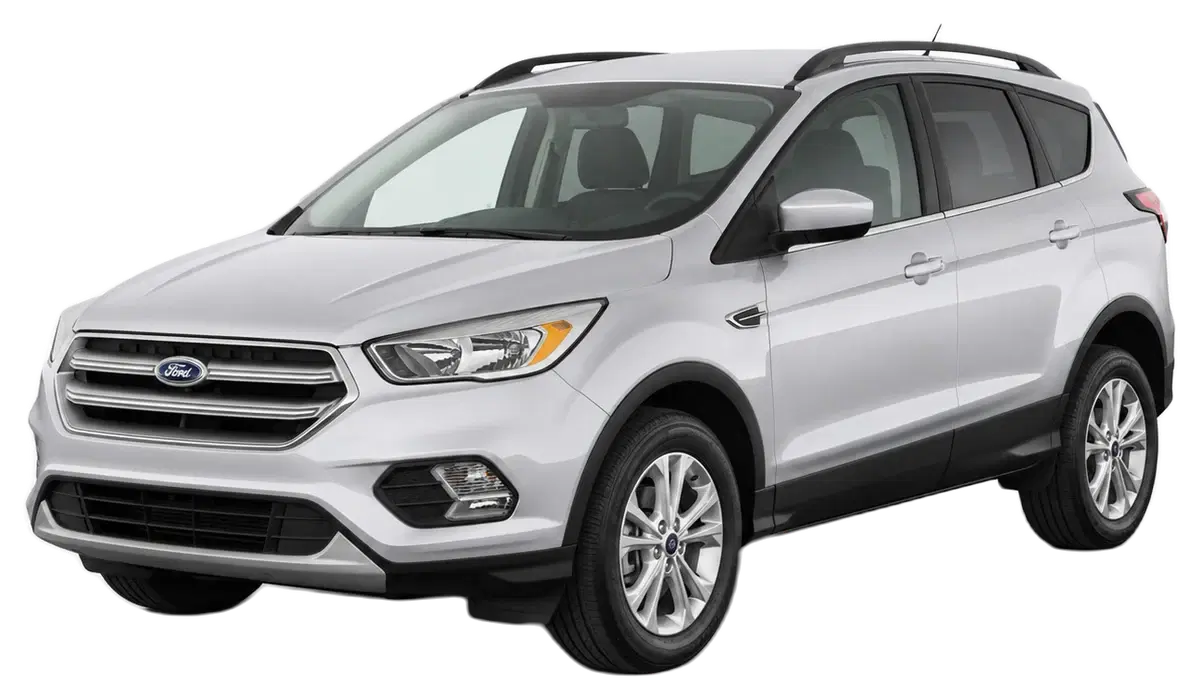
2018 Ford Escape alternator replacement: parts and labor
Labor runs $145 to $465 (the job takes 1 to 3 hours at typical independent-shop rates), and the alternator itself typically costs $180 to $400 for the 2018 Ford Escape, plus $15 to $45 in shop supplies and fees. Prices updated October 2026.
| Engine | Parts | Labor | Estimated total |
|---|---|---|---|
| 2.5L I4 | $180 to $330 | $145 to $310 (1.3 to 2.0 hrs) | $340 to $685 |
| 1.5L EcoBoost | $220 to $400 | $220 to $435 (2.0 to 2.8 hrs) | $455 to $880 |
| 2.0L EcoBoost | $190 to $350 | $255 to $465 (2.3 to 3.0 hrs) | $460 to $860 |
Coverage note: None excluded. The 2018 Escape had no hybrid or performance variant; all three US engines (2.5L, 1.5L EcoBoost, 2.0L EcoBoost) are covered. The 175 amp alternator required with the optional 110 volt outlet package is folded into the parts spread rather than broken out.
RepairPal ($1,038 to $1,426) and YourMechanic run high because they price the part near OEM list: Motorcraft units for this Escape list at $436 to $620 MSRP (CJ5Z-10346-C/D/E/F), while the same new Motorcraft alternators sell for $231 to $386 online and quality remans run $149 to $297. Choosing OEM Motorcraft over a quality reman at an independent shop adds roughly $100 to $250 in parts; the RepairPal delta beyond that is dealer-level labor pricing, not a different job.
Where these numbers come from
- Estimate ranges: a hand-verified research pass for this exact vehicle and repair, cross-referenced across 12 independent sources (parts retailers, labor guides, and published shop pricing), completed September 2026.
- Recall and complaint data: NHTSA (National Highway Traffic Safety Administration) records for the 2018 Ford Escape specifically, filtered to charging system relevance and refreshed daily from the federal API.
- Local prices: real, accepted quotes from verified Fixxr marketplace jobs, published per metro once five verified jobs of this type have closed. Never estimates dressed up as transactions.
Not included in the estimate: Serpentine belt (about $25 to $60 part; smart to add on the 2.0L since the belt already comes off through the wheel well), Diagnostic/charging-system test fee (about $100 to $160, often credited toward the repair), Battery replacement or battery monitoring sensor replacement if either tests bad, Core charge (about $75, refundable when the old alternator is returned), Sales tax and any environmental/disposal fees beyond standard shop supplies.
What actually goes wrong on this exact vehicle
Federal safety data for the 2018 Ford Escape, filtered to the charging system specifically.
0
charging system recalls
6
charging system owner complaints
Real owner report, verbatim from NHTSA:
“Battery light came on, its a new battery with warning of 12v battery failure. The back camera has been giving blank screen and camera unavailable message.”
Get the failure confirmed with a real diagnosis before you approve the repair, so you fix the part that actually failed.
Recall fixes are free at the dealer. Everything else deserves a fair price.
Source: NHTSA (National Highway Traffic Safety Administration), recalls and complaints for the 2018 Ford Escape. Refreshed periodically.
Not sure what’s wrong?
A battery light or a car that dies while driving can be the alternator, the battery, or the wiring. Describe what your car is doing and our free diagnostic tool narrows it down before you spend a dollar.
Diagnose it freeKnow what you need?
Post your alternator replacement to the marketplace and get connected with local mechanics. Real repair offers for your Escape, free, with no phone calls to make.
Get connected with a mechanicHow your charging system works
The battery starts your 2018 Ford Escape; the alternator runs it. Once the engine is on, a belt spins the alternator and it generates the electricity for everything, headlights, computers, ignition, while recharging the battery for the next start. When the alternator quits, the car drains the battery and dies, which is why a bad alternator so often gets misdiagnosed as a bad battery.
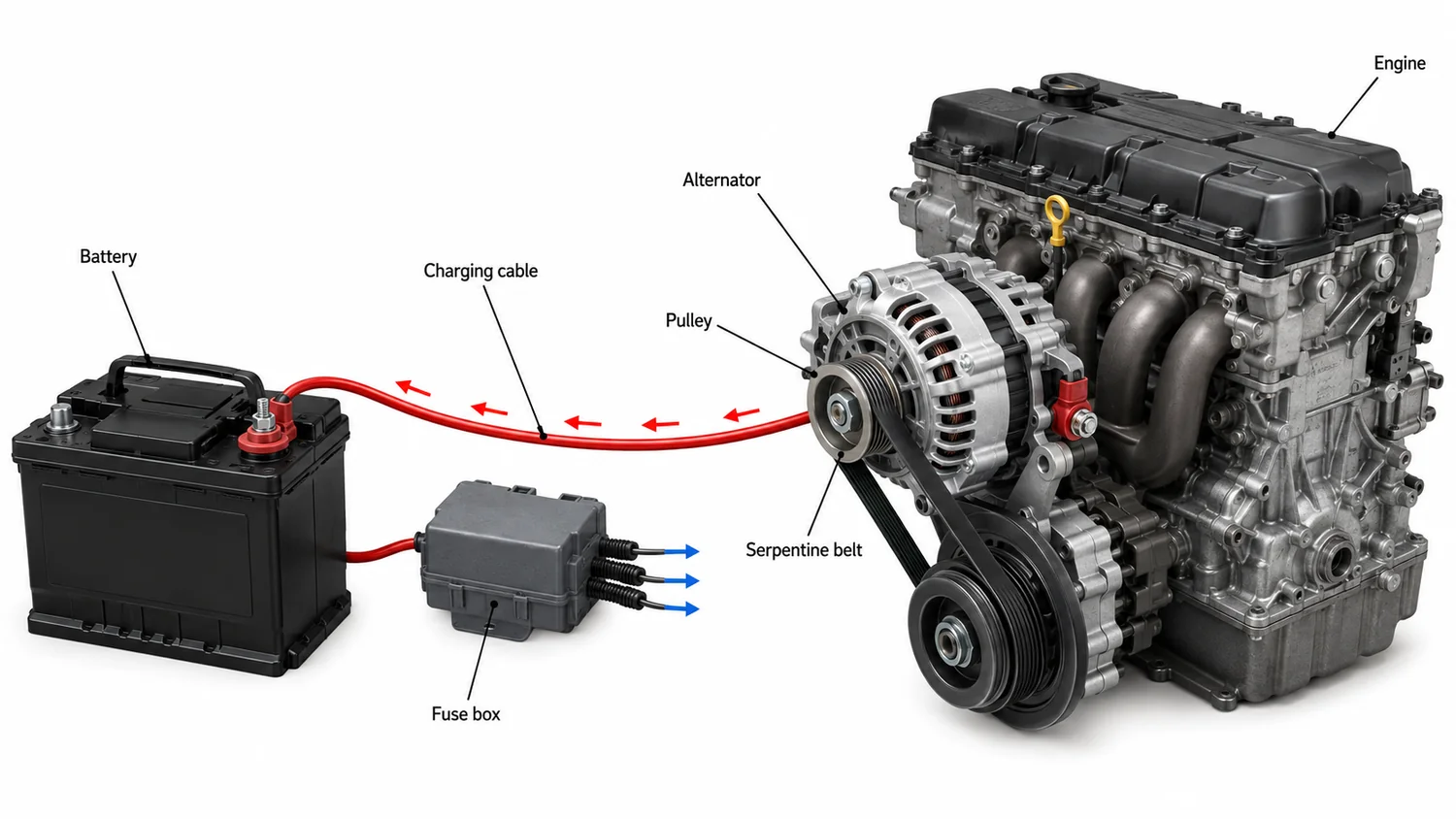
Four signs it’s the alternator, not the battery
Battery light while driving
The charging system stopped keeping up. The battery is now running the car alone.
Lights dim at idle
Headlights or dash brighten with revs and dim at a stop. Classic weak-alternator output.
Whine or growl up front
A failing alternator bearing gets noisy before it dies. The pitch rises with engine speed.
Dead battery, again
A new battery that keeps dying was probably never being recharged. Test the alternator first.
The two-minute check: with the engine running, voltage at the battery should read roughly 13.5 to 14.5 volts. Low 12s means the alternator is not charging. Most parts stores run this test free.
What an alternator replacement is like on the 2018 Ford Escape
The 2018 Escape sold in the US with exactly three engines: the 2.5L Duratec I4 on the base S trim (FWD only), the 1.5L EcoBoost on SE and SEL, and the 2.0L twin-scroll EcoBoost on Titanium and as an option on SE/SEL. The alternator part splits by engine, not trim: the 2.5L and most 2.0Ls share the 150 amp CJ5Z-10346-C family (aftermarket interchange 11551), while the 1.5L uses its own CJ5Z-10346-D (150 amp) or CJ5Z-10346-F (175 amp). Escapes optioned with the 110 volt AC power outlet require the 175 amp unit, and the 2.0L also came with a 175 amp version (CJ5Z-10346-E), so match the amperage on the old unit's sticker before ordering. AWD versus FWD barely changes this job; that variation is folded into the labor spread.
Access is what separates the three engines on price. On the 2.5L the alternator sits high on the front of the engine and comes out from the top, which is why it books the fewest hours. On the 1.5L EcoBoost, techs use the engine-jack method documented on fordescape.org for this chassis: remove the engine roll restrictor bolt from underneath, unclip and move the coolant bottle, support the oil pan with a jack and wood block, loosen the two side engine mount bolts, and raise the engine about 5 cm so the alternator clears the frame rail and intake. On the 2.0L EcoBoost the unit exits through the bottom: right front wheel and inner splash shield off, 15mm on the belt tensioner, then unbolt the A/C compressor and let it hang (lines stay connected, so no refrigerant recharge is needed).
Real 2026 part prices for this exact truck: RockAuto lists quality remans for the shared 150 amp 2.5L/2.0L unit at $148.79 (ACDelco Gold 3343066), $197.89 (Bosch AL7696X), and $199.79 (Denso 2104351), with new Motorcraft GL8669 at $239.79 plus a $75 core. The 1.5L part costs more across the board: remans run $194.99 (TerrePower 12884) to $296.79 (Bosch AL7585X), and new Motorcraft GL8672/GL8785 run $356.79 to $385.79. AutoZone's Duralast reman for this Escape lands around $250 to $300 plus a roughly $75 refundable core, which is closer to what an indie shop actually bills when it sources from a local commercial supplier and adds margin.
RepairPal's 2018 Escape figure of $1,038 to $1,426 assumes $489 to $620 for the part, which is Motorcraft list-price territory (CJ5Z-10346-F lists at $620), plus $549 to $806 labor. That is a dealer-shaped estimate, not an indie quote. AutoNation Mobile Service pegs the 2018 1.5L Escape job at $652 to $796, which sits right inside the independent-shop range here. At 2026 independent rates of roughly $110 to $155 per hour, even the worst case 2.0L teardown does not get near $1,400 unless the shop is billing a new OEM unit at full list.
Two diagnosis traps specific to this generation: the 2013 to 2019 Escape runs Ford smart charge with a battery monitoring sensor clamped on the negative battery terminal, and a failing sensor or corroded ground strap throws the battery light and low-voltage symptoms that get misdiagnosed as a dead alternator. Have the shop verify charging output and scan for smart-charge codes before approving the part. Failures on these alternators commonly show up in the 100k to 150k mile window, often as a flickering battery light or dimming at idle before a hard no-charge.
Estimate note: these are researched independent-shop ranges, not a guaranteed quote. The only exact number is one from a shop that has seen your car.
Frequently asked questions
How much does a 2018 Ford Escape alternator replacement cost?
A 2018 Ford Escape alternator replacement typically runs $340 to $880 at an independent shop, parts and labor included. The alternator itself is $180 to $400, labor makes up most of the rest, and the job takes 1 to 3 hours.Why does the price change with the engine?
The 2018 Ford Escape came with more than one engine, and they do not share the same part or the same access. A tighter engine bay or extra teardown adds labor hours, and the part price moves too. Sites that show one national number flatten that out. Pick your engine on the estimate above for a closer figure.How do I know if it's the alternator or the battery?
A battery that only cranks weakly on startup but runs fine afterward is usually the battery. A battery or charging warning light while driving, headlights that dim at idle, or a car that dies while running points at the alternator. The clean test is voltage at the battery with the engine running: roughly 13.5 to 14.5 volts means the alternator is charging, low 12s means it is not. Most parts stores will test both for free, so confirm before buying either part.Can I drive my Ford with a bad alternator?
Only briefly. Once the alternator stops charging, the car runs off the battery alone, and depending on its charge and what is switched on you may get 30 minutes to an hour before the Ford dies, possibly in traffic. Turn off everything you can spare and drive straight to the shop, or have it towed if the warning light has been on a while.How long does an alternator last?
Most factory alternators last roughly 100,000 to 150,000 miles, or 7 to 12 years. Heat, short-trip driving, and heavy electrical loads shorten that. The usual failures are worn brushes, a failing voltage regulator, or a noisy bearing, and the fix is replacement rather than repair on nearly all modern units.Are there recalls on the 2018 Ford Escape?
Yes, NHTSA lists 4 recalls for the 2018 Ford Escape. Recall repairs are done free of charge at a franchised dealer for that brand, so it is worth checking your VIN before paying a shop for related work.
More 2018 Ford Escape repair costs
Related charging system repairs
You deserve a fair fix.
Tell us what is wrong. A verified mechanic comes to you.