
Home/Repair costs/2018 Ford Escape/Radiator replacement
2018 Ford Escape · Radiator replacement
2018 Ford Escape radiator replacement cost
A 2018 Ford Escape radiator replacement typically costs $600 to $1,100 at an independent shop, parts and labor included across its engine options. The radiator itself runs $150 to $600, and the job takes 2 to 4 hours. Prices updated October 2026.
Estimated cost, selected engine
$600 to $1,010
Charlotte, NC area
Prices updated October 2026
Which engine? They price differently, so pick yours for a closer number.
Radiator (part)
$150 to $600
Labor (2 to 4 hrs)
$250 to $600
Coolant + bleed
$25 to $60

2018 Ford Escape radiator replacement: parts and labor
Labor runs $250 to $600 (the job takes 2 to 4 hours at typical independent-shop rates), and the radiator itself typically costs $150 to $600 for the 2018 Ford Escape. Prices updated October 2026.
| Engine | Parts | Labor | Estimated total |
|---|---|---|---|
| 2.5L I4 | $150 to $600 | $250 to $600 | $600 to $1,010 |
| 1.5L EcoBoost I4 | $150 to $600 | $250 to $600 | $600 to $1,100 |
Where these numbers come from
- Estimate ranges: researched independent-shop parts and labor pricing for this job class, anchored per vehicle segment and updated October 2026.
- Recall and complaint data: NHTSA (National Highway Traffic Safety Administration) records for the 2018 Ford Escape specifically, filtered to cooling system relevance and refreshed daily from the federal API.
- Local prices: real, accepted quotes from verified Fixxr marketplace jobs, published per metro once five verified jobs of this type have closed. Never estimates dressed up as transactions.
Not included in the estimate: diagnosis, taxes and shop fees, related parts found worn during the job, towing.
What actually goes wrong on this exact vehicle
Federal safety data for the 2018 Ford Escape, filtered to the cooling system specifically.
0
cooling system recalls
312
cooling system owner complaints
Real owner report, verbatim from NHTSA:
“The contact owns a 2018 Ford Escape. The contact stated that while driving 45 MPH, the head gasket of the engine cracked and the vehicle stalled. There was coolant leaking into the engine previously, and the vehicle was repaired. The vehicle was leaking coolant. There was white smoke coming from the tailpipe with a sweet odor during the failure. The vehicle was towed to the residence. The manufacturer was contacted by phone, where a case was opened. The contact was informed that there was no recall or manufacturer warranty on the vehicle. The dealer informed the contact that the engine needed to be replaced. A mobile mechanic diagnosed the vehicle and confirmed that the head gasket was cracked. The approximate failure mileage was 94,000.”
Worth knowing: the radiator is one of the most common causes of overheating, alongside the thermostat, water pump, and hoses. Get the real source confirmed before you approve any repair, so you fix the part that actually failed.
Recall fixes are free at the dealer. Everything else deserves a fair price.
Source: NHTSA (National Highway Traffic Safety Administration), recalls and complaints for the 2018 Ford Escape. Refreshed periodically.
Not sure what’s wrong?
Overheating can be the radiator, thermostat, water pump, or a leak. Describe what your car is doing and our free diagnostic tool narrows it down before you spend a dollar.
Diagnose it freeKnow what you need?
Post your radiator replacement to the marketplace and get connected with local mechanics. Real repair offers for your Escape, free, with no phone calls to make.
Get connected with a mechanicHow your cooling system works
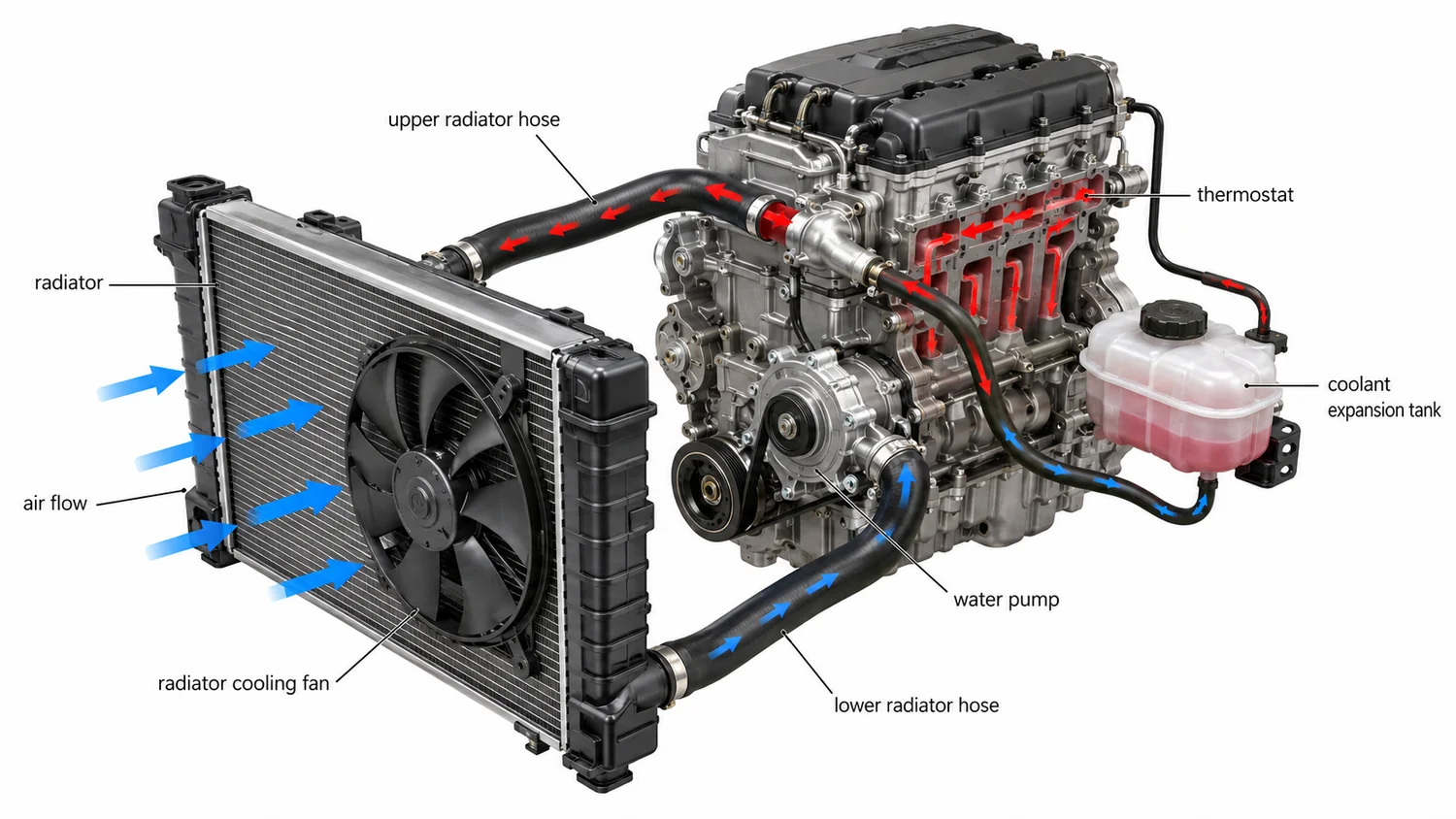
The radiator is one piece of a loop. Here is how the parts work together, so you understand exactly what your car is doing and why.
Found a puddle? What the color tells you
Bright green
Classic coolant leak. Find the source before it overheats.
Orange / pink
What most modern vehicles use (OAT). Same urgency as green.
Rusty brown
Old, corroded coolant. Overdue for a flush.
Milky / oily
Coolant mixing with oil, like a coffee milkshake. Can mean a head gasket. Serious.
What a radiator replacement is like on the 2018 Ford Escape
The bill splits into three pieces: the radiator itself, the labor to swap it, and one to two gallons of fresh coolant with a fill-and-bleed to clear air pockets. On most vehicles the radiator sits behind the bumper cover, grille, condenser, and fans, so a tech spends two to four hours getting it out and back in. That access time, not the part price, is usually why two quotes for the same job look so different.
The 2018 Ford Escape shipped more than one engine, and the larger one runs a little higher on both parts and access. Ask your shop to confirm the exact part for your engine before the work starts.
Estimate note: these are researched independent-shop ranges, not a guaranteed quote. The only exact number is one from a shop that has seen your car.
Frequently asked questions
How much does a 2018 Ford Escape radiator replacement cost?
A 2018 Ford Escape radiator replacement typically runs $600 to $1,100 at an independent shop, parts and labor included. The radiator itself is $150 to $600, labor makes up most of the rest, and the job takes 2 to 4 hours.Why does the price change with the engine?
The 2018 Ford Escape came with more than one engine, and they do not share the same part or the same access. A tighter engine bay or extra teardown adds labor hours, and the part price moves too. Sites that show one national number flatten that out. Pick your engine on the estimate above for a closer figure.Is it always the radiator when my Ford overheats?
Not always, but the radiator is one of the most common culprits, which is why it is worth checking first. A clogged, corroded, or leaking radiator causes overheating on its own, and it is also the most common place a car loses coolant. The other leading causes are a stuck thermostat, a failing water pump, a bad cooling fan, and low coolant. Because several of these look identical from the driver's seat, get a real diagnosis before you approve any repair, so you fix the part that actually failed.Can I drive my Ford with a bad radiator?
Not for long. A leaking or clogged radiator lets the engine overheat, and driving an overheating Ford risks a warped cylinder head or a blown head gasket, a $3,000 to $8,000 repair on top of the radiator. If the temperature gauge climbs or you see steam, pull over, let it cool, and keep any driving to short, low-speed trips until it is fixed. If it keeps overheating, tow it.How long does a radiator last?
Most original radiators last roughly 8 to 12 years or 100,000 to 150,000 miles. The usual failure on modern units is the plastic end tank, which cracks or seeps with age and heat cycles, and internal clogging from old coolant. Regular coolant changes are the cheapest way to extend radiator life.Are there recalls on the 2018 Ford Escape?
Yes, NHTSA lists 4 recalls for the 2018 Ford Escape. Recall repairs are done free of charge at a franchised dealer for that brand, so it is worth checking your VIN before paying a shop for related work.
Radiator replacement cost on other vehicles
- 2018 Ford Explorer radiator replacement cost
- 2018 Ford Mustang radiator replacement cost
- 2018 Ford Edge radiator replacement cost
- 2018 Ford Fusion radiator replacement cost
- 2018 Toyota RAV4 radiator replacement cost
- 2018 Honda CR-V radiator replacement cost
- 2018 Nissan Rogue radiator replacement cost
- 2018 Jeep Cherokee radiator replacement cost
Related cooling system repairs
You deserve a fair fix.
Tell us what is wrong. A verified mechanic comes to you.