


An alternator replacement runs $300 to $530 at an independent shop in 2026 when the unit sits on top of a 4-cylinder engine and the shop installs a quality remanufactured part. The same job on an engine where the alternator hides behind the intake, brackets, or a mount runs $575 to $1,010, and the high-amp or 48V units on newer start-stop vehicles can push toward $2,000.
The alternator is one of those parts that gives you almost no warning until it gives you all of it at once: a battery light, dimming headlights, and a car that dies in a parking lot. The good news is that this is a well-understood repair with well-understood pricing, and the two things that move the bill, access and part choice, are both knowable before you approve anything.
Want your number first? The alternator cost calculator prices this job for your exact year, make, and model in about thirty seconds, then come back for what's behind the number.
What Does an Alternator Replacement Cost in 2026?
| Scenario | Typical price installed |
|---|---|
| Easy-access 4-cylinder, remanufactured unit (Civic, Corolla, Camry style) | $300 to $530 |
| Same easy-access job with a new OEM part (Denso, ACDelco, Motorcraft) | $520 to $1,010 |
| Buried V6/V8 access (transverse V6, trucks, European cars) | $575 to $1,010 |
| High-amp or 48V start-stop unit (newer Audi, BMW, Ram eTorque) | $780 to $2,000 |
| Serpentine belt added during the job | $25 to $120 |
The math behind the cheapest real-world job: a remanufactured alternator runs $180 to $320 after the core credit, and a top-mount unit books 1.0 to 1.5 hours at $120 to $140 per hour, so $120 to $210 in labor. That is $300 on the nose at the low end. National-average sites like RepairPal publish $806 to $1,087 for this repair because their estimator assumes a new OEM-grade part priced at $611 to $801; an independent shop installing a quality reman on the same car lands $300 to $500 under that range with identical labor. For a concrete single-vehicle example, see our researched per-vehicle page for the 2018 Toyota Camry alternator.
Why Access, Not the Part, Sets the Labor Bill
Alternator labor is a story about where the unit lives. A top-mounted 4-cylinder alternator books 1.0 to 1.5 hours. A buried unit that needs the intake tube, brackets, or an engine mount out of the way books 3 to 4 hours, and a 2022 Lexus ES350 V6 books 3.7 hours for the same basic remove-and-replace. The average US shop labor rate hit $132 per hour as of June 2026 (Tekmetric state data, range $85 to $197), so a buried alternator that books 2.5 extra hours of access work adds over $300 in labor before the part is even priced.
Region moves the same lever. Because state labor rates span $85 to $197 per hour, the identical 2.5 hour job costs about $213 in labor in the cheapest state and $493 in the most expensive, at the same book time with the same part.
How Do I Know It's the Alternator and Not the Battery?
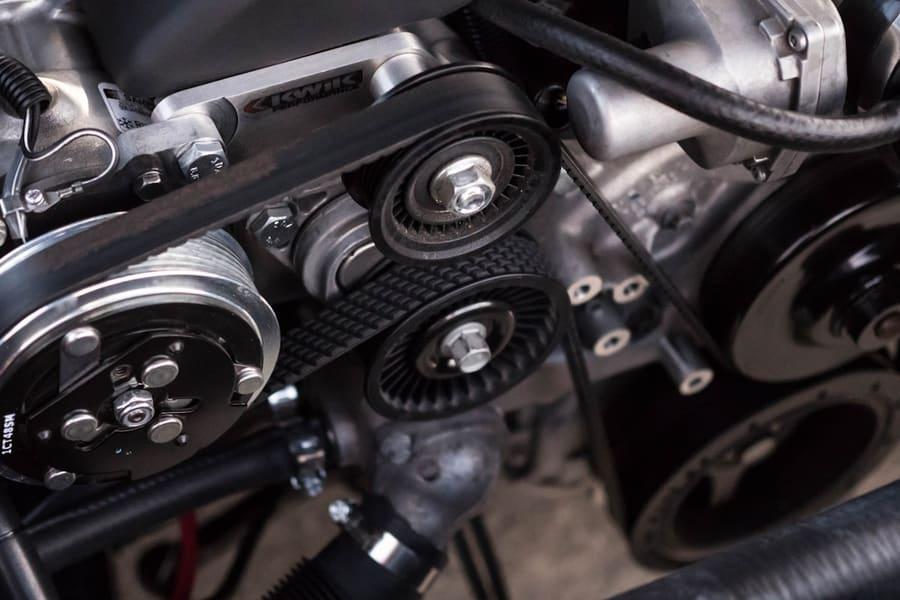
Sort this out before you spend anything, because a battery costs a fraction of an alternator and the symptoms overlap. The alternator, driven by the serpentine belt, powers everything electrical while the engine runs and recharges the battery; the battery's real job is starting. So the classic tell: a bad battery struggles to start the car but runs fine once it's going, while a bad alternator lets the car start normally and then dies while driving, because it is draining the battery instead of charging it.
Signs pointing at the alternator:
- The battery warning light on the dash while driving
- Headlights that dim or brighten with engine RPM, or go dim at idle
- A whining or growling noise from the front of the engine that rises with RPM
- Electrical gremlins: flickering dash lights, slow power windows, a radio that resets
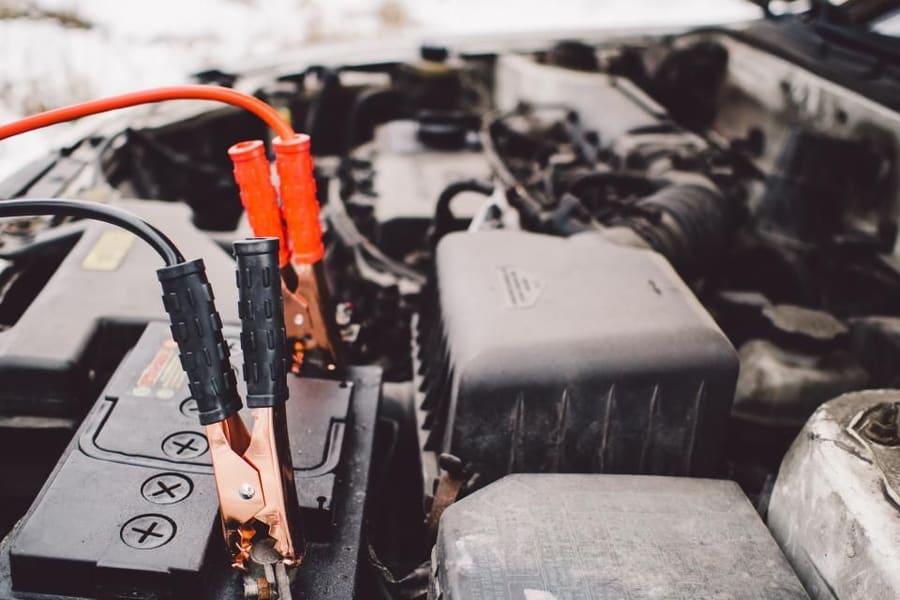
- The car dies shortly after a jump start instead of staying running
- Repeated dead batteries on a battery that is only a year or two old
A charging-system test settles it in minutes: $60 to $160 at a shop, often credited toward the repair if you approve the work, and free at most parts stores. Our battery or alternator guide walks through the full checklist, and if the car will not crank at all, start with why your car won't start. One more thing worth testing on the same visit: a failing alternator often takes the battery with it, because repeated deep discharges permanently cost a lead-acid battery capacity. If the battery fails a load test, replacing it during the same visit adds $150 to $400, and our battery cost guide breaks that number down. Once an alternator is confirmed bad, treat it as a this-week repair, not a next-month one; when it stops charging, the car runs on stored battery power alone and quits wherever it happens to be.
Remanufactured, New Aftermarket, or New OEM: Read the Warranty Fine Print
The part tiers in 2026: a remanufactured unit runs $180 to $320, a new aftermarket unit $250 to $450, and a new OEM part (Denso, ACDelco, Motorcraft) $400 to $800. The labor is the same either way, so part choice alone moves the total $200 to $480 on the identical car. One Acura dealer quoted $780 for the OEM part versus $600 aftermarket for the same job.
The fine print matters more than the label. Parts-store remans (Duralast, O'Reilly Ultima, NAPA) carry limited lifetime warranties, but the warranty covers the part only: if the reman fails at 60,000 miles you get a free alternator and pay the 1 to 4 hours of labor all over again. New OEM units typically carry shorter warranties, 2 years on ACDelco Gold and 1 year on a reman Denso, but fail less often out of the box. Before approving, ask two questions: how long is the part covered, and is labor covered on a warranty replacement.
Also on every alternator invoice: the core charge, a refundable $40 to $80 deposit (a reman Denso on RockAuto carried a $79 core) that comes back when the old alternator is returned. Shops handle the return automatically; DIYers often forget and leave the money on the table.
The Pulley That Can Fake a Dead Alternator
Many alternators built since the mid-2000s use an overrunning alternator decoupler (OAD) pulley instead of a solid pulley. A worn OAD is a $30 to $100 part, and it can do a convincing impression of full alternator failure, with belt noise and flutter that sends people shopping for an alternator they do not need. It is worth ruling out before you buy the whole unit.
The flip side matters at replacement time: the new alternator must keep the OAD-type pulley. Swap in a solid-pulley unit and you invite belt flutter, accelerated tensioner wear, and possible belt ejection.
What Drives the Price
- Access. The biggest swing in the whole job: 1.0 hour on a top-mount 4-cylinder versus 3.7 book hours on a buried V6, which is $130 versus $480 or more in labor at the same shop before the part is touched.
- Part type. Reman $180 to $320, new aftermarket $250 to $450, new OEM $400 to $800. Same labor, so the part choice alone moves the total $200 to $480.
- Amperage and technology. Standard 100 to 130 amp units are cheapest. High-amp 180 to 250 amp and 48V start-stop units add $300 to $900 in parts and can add coding time only a dealer or well-equipped shop can do.
- Regional labor rate. State averages ran $85 to $197 per hour as of June 2026 (Tekmetric), so the identical 2.5 hour job costs about $213 in labor in the cheapest state and $493 in the most expensive.
- Bundled belt and tensioner work. The belt adds $25 to $120 done together, a tensioner adds $30 to $120 in parts with minimal labor, and both cost double or more as separate visits later because you pay the access labor twice.
- Diagnosis and battery condition. A charging-system test runs $60 to $160 at a shop (often credited to the repair, free at parts stores), and a battery killed by the dying alternator adds $150 to $400.
Alternator Replacement FAQ
How long does it take a mechanic to replace an alternator? One to 1.5 hours on most 4-cylinder cars where the alternator sits on top of the engine. Buried units on transverse V6s, trucks, and European cars book 3 to 4 hours because intake tubes, brackets, or mounts have to come off first. A 2022 Lexus ES350 books 3.7 hours.
Is a remanufactured alternator as good as a new one? A quality reman (Denso, Bosch, Duralast) gets new brushes, bearings, regulator, and diodes, and usually carries a lifetime part warranty that new OEM units do not. The catch: if it fails, the warranty replaces the part but you pay installation labor again. Bargain remans have noticeably higher repeat-failure rates.
Should I replace the serpentine belt when I replace the alternator? If the belt has any cracking or glazing, yes. It already comes off during the alternator job, so the add-on is $25 to $80 for the belt and little to no extra labor. Waiting means paying $90 to $250 later for a standalone belt visit.
Can I buy the alternator myself and just pay a shop to install it? Some independent shops allow it, but most will not warranty customer-supplied parts. If your part fails, you buy the labor twice. Shops mark parts up partly to cover that risk, so the real savings are usually smaller than the sticker gap suggests.
Why is my dealer quote so much higher than the local shop? Two stacked reasons: dealer labor runs $20 to $40 per hour above independents, and dealers quote new OEM parts only, which cost $400 to $800 versus $180 to $320 for a reman. National estimate sites like RepairPal lean on those same OEM part assumptions, which is why their averages sit near the top of what independents actually charge.
These ranges cover the alternator and installation at independent shops. They do not include taxes, shop supplies, or disposal fees (RepairPal and most estimator ranges exclude those too), a $60 to $160 diagnostic fee if the shop does not credit it toward the repair, a new battery at $150 to $400 if the failing alternator ran the old one flat, a worn belt tensioner or idler pulley at $30 to $120 in parts, towing if the car died on the road, or the software coding and 48V battery service some European and start-stop vehicles require. Dealer OEM-only pricing runs 30 to 50 percent above these independent-shop figures for the same work.