


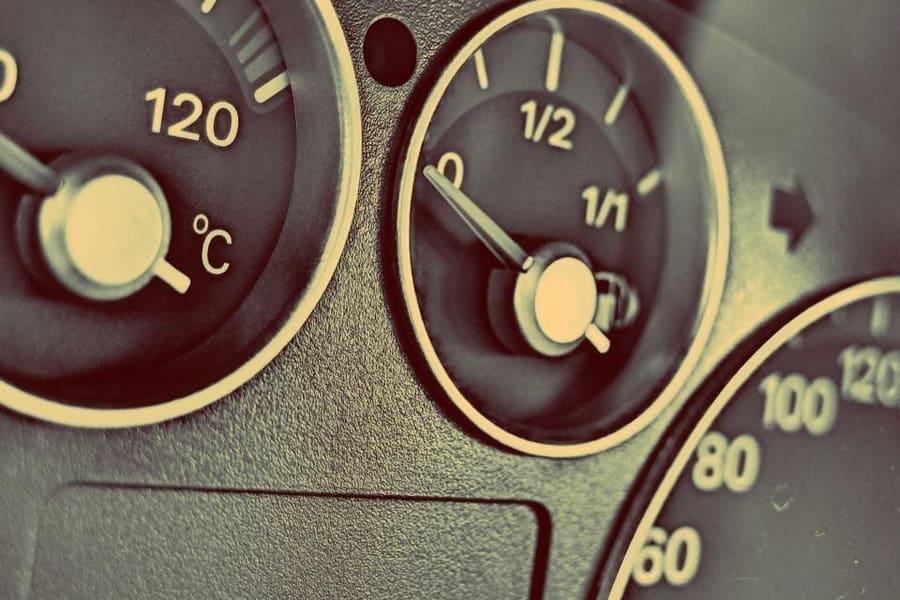
If your car starts overheating, turn the A/C off, turn the heater on full blast, and pull over as soon as it's safe to stop. Shut the engine off and let it cool for at least 15 to 30 minutes before you touch anything under the hood. Whatever you do, don't open the radiator cap while the engine is hot, the system is under pressure, and escaping coolant and steam can cause serious burns.
That's the short version. The longer version matters because overheating is one of the few car problems where your next five minutes genuinely decide the bill. Caught early and handled right, it's often a $150 to $500 repair at North Carolina independent-shop rates, roughly $90 to $130 an hour in Charlotte, $95 to $135 an hour in the Triangle. Driven through, it can warp a cylinder head or blow a head gasket and turn into a $1,500 to $3,000+ job, sometimes a dead engine. Here's what to do, what to avoid, and how to tell which end of that range you're likely looking at.
Already know which repair you're facing? The radiator cost calculator prices it for your exact year, make, and model in about thirty seconds.
What Should I Do in the First 60 Seconds?
Shed heat immediately and get off the road, in that order of urgency. If the temperature gauge is climbing into the red or a coolant warning light comes on, work through this sequence:
- Turn off the air conditioning. The A/C adds load to the engine and dumps extra heat into the system.
- Turn the heater on full, fan on high. It feels wrong in a Carolina July, but the heater core is essentially a small radiator, running it pulls heat out of the coolant and buys you time.
- Turn on your hazards and pull over somewhere safe: a parking lot, a wide shoulder, an exit ramp. Don't stop in a live lane.
- Shut the engine off once you're stopped. Every extra minute a hot engine keeps running adds damage.
- Pop the hood release from inside the car, but don't raise the hood fully if steam is pouring out. Let it vent first.
- Wait at least 15 to 30 minutes. Not five. The needle needs to come well down before the system depressurizes.
- Check the coolant level at the overflow reservoir, the translucent plastic tank, only once everything is cool. If it's empty and you have coolant (or, in a pinch, water), topping it up may get you to a shop.
- Call for a tow if the temperature spikes again within a few minutes of restarting. At that point, driving it is gambling with the engine.
What Should I Never Do When My Engine Overheats?
Never open the radiator cap or coolant reservoir cap while the engine is hot. The cooling system is pressurized, which raises the boiling point of the coolant, crack the cap and that superheated liquid flashes to steam in your face. Shops see these burns every summer, and every one of them was avoidable by waiting half an hour.
A few more moves that turn a cheap problem into an expensive one:
- Don't keep driving to "make it home." Ten more miles with the needle buried is how a $250 hose becomes a $2,500 head gasket. If home is farther than the nearest safe stopping point, it's too far.
- Don't pour cold water on or into a hot engine. The thermal shock can crack the block or cylinder head. If you need to add fluid, wait until things are cool and add it gradually with the engine running.
- Don't assume it fixed itself because the gauge came back down. Overheating almost always has a physical cause, and it almost always comes back, usually at a worse time.
Why Is My Car Overheating?
Nearly every overheating case comes down to one of two problems: there isn't enough coolant in the system, or the coolant isn't circulating and shedding heat the way it should. Low coolant usually means a leak, a hose, the radiator, a water pump seal, the heater core. Circulation and airflow failures come from a stuck thermostat, a dead cooling fan, a failing water pump, or a clogged radiator.
The good news is that the most common causes sit at the cheap end of the list. Here's what the usual suspects run at NC independent shops, from least to most expensive, labor built from typical book hours times local rates:
| Cause | Typical NC cost (parts + labor) | Notes |
|---|---|---|
| Coolant top-up + pressure test | $25 to $150 | Finding the leak is the real job |
| Radiator cap | $20 to $80 | A weak cap lets coolant boil early |
| Radiator hose | $100 to $380 | Cheap part; labor varies by how buried it is |
| Thermostat | $140 to $480 | One of the most common culprits |
| Cooling fan / fan motor | $300 to $750 | Classic cause of overheating in traffic |
| Water pump | $400 to $1,100 | Often bundled with a timing belt job |
| Radiator replacement | $450 to $1,100 | Higher on trucks and European makes |
| Head gasket | $1,500 to $3,000+ | Usually the result of overheating, occasionally the cause |
Treat those as ballparks, not guaranteed quotes, your make, model, and shop move the numbers. The water pump and radiator guides break their jobs down line by line, and our cost guides cover the rest.
One pattern worth knowing: overheating mostly in stop-and-go traffic, crawling I-77 into uptown on an August afternoon, points at the cooling fan, because there's no natural airflow through the radiator at a standstill. Overheating at highway speed points more toward a thermostat, water pump, or restricted radiator, since airflow isn't the issue there. Long mountain grades on I-40 west of Asheville stress the whole system at once, which is why a marginal cooling system that behaves in town often shows itself there first.
Is It Serious, or Can It Wait?
A single brief spike that you caught quickly can usually wait a few days for an appointment, repeated overheating, or any sign that coolant is mixing with oil or exhaust, cannot. Here's the honest split.
Probably fine to schedule (drive gently, watch the gauge):
- The needle crept up once, say, idling with the A/C blasting on a 95° day, came right back down, and the coolant level checks out.
- You're losing a little coolant slowly (topping up every few weeks) with no gauge movement and no puddles.
Stop driving and get it looked at now:
- It overheats again within minutes of restarting.
- White, sweet-smelling exhaust smoke, milky tan sludge under the oil cap, or coolant disappearing fast, the classic head gasket signals. Our guide to exhaust smoke colors covers what each kind of smoke means.
- Steam from under the hood, coolant pooling under the car, or the needle pegged in the red.
- The temperature warning shows up alongside other dashboard warning lights, especially oil pressure or check engine.
An engine can often survive one brief overheat with no lasting harm. What kills engines, warped heads, cooked gaskets, seized internals, is repeated heat cycles, or one long "I just need to get home" drive with the gauge buried.
How Do I Figure Out What's Actually Wrong?
You can narrow the cause down a long way before anyone touches the car, just by noting when it overheats, what you see, and what you smell. Those details are exactly what a good mechanic asks for, and shops across Charlotte and the Raleigh area diagnose this exact complaint all summer long. They're also what Fixxr's free diagnostic works from: describe your symptoms, when the gauge climbs, whether you've spotted leaks, any smells or smoke, even a photo of the puddle under the car, and you'll get a ranked list of likely causes with a fair cost range for each.
Overheating feels like an emergency, and in the moment it is, but it's one with a clear playbook. Heater on, pull over, engine off, hands off the cap, let time do the cooling. Follow that, and odds are you're dealing with a hose, a thermostat, or a fan: real money, but ordinary-repair money. And when the estimate arrives, run it through the quote scanner at is my quote fair, snap a photo, and in about a minute your diagnostic tells you what that repair typically costs for your car in your part of North Carolina. The expensive outcomes almost all require ignoring the gauge, and now you won't. You deserve a fair fix.