


An external belt-driven water pump, the design on most sedans, trucks, and V8s, runs $400 to $700 installed at an independent shop in 2026. If your engine drives the pump off the timing belt, the two get replaced together and the combined job runs $900 to $1,400. And on engines that bury the pump behind the timing cover, like Ford's 3.5L V6 and EcoBoost family, the same part name generates a $1,500 to $2,400 bill.
Those spreads have almost nothing to do with the part. A water pump that sells for $187 in parts (Aisin's complete timing belt and pump kit at RockAuto) routinely generates a $900 to $1,400 shop bill in 2026, because 4 to 6 hours of teardown labor, not the pump, is what you are really buying. Labor is 60 to 70 percent of most water pump bills. Here is the whole picture, including the one moment when adding a water pump costs about $100.
Want your number first? The water pump cost calculator prices this job for your exact year, make, and model in about thirty seconds, then come back for what's behind the number.
What Does a Water Pump Replacement Cost in 2026?
| Scenario | Typical price installed |
|---|---|
| External belt-driven pump (most sedans, trucks, and V8s) | $400 to $700 |
| Timing-belt-driven pump, done with a full timing belt kit | $900 to $1,400 |
| Adding the pump while a timing belt job is already open | $100 to $250 |
| Chain-driven pump behind the timing cover (Ford 3.5/3.7 V6 and EcoBoost) | $1,500 to $2,400 |
| Electric water pump (BMW N52/N54 sixes) | $800 to $1,400 |
The math behind the most common job: the pump itself sells for $50 to $150 retail at AutoZone or O'Reilly, shows up as roughly $130 to $280 on the shop's parts line after standard markup, and takes 1.5 to 3 hours to swap at 2026 independent labor rates of $120 to $159 per hour. That lands the bill at $400 to $700. National-average sites like RepairPal publish $885 to $1,134 for water pump replacement (labor $361 to $530, parts $524 to $604), well above the simple external job, because that blended number averages in chain-driven designs and OEM-leaning parts prices. Neither figure is wrong; they are describing different engines.
How Do I Know the Water Pump Is Failing?
The water pump circulates coolant in a loop between the engine and the radiator, carrying heat away from the cylinders. A spinning impeller does the actual moving; a shaft, a bearing, and a seal let it spin without leaking, and those three are the wear items. A pump usually gives warning before it quits:
- A coolant puddle under the front-center of the engine, often bright green, orange, or pink
- Coolant weeping or crusty residue around the pump's weep hole
- A whine, growl, or grinding from the front of the engine that changes with RPM, from a worn pump bearing
- A loose or wobbly pulley at the pump when the engine is off and cool
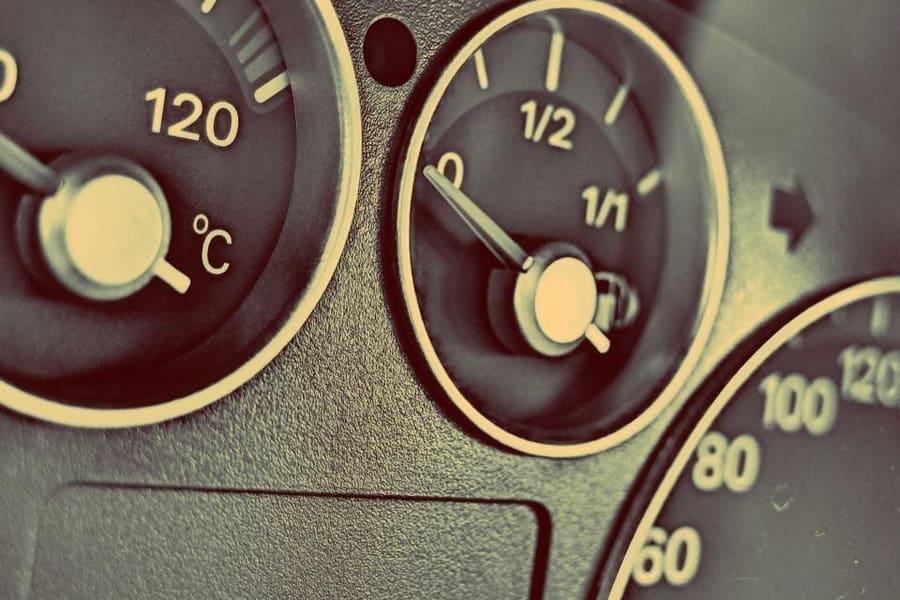
- The temperature gauge climbing or an overheating warning, especially in stop-and-go traffic
- Low coolant you keep having to top off, or a sweet smell and light steam after a drive
The weep hole deserves its own mention because it confuses people into hoping for a cheap fix. That small hole under the pump's shaft is a designed failure signal: coolant seepage or a dried white or green crust there means the internal shaft seal is gone. There is no gasket to re-tighten. The whole pump gets replaced.
Why the Same Repair Is $400 on One Car and $2,400 on Another
How the pump is driven sets the price before anyone touches a wrench. RepairPal shows a Toyota Corolla water pump at $498 to $646 but a Ford Explorer at $1,211 to $1,563, the same repair name at triple the price, and the difference is almost entirely labor, because the Ford pump lives behind the timing cover.
Ford's Cyclone and EcoBoost V6 family is the extreme case: the pump is driven by the timing chain inside the engine, so the front of the engine comes apart to reach it. Owner and shop reports put the job at 8 to 12 hours, and quotes usually include chain cover gaskets, coolant, and an oil change, because a leaking pump can push coolant into the engine oil. Dealer quotes on these engines commonly run $2,500 to $3,000. The same truck can even be either job: an F-150 with the 5.0 V8 has an easy external pump, while the 3.5 EcoBoost buries it behind the cover. Our 2018 Ford F-150 water pump page breaks the numbers down for that truck specifically.
BMW's N52 and N54 sixes (328i, 335i, 528i, X3 and X5) sit in their own lane: the pump is electric, with no belt at all. The genuine BMW pump alone lists near $676, aftermarket versions run $350 to $450, and the thermostat gets replaced with it because BMW's own procedure removes the pump to reach the thermostat. With the vacuum-fill bleed procedure the job lands at $800 to $1,400 at an independent shop.
Why Shops Bundle the Pump With the Timing Belt
If your pump is driven by the timing belt, doing both at once is genuinely in your interest, not padding. The belt has to come off to reach the pump anyway, so adding the pump costs about $100 to $250: $100 to $150 in parts and roughly half an hour of extra labor. Skip it, and if the pump starts leaking a year later, you pay the full $900 to $1,400 teardown a second time. That is the same logic covered in our timing belt cost guide: do the wear items that share the labor together, once.
The parts side of this bundle is cheaper than most drivers expect. The Aisin TKH-002 kit, which includes the belt, water pump, tensioner, and idlers for Honda's J-series V6, sells for $187 at RockAuto and $220 to $330 at NAPA or O'Reilly. Honda Pilot owners report independent-shop quotes of roughly $920 to $1,400 for the full service, which matches the math, while dealers quote the same bundle at $1,500 to $2,200.
One thing every water pump quote should include, bundled or not: 1 to 2 gallons of the correct spec coolant ($20 to $60) and a bleed or vacuum-fill step. A shop quote missing coolant is a shop planning to reuse what drained out.
Can I Keep Driving With a Leaking Water Pump?
Short trips with a slow weep-hole seep are usually survivable if you watch the temperature gauge and coolant level, but a failing pump can let go without warning, and a seized pump can shred the belt that drives it on the way out. The real risk is heat: a few minutes of overheating can turn a $500 pump job into a head gasket repair costing thousands. So treat a confirmed leak or bearing noise as a repair to book within days, not weeks.
If the gauge starts climbing while you drive, turn the heater on full (it pulls heat off the engine), find a safe place to pull over, and shut it down. Our guide on what to do when your car is overheating walks through the first 60 seconds. The rule of thumb: a leak you can schedule around, an overheating engine you cannot.
What Drives the Price
- How the pump is driven: the single biggest swing. 1.5 to 3 hours for an external belt pump versus 8 to 12 hours when it hides behind the timing cover. Same part name, $400 job or $2,400 job.
- Shop labor rate: independents ran $120 to $159 per hour nationally in 2026; dealers add $20 to $40 per hour, and luxury-brand dealers in big metros reach $250 or more.
- Parts choice: aftermarket external pumps run $50 to $150 retail, while OEM and European electric pumps run $350 to $700. On German cars the parts choice alone can move the bill $300 or more.
- What gets bundled in: thermostat, tensioners, idlers, serpentine belt, and coolant add $100 to $300 in parts but almost no labor while everything is apart, and they prevent a second teardown.
- Overheating damage already done: if the car was driven hot, head gasket testing, hoses, and radiator checks can stack hundreds more on top.
- Region and access: low-cost states sit around the low $140s per hour while California, Washington, and the Northeast bill $145 to $160 or more, and cramped transverse V6 bays add book time versus open truck bays.
Water Pump Replacement FAQ
How much does it cost to replace a water pump at an independent shop? Most drivers pay $400 to $700 for a simple belt-driven pump in 2026, but the national average is $885 to $1,134 because many engines bury the pump behind the timing belt or timing cover. Chain-driven designs like Ford's EcoBoost V6 family can run $1,500 to $2,400.
Can I drive with a leaking water pump? Short trips with a slow weep-hole seep are usually survivable if you watch the temp gauge and coolant level, but a failing pump can let go without warning. Get it looked at within days, not weeks.
Should I replace the water pump when I do the timing belt? Yes on almost every timing-belt engine. The belt has to come off to reach the pump, so the pump adds only about $100 to $250 to the job. If it fails later on its own, you pay the full $900 to $1,400 teardown a second time.
Why is my water pump quote over $2,000 on my Ford? On Ford's 3.5L and 3.7L V6 and EcoBoost engines the pump is driven by the timing chain inside the engine, not an outside belt. The front of the engine has to come apart, which takes 8 to 12 hours, and the job usually includes gaskets, coolant, and an oil change because a leaking pump can contaminate the oil.
How long does water pump replacement take? About 1.5 to 3 hours for an external belt-driven pump, 4 to 6 hours when it is done with a timing belt, and 8 to 12 hours on engines where the pump sits behind the timing cover. Most shops keep the car for a day; the big Ford jobs can take two.
Is it cheaper to buy the water pump myself and have a shop install it? Usually not by much, and many shops decline customer-supplied parts or void their labor warranty on them. A pump that is $80 at O'Reilly often shows as $130 to $160 on the invoice, and that 40 to 100 percent markup is standard because it funds the parts warranty the shop carries. The pump is the cheap half of the bill anyway: saving $60 on the part does nothing about the $600 of labor, and if a customer-supplied pump fails, you pay the labor twice.
These ranges cover the pump, gaskets, coolant, and installation at independent shops. They do not include sales tax, shop supplies, or disposal fees (typically $20 to $80), a diagnostic or pressure-test fee if the shop does not waive it with the repair ($100 to $180), a full coolant-system flush beyond the basic drain and refill, or parts that turn out to be worn once things are apart, like the radiator, hoses, heater core, fan clutch, or a serpentine belt shredded by a seizing pulley. Head gasket testing or repair after an overheat is its own job, and dealer pricing adds $20 to $40 per hour in labor plus OEM parts premiums over these independent-shop figures.