


Ask ten technicians what the hardest repair on a car is and you will get three different answers, all of them correct. By raw labor hours it is internal engine or transmission work: a head gasket on a transverse V6, or a transmission rebuild, at 12 to 25 hours of book time. By physical misery it is anything behind the dashboard, which is why a cheap AC evaporator turns into a $2,600 bill. And by pure skill, almost every veteran mechanic gives the same answer: an intermittent electrical fault, which can consume more hours than an engine swap and has no published labor time at all.
That distinction matters to you as a driver, because it explains the two most confusing lines on a repair estimate: why a small part costs a fortune to install, and why a shop sometimes quotes diagnostic time open-ended instead of flat. Here is what actually makes a job hard, what the hardest ones cost, and which ones are worth attempting yourself.
Want your number first? The repair cost calculator prices a specific job for your exact year, make, and model in about thirty seconds, then come back for what is behind the number.
The Hardest Jobs, and What They Run
These are typical 2026 ranges at an independent shop on a mainstream vehicle, with rough book-hour figures. Hours vary enormously by platform, and that variation is the whole point of this article.
| Job | Rough book hours | Typical 2026 cost |
|---|---|---|
| Transmission rebuild or replacement | 8 to 20 | $2,800 to $6,500 |
| Head gasket, V6 or V8 with two heads | 12 to 25 | $2,520 to $4,400 |
| Engine replacement | 10 to 25 | $4,200 to $12,000 |
| AC evaporator (dash out) | 8 to 16 | $1,200 to $2,600 |
| Head gasket, 4-cylinder single head | 8 to 14 | $1,550 to $2,350 |
| Torque converter (transmission out) | 6 to 12 | $1,100 to $2,800 |
| Heater core (usually dash out) | 6 to 14 | $900 to $2,400 |
| Intermittent electrical diagnosis | no book time | billed hourly, $100 to $600+ |
| Timing chain (versus a belt) | 6 to 15 | $1,200 to $3,000 |
Three honest notes on that table:
- The hour ranges are not sloppiness, they are the reality. The identically named repair can be 8 hours on one car and 20 on another because of how the engine sits and what has to come off first. This is the single biggest reason your quote does not match your neighbor's.
- Intermittent electrical is the only row with no book time. Flat-rate guides price known procedures. They cannot price "find the wire that fails when it rains." Shops bill this hourly because nobody can honestly quote it flat, and that is a sign of candor rather than a blank check. Ask for an authorization cap.
- Machine work is often a separate bill. A head gasket job frequently includes sending the head to a machine shop to check it is still flat and resurface it. That is a legitimate line item, and skipping it is how a head gasket job fails twice.
Hard Because You Cannot Reach It
This is the rule that explains most expensive repair bills: what the part costs matters far less than what has to come off to reach it. A heater core is a small radiator that might cost $90. On a lot of vehicles it sits behind the entire dash assembly, which means the steering column, the instrument panel, sometimes the seats, and every connector behind them come out and go back in, with the air conditioning evacuated and recharged because the lines run through the same box.
The all-time example mechanics trade stories about is the transverse V6, an engine mounted sideways in a front-wheel-drive car. The rear bank of cylinders faces the firewall with a few inches of clearance. On some of those platforms, replacing three spark plugs on the back means either removing the intake manifold or rocking the whole engine forward on its mounts. Same three plugs as the front bank. Four times the labor.
You can spot this pattern on your own estimate without knowing anything about cars. If the parts total is small and the labor total is large, you are paying for access, not for greed. It is also why bundling genuinely saves money: with the front of the engine already apart for a timing belt, adding the water pump saves $300 to $500 in labor you would otherwise pay twice. A shop that suggests it is looking out for you.
Hard Because You Cannot Find It
Ask a technician with 25 years in the trade what job they least want to see roll in, and it is rarely an engine. It is a car with a fault that happens once a week.
A known repair, however brutal, has a procedure and an end. An intermittent fault has neither. A wire chafed inside a harness, a connector with corrosion that conducts fine until it warms up, a ground strap that has loosened a quarter turn, a module that browns out only when the AC compressor kicks on and the headlights are up. The car arrives running perfectly. The technician's job is to reproduce a failure that does not want to be reproduced, then trace it through a wiring diagram with a meter and a scope.
This is why the diagnostic hour is the most undervalued thing on your bill. A standalone diagnostic runs $100 to $150 and buys roughly an hour of real testing. Not plugging in a code reader, which the parts store does free, but turning a code into a confirmed cause. CarMD's 2026 Vehicle Health Index put the average check-engine-light repair at a record $554, with the labor share up 51% in a single year. Modern cars are computers with wheels, and diagnosis is where the expertise lives.
The genuinely useful thing to understand: on a hard electrical fault, the diagnosis can honestly cost more than the fix. Four hours of tracing to find a corroded ground, then ten minutes and a $12 terminal to repair it. That bill looks absurd and it is completely fair. The four hours were the work.
Hard Because There Is No Margin for Error
The third kind of hard has nothing to do with hours. Some jobs are unforgiving in ways an inexperienced hand does not see coming:
- Head bolts are usually torque-to-yield, meaning they stretch permanently when tightened and must be replaced, in sequence, in stages, to a specific angle. Reuse them or skip the sequence and the gasket fails again in a few thousand miles.
- Timing is absolute. One tooth off on a belt or chain and the engine runs badly. Several teeth off on an interference engine and the valves meet the pistons, turning a $1,200 job into an engine replacement.
- Aluminum threads strip. Much of a modern engine is aluminum, and a fastener overtightened by a few foot-pounds pulls the threads out of the block. Now the repair includes a thread insert.
- Cleanliness decides transmission rebuilds. A single piece of grit in a valve body causes a shift complaint that sends the car back. This is why rebuild shops are obsessive in a way that looks like theater until you have seen a comeback.
- Sealing surfaces have to be genuinely flat. Which is why the machine shop step exists, and why a shop that includes it is doing the job properly rather than padding it.
None of this is exotic knowledge. It is the difference between a repair that lasts ten years and one that lasts ten weeks, and it is a large part of what a shop's warranty is actually insuring.
Which of These Should You Never Try Yourself?
Honest thresholds. Plenty of people successfully do their own brakes and alternators, and there is no reason not to. The line is not about intelligence, it is about tooling, space, and what failure costs:
- Reasonable to attempt with basic tools: brake pads and rotors, batteries, air filters, spark plugs on an inline engine with good access, serpentine belts, bulbs, wiper blades.
- Attempt only with the right equipment and a service manual: timing belts, water pumps, suspension work involving spring compressors, anything requiring a torque wrench and a published sequence. A coil spring holds enough stored energy to be lethal; that is not a scare tactic, it is the reason a spring compressor exists.
- Leave alone unless this is your trade: internal engine and transmission work, anything requiring the drivetrain to come out, high-voltage hybrid and EV systems, and airbag or restraint components. High-voltage packs can kill you, and airbag modules can deploy during handling.
- The honest test on any job: if a mistake costs more than the labor you are saving, pay the labor. Saving $600 on a timing belt you install one tooth off is not saving $600.
If you do want to try something, our guide to what car repairs cost will tell you what you would be saving before you commit a Saturday to it.
What Do the Hardest Jobs Cost in North Carolina?
Labor-heavy jobs are exactly where a lower local rate compounds in your favor. Independent shops in Charlotte generally bill $90 to $130 an hour and the Raleigh-Durham Triangle about $95 to $135, against a national average near $132 and the best-supported survey band of $120 to $159 (PartsTech's survey of 752 shops). On a 15-hour head gasket that difference is $450 to $600 of real money, and on a 20-hour engine job it is more.
Dealer rates in the state still post in the national $150-to-$250 range. For the hardest jobs the dealer premium is sometimes genuinely worth it, factory tooling, model-specific training, and access to manufacturer software for module programming are real advantages on software-heavy and warranty work. Our guide to dealership versus independent covers when that is the right call and when it is not. Jobs on this list all need a lift, so they belong in a shop, but the diagnosis that tells you which job you are facing often does not: mobile mechanics in Charlotte and around the Triangle can do that where the car sits.
Every figure here is a ballpark for checking a quote, not a guaranteed price for your vehicle, and the ranges are wide because the platforms genuinely differ that much. Our cost guides break the common jobs down into parts and labor the same way.
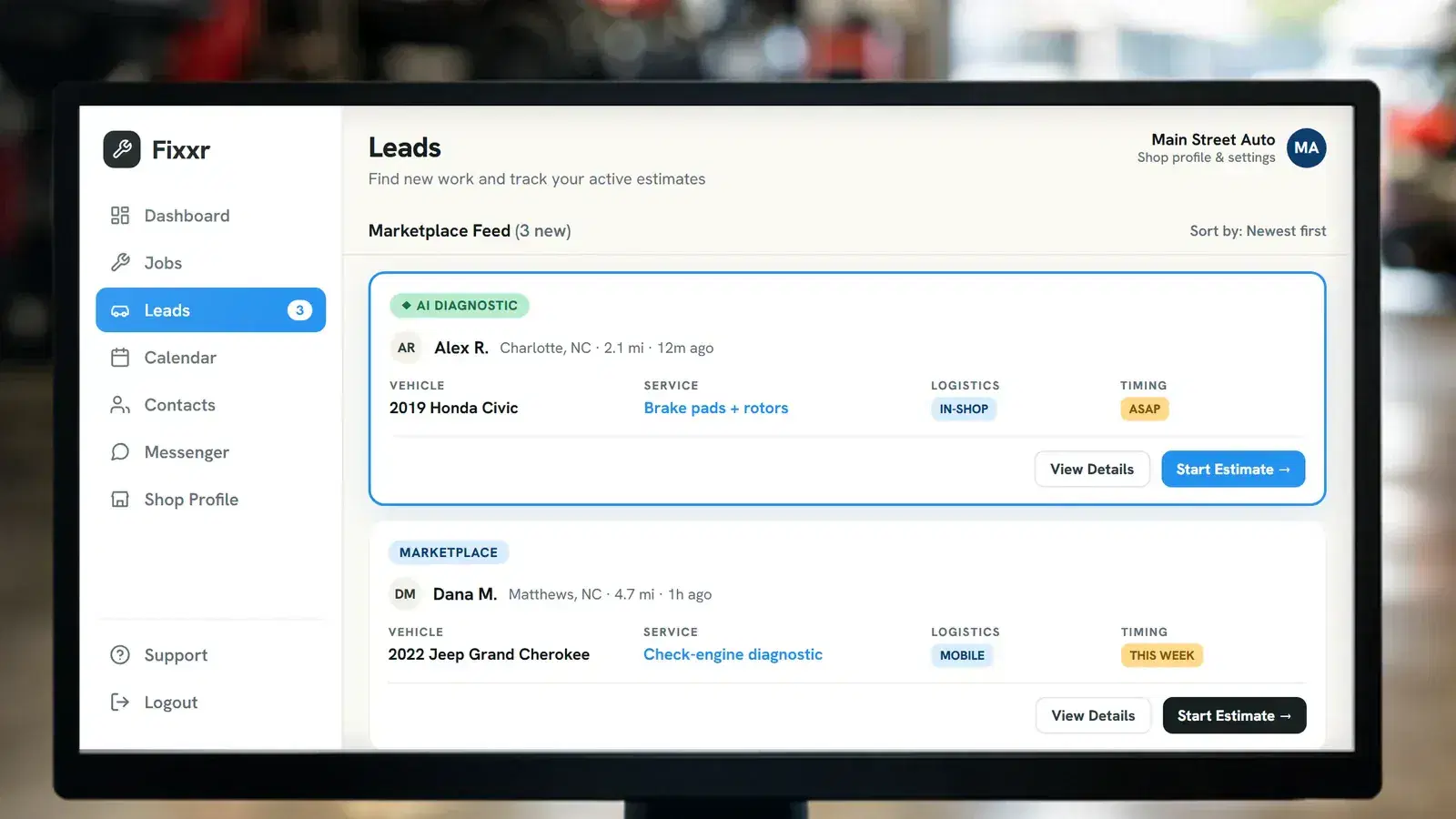
If a shop has handed you an estimate with double-digit labor hours on it, that is worth understanding rather than just swallowing. Run it through Fixxr's quote scanner at is my quote fair: snap a photo, tell us the vehicle, and in about a minute your diagnostic checks the hours and the parts against real data for your exact year, make, and model in your area. Hard jobs are expensive because they are hard, and a shop that writes 18 hours for an 18-hour job is not overcharging you, but you should be able to see that for yourself. You deserve a fair fix.