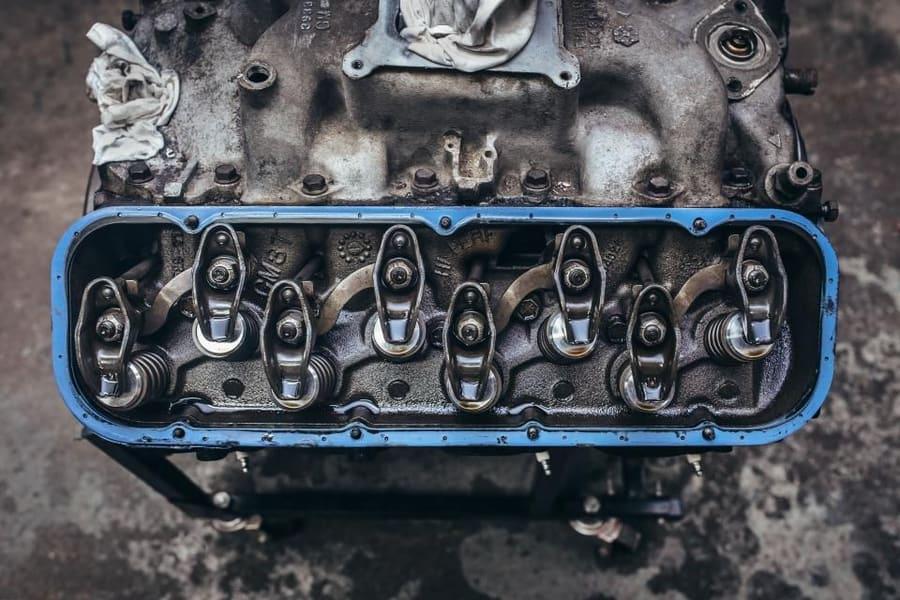




The most expensive thing to repair on a normal car is the engine, and the transmission is right behind it. A full engine replacement typically runs $4,200 to $12,000 depending on the vehicle, and a new transmission from a dealership runs $6,000 to $10,000. On luxury and performance platforms both numbers roughly double. If you drive an EV or a hybrid, the battery pack has quietly joined that tier: hybrid packs average around $5,000 and EV packs commonly run $6,000 to $9,000 or more.
But the repairs that actually blindside people are usually not the engine. Nobody is shocked that an engine costs five figures. What ruins a week is the $2,400 in-dash AC evaporator, the $2,750 catalytic converter, or the $4,400 head gasket on a car worth $6,000. Here is the honest big-ticket list, why these particular jobs cost what they do, and the free habits that keep a $200 problem from turning into one of them.
Want your number first? The repair cost calculator prices a specific job for your exact year, make, and model in about thirty seconds, then come back for what is behind the number.
The Big-Ticket List, Priced Honestly
These are typical 2026 ranges at an independent shop on a mainstream vehicle. Every one of them is a ballpark to check a quote against, not a guaranteed price for your car.
| Repair | Typical 2026 range |
|---|---|
| Engine replacement (economy to mainstream) | $4,200 to $12,000 |
| New OEM transmission at a dealership | $6,000 to $10,000 |
| CVT replacement (common on some sedans and crossovers) | $4,200 to $7,500 |
| EV high-voltage battery pack | $6,000 to $9,000+ |
| Remanufactured transmission, installed | $3,800 to $6,500 |
| Hybrid battery pack | around $5,000 |
| Transmission rebuilt locally | $2,800 to $5,200 |
| Head gasket, V6 or V8 with two heads | $2,520 to $4,400 |
| AC evaporator (buried in the dash) | $1,200 to $2,600 |
| OEM catalytic converter at an independent | $950 to $2,750 |
| Torque converter replacement | $1,100 to $2,800 |
| Head gasket, 4-cylinder single head | $1,550 to $2,350 |
A few honest notes on reading that table:
- "Replacement" hides three very different prices. A transmission can be a used unit from a salvage yard ($1,800 to $3,400), your original rebuilt ($2,800 to $5,200), a remanufactured unit ($3,800 to $6,500), or new from the dealer ($6,000 to $10,000). All four are legitimate repairs with different warranties. Getting all four quoted is the single highest-value thing you can do on a big job.
- Luxury, European, and performance platforms run far higher, routinely $15,000 to $25,000 for a complete engine and $10,000 to $14,000 for a transmission. If that is your car, the ranges above are a floor.
- Bundling on a teardown is real savings, not padding. Once the front of the engine is apart, adding the water pump to a timing belt job saves $300 to $500 in duplicated labor. A shop suggesting that is doing you a favor.
Why Do Engines and Transmissions Cost So Much?
Three reasons stack up, and none of them is the shop:
The part is an assembly, not a part. You are not buying a gasket, you are buying several hundred machined components pre-assembled and tested. A remanufactured transmission arrives as a sealed unit that someone disassembled, measured, replaced the wear items in, and warrantied. That process has a floor price no shop controls.
Access is most of the labor. This is the rule that explains almost every expensive repair bill: what a part costs matters less than what has to come off to reach it. A $70 water pump becomes a $900 job when the front of the engine has to come apart. An engine or transmission means pulling driveshafts, subframes, wiring harnesses, cooling lines, and exhaust, often dropping the whole drivetrain out the bottom. Ten to twenty hours of book time is normal, and at $132 an hour national average that is $1,300 to $2,600 in labor before a single part is paid for.
There is no partial fix. You can replace one brake pad set and leave the rest. You cannot replace a third of a transmission. Internal failures shed metal through the whole unit, which is why a shop that finds glitter in the pan will tell you the fluid service is no longer the repair.
The Expensive Repairs Nobody Expects
The engine is the famous one. These are the ones that actually surprise people, and all of them are expensive for the same access reason:
- AC evaporator, $1,200 to $2,600. The part is cheap. It lives behind the entire dashboard, which means pulling the dash, the steering column, and sometimes the seats. Almost all of that bill is labor.
- Catalytic converter, $950 to $2,750 for OEM. The precious metals inside it (platinum, palladium, rhodium) are the cost. That is also why converters get stolen, and why a theft replacement on a tall truck or hybrid with an anti-theft shield can hit $1,800 to $4,000. Our catalytic converter guide covers both the repair and the prevention.
- Head gasket, $1,550 to $4,400. A gasket that costs maybe $80 sits between the two heaviest pieces of the engine. Reaching it means most of a teardown, plus machine work to check the head is still flat. This is the repair most likely to total an older car, and our head gasket cost guide explains when it is worth doing.
- ADAS recalibration. On a 2018-or-newer car, a windshield replacement, an alignment, or a bumper repair can require recalibrating cameras and radar. Expect a few hundred dollars added, and expect it to be genuinely necessary: the lane-keeping and emergency-braking systems steer and stop your car based on those sensors. This is safety work, not an upsell.
- Airbag and restraint system work. After a deployment, modules, sensors, seat belts, and the airbags themselves often all need replacement. It adds up fast and it is not optional.
The EV and Hybrid Wrinkle
Electric and hybrid drivetrains flip the cost profile. There is no timing belt, no water pump driven off the crank, no catalytic converter, no oil change, and brakes last far longer because regenerative braking does most of the slowing. Consumer Reports' own long-run maintenance data puts Tesla at the very bottom of 10-year maintenance spend, around $4,035, cheaper than any gas brand in the survey.
The trade is concentration of risk. The routine costs nearly vanish and one component carries almost all the exposure: the high-voltage pack, at $6,000 to $9,000 or more, and hybrid packs averaging around $5,000. Two things make that less alarming than it sounds. Federal rules require long warranty coverage on those packs, so many failures land inside warranty. And a full pack replacement is increasingly not the only option: module-level repair by a specialist can cost a fraction of a full pack, though not every shop or vehicle supports it.
The practical takeaway: if you are buying a used EV or hybrid, the remaining battery warranty is a larger part of the value than the mileage is.
When Is a Big Repair Worth It, and When Is the Car Done?
Honest thresholds, because this is the actual decision behind the search:
- Repair cost under about a third of the car's value: just fix it. Nearly always cheaper than replacing the car, and you already know this car's history.
- Repair cost approaching or exceeding the car's value: slow down and do the math. Not automatically a no. A $4,000 transmission in a $5,000 car that is otherwise solid can still be the cheapest transportation you will find, because the alternative is a $20,000 car payment and somebody else's unknown history.
- The number that actually matters is cost per remaining year. A $3,500 repair that buys four more years is under $75 a month. Compare that to a car payment, not to zero.
- Two or more big-ticket systems failing at once is the real signal. A transmission is a repair. A transmission plus rust plus a tired engine plus failing AC is a pattern, and the pattern is what tells you the car is finished.
- Anything over $2,000 earns a second quote. Always. The dollars at stake finally justify the hour it costs you, and the spread between a used unit and a new dealer unit on the same job can be $5,000.
That decision has its own rule of thumb floating around the internet. Our guide to the $3,000 rule for cars explains where it is useful and where it falls apart.
How to Not End Up Here: The Five-Minute Monthly Check
Most big repairs are small repairs that went unattended. A genuine majority of catastrophic engine and transmission failures trace back to heat or fluid, both of which give you weeks of warning if anyone is looking. You need no tools for any of this:
- Check the oil once a month, cold, on level ground. Low oil is the fastest path to a five-figure engine. Milky or coffee-colored oil means coolant is getting in, which is a head gasket warning worth acting on that week.
- Look at the temperature gauge every time you drive. Not at the end of the drive, but during it. A needle creeping above its normal spot is the single cheapest warning you will ever get. Our overheating guide covers exactly what to do when it moves.
- Glance under the car where you park. A clean spot is information. A new puddle, and its color, tells you which system is leaking before the level gets critical.
- Notice the first shift that feels wrong. Flare, hesitation, a clunk into gear. Caught at that stage, a transmission problem is sometimes a fluid service or a valve body ($850 to $1,900). Ignored for six months, it is a rebuild. Transmission warning signs covers the difference.
- Do not drive on a flashing check engine light. Steady means diagnose it soon. Flashing means an active misfire dumping raw fuel into the catalytic converter, and every mile can convert a $200 ignition repair into a $2,000 converter. Pull over and get it towed.
That is the whole list, and doing it costs nothing. The maintenance that prevents big repairs is mostly attention, not money.
What Do the Big Repairs Cost in North Carolina?
Local drivers get a real break on exactly the jobs where it matters most. Because big-ticket repairs are labor-heavy, a lower hourly rate compounds: independent shops in Charlotte generally bill $90 to $130 an hour and the Raleigh-Durham Triangle about $95 to $135, against a national average near $132 and a survey band of $120 to $159. On a 15-hour engine or transmission job, that gap alone is several hundred dollars.
Dealer rates in the state still run $150 to $250, so on out-of-warranty big-ticket work the independent-shop advantage is wider here than in most markets. Transmission and major engine work needs a lift, so it belongs in a shop rather than your driveway, but the diagnosis that tells you whether you are facing a $400 repair or a $4,000 one can often happen where the car sits, and mobile mechanics in Charlotte and around the Triangle cover that. Our cost guides break down dozens of other repairs the same way.
If you are holding an estimate with a number on it that made your stomach drop, run it through Fixxr's quote scanner at is my quote fair before you decide anything. Snap a photo of the estimate, tell us the vehicle, and in about a minute your diagnostic comes back with what that repair typically costs for your exact year, make, and model in your area, including whether a used, rebuilt, or remanufactured option should be on the table. Big repairs are genuinely expensive, and knowing the real range is what turns a panic into a decision. You deserve a fair fix.