


Replacing one brake caliper on a common sedan or crossover runs $250 to $450 installed at an independent shop in 2026. A loaded caliper, which arrives with the bracket, slide pins, and pads already assembled, runs $300 to $600 for the corner, and doing both calipers on an axle with a full fluid flush lands at $520 to $950.
Search this job and you will see numbers near a thousand dollars. Sometimes that is real, because a caliper that dragged for a month takes the pads and rotors with it. But the caliper itself is often the cheapest part of the fix, and a surprising share of calipers diagnosed as seized are not seized at all. Here is the whole picture, including the $90 repair worth asking about first.
Want your number first? The brake job cost calculator prices this job for your exact year, make, and model in about thirty seconds, then come back for what's behind the number.
What Does Brake Caliper Replacement Cost in 2026?
| Scenario | Typical price installed |
|---|---|
| Single reman caliper, one corner (common sedan or crossover) | $250 to $450 |
| Loaded caliper with bracket and pads, one corner | $300 to $600 |
| Pair per axle (both front or both rear), reman, with full flush | $520 to $950 |
| Seized-slider rescue (slide pin service, no caliper replaced) | $90 to $250 |
| Full seized-caliper rescue (caliper plus the pads and rotors it cooked) | $600 to $1,200 |
The math behind the single-caliper price: the part lands at $100 to $230 on the invoice after typical shop markup and a bottle of DOT 3 or 4 fluid, and the swap plus the mandatory bleed books at 1.0 to 1.5 hours, so $150 to $220 in labor at independent rates of $100 to $150 per hour. As of 2026, the reman caliper your independent shop actually installs sells for as little as $40 to $120 at the big parts chains, yet RepairPal's national average for the job is $890 to $960 because it prices roughly $741 of new OE-grade parts. On a common sedan, the honest independent-shop number is $250 to $450 per corner. RepairPal's own per-model pages back this up, showing $465 to $776 for common cars, and a shop installing a warrantied reman lands under even that.
Reman, New, or Loaded: Which Caliper Goes On Your Car
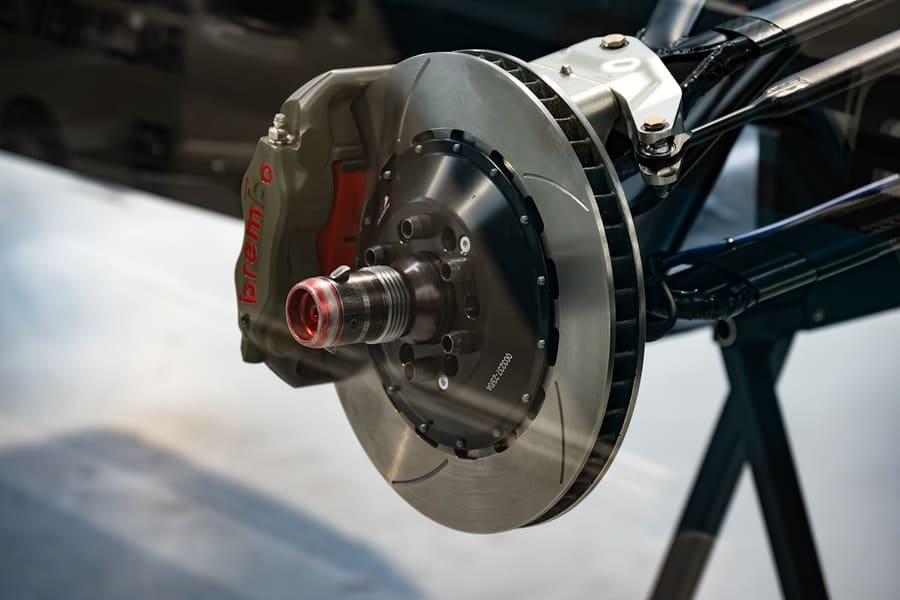
A remanufactured caliper is your car's original casting rebuilt with new seals, pistons, and hardware, then pressure tested. It sells for $40 to $120 at AutoZone, O'Reilly, or RockAuto for a Camry or CR-V class car, which is 40 to 60 percent less than new, and it carries a similar warranty because the casting is the same OE part. Reman calipers come with a $30 to $60 core charge, a refundable deposit for the old unit, but at a shop you never see it because the shop hands your old caliper back to the supplier.
The step up is a loaded caliper: the caliper, bracket, and pads pre-assembled as one piece. You pay $120 to $300 for the part instead of $40 to $120, but it bolts on in the same 1.0 to 1.5 hours and solves a rusty bracket and worn pads in one move. That is why it is the go-to fix in rust belt states, where the bracket that holds the caliper is usually corroded too.
How a Seized Caliper Announces Itself
A seized caliper tells on itself while you are not braking. The car pulls toward the bad side, one wheel is too hot to touch after a drive, you smell hot brakes sitting at a stoplight, and your fuel economy quietly drops because the engine is fighting a dragging pad. If the steering wanders during normal driving, our guide to why a car pulls to one side sorts caliper drag from alignment and tire causes. Noise that only happens when you press the pedal usually points elsewhere; what squeaking and grinding brakes mean covers that side of the family.
Timing is the expensive variable. A caliper that dragged for weeks typically glazes the pads and heat-warps the rotor, and rotors are replaced in pairs, which is how a $250 to $450 single-caliper job becomes the $600 to $1,200 corner rebuild in the table. The rest of the pad and rotor pricing picture lives in our full brake job cost guide.
The Slide-Pin Fix That Saves a Lot of Calipers
Many calipers diagnosed as seized are really stuck slide pins, the greased rods the caliper floats on. A hardware kit with new pins and boots runs $10 to $30 per side plus silicone grease, and the labor is 0.5 to 1.5 hours depending on rust, so a shop can clean the bracket, install the kit, and regrease everything for about $90 to $250 all in. That beats a $300-plus caliper job by a wide margin, which is why it is worth asking any mechanic whether the piston still moves freely before approving a replacement. The kit only works when it does; pins that are deeply scored or rust-welded into the bracket, or a piston that will not retract, mean the caliper or bracket has to go.
Why the Brake Bleed Is Not an Upsell
Replacing a caliper means unbolting the brake hose, and opening the line lets air in. Air in brake fluid means a spongy pedal, so bleeding afterward is physically required, not a padded invoice. Upgrading from a bleed to a full $80 to $120 flush costs little extra since the bleeder is already open, and it is genuinely good preventive money: moisture-contaminated old fluid is what corrodes caliper pistons and seizes calipers in the first place. The bleed is also where rust bites the clock. Book time is 1.0 to 1.5 hours per caliper including the bleed, but a rust-frozen bleeder screw or a rounded brake-line fitting can add 0.5 to 1.0 hour, which is why rust belt quotes run higher than sun belt quotes for the same car.
What Drives the Price
- Reman vs new vs loaded: reman $40 to $120, new $100 to $250, loaded with bracket and pads $120 to $300 at retail. This choice moves the parts line more than anything else on a mainstream car.
- Vehicle class and caliper design: single-piston sedan calipers sit at the bottom of every range; heavy-duty truck twin-piston and luxury fixed multi-piston calipers can push the part alone past $300 to $800.
- Electronic parking brake rears: many 2015-plus cars need a scan tool to retract the parking-brake motor before the rear caliper comes off, adding 0.3 to 0.5 hour, and some EPB calipers are only sold new, not reman.
- Collateral drag damage: a caliper that stuck for weeks usually takes the pads ($60 to $150) and rotors ($100 to $280 per axle) with it, turning a $350 job into a $600 to $1,200 corner rebuild.
- Rust and seized hardware: frozen bleeders, rusted brackets, and rounded fittings add 0.5 to 1.0 hour of labor, so rust belt cars routinely quote $75 to $150 higher than the same car in the south.
- Labor rate and shop type: independents run $100 to $150 per hour in 2026, urban shops trend to the top of that, and dealers bill $150 to $200, so the same 1.5-hour job swings $150 to $300 on labor alone.
Brake Caliper FAQ
Can I replace just one brake caliper? Yes, if the other side is healthy. Calipers are not a matched wear item like pads and rotors, so a newer car with one leaking or seized caliper only needs that corner fixed. Shops recommend the pair when both calipers are original on a car past 120,000 miles so both sides clamp evenly.
Is it OK to keep driving with a seized caliper? No. A dragging pad builds heat constantly, which can warp the rotor, glaze the pads, and boil the fluid, and it lengthens stopping distance while burning extra fuel. Every week on it moves the bill from the $250 to $450 range toward a $600 to $1,200 corner rebuild.
How long does brake caliper replacement take? About 1 to 1.5 hours per caliper at a shop, including the bleed. Rusted hardware can stretch that toward 2 to 2.5 hours, and rear calipers with an electronic parking brake add a scan-tool step. Plan on leaving the car for half a day.
Why does the shop want a fluid flush with a new caliper? Opening the line means the system must be bled regardless, and the bleeder is already open. Going from a bleed to a full flush adds only fluid and a few minutes, and it protects the new caliper, because moisture-heavy old fluid is what corrodes pistons to begin with.
Are remanufactured calipers as good as new ones? For most drivers, yes. A reman is the original casting rebuilt with new seals, pistons, and hardware, then pressure tested, at 40 to 60 percent less than new with a comparable warranty. The exceptions are electronic parking brake and performance calipers, which often are only sold new.
How much does it cost to fix a stuck caliper without replacing it? If the problem is the slide pins rather than the piston, roughly $90 to $250 for a cleaned bracket, a new pin and boot kit, and fresh grease. It only works when the piston still moves freely.
These ranges cover the caliper and installation at independent shops. They do not include pads and rotors except in the full rescue scenario (add $60 to $150 for pads and $100 to $280 for a rotor pair if drag damage exists), brake hoses, which often crumble on the same corner that seized and add $60 to $150 per hose installed, or electronic parking brake and performance multi-piston calipers, which run well above these figures. Also outside the ranges: a diagnostic fee of $0 to $150 that many shops waive when you approve the repair, sales tax and shop supplies at another 5 to 10 percent of the invoice, and dealer pricing, which runs roughly double these numbers on the strength of new OEM parts and $150 to $200 per hour labor.